Why Choose Our Silk Collection: A Guide to Luxury and Performance
When you want fabrics that feel as beautiful as they look, choose our curated selection of premium silk fabric. Whether you design bridal gowns, ready-to-wear dresses, lingerie, or upscale home décor, these materials deliver unmatched drape, sheen, and comfort.
The Appeal of Silk: Natural Comfort and Timeless Elegance
Silk has been prized for centuries for a reason. Its smooth surface, natural luster, and light-but-strong fibers create garments that move beautifully and feel cool in warm weather yet insulating in cooler conditions. Our range highlights the best properties of real silk: breathability, moisture regulation, and a luxurious hand that transforms simple patterns into standout pieces. At the heart of every choice is silk fabric—the foundation for garments that flatter, last, and feel wonderful against the skin.
Different Types of Silk Fabric and What They’re Best For
We stock a wide variety of silk constructions so you can match fabric behavior to design goals. Below are the most popular silk types and practical uses:
- Silk Charmeuse Fabric: Silky, glossy face with a fluid drape—ideal for bias-cut dresses, blouses, and luxurious linings. Choose charmeuse when you want a glowing finish and sensual movement.
- Silk Satin Fabric: High sheen and smoothness; excellent for evening wear and bridal gowns where shine and body are desired.
- Silk Crepe Fabric (including georgette and crepe de chine): Lightweight with a slightly pebbled texture; perfect for flowing dresses and blouses that require subtle volume and non-clingy drape.
- Silk Chiffon Fabric: Sheer and floaty—use for overlays, sleeves, scarves, and delicate layers.
- Silk Organza Fabric: Crisp and translucent for structured overlays, bridal veils, and voluminous skirts.
- Silk Taffeta Fabric: Stiffer silk with a convincing body—great for ballgowns and structured silhouettes.
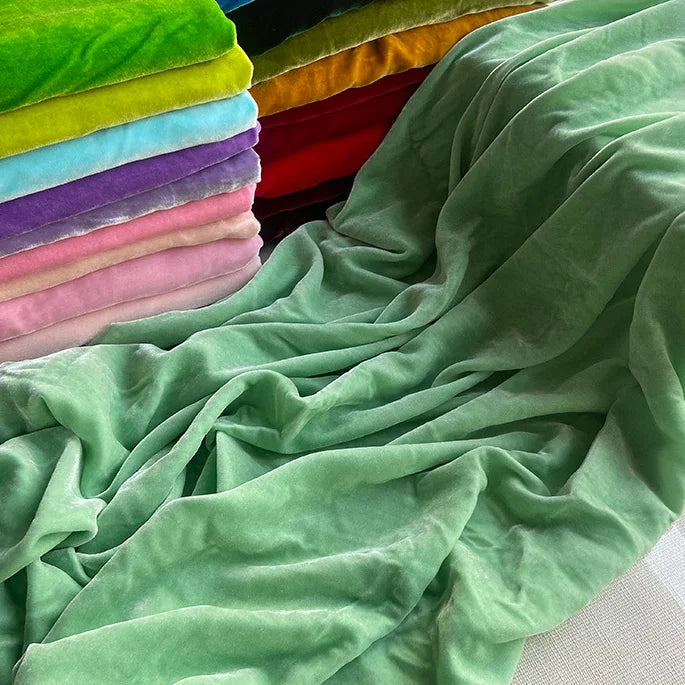
- Silk Velvet Fabric: Soft, pile-faced fabric that adds opulence to eveningwear and upholstery accents.
- Silk Brocade Fabric, Silk Damask Fabric, and Silk Jacquard Fabric: Woven patterns with texture and structure; suited to formalwear, jackets, and decorative home textiles.
- Silk Tulle Fabric: Lightweight netting for veils, overlays, and decorative trim.
Each of these variations offers different hand, weight, opacity, and drape. Our product pages include clear specs like weight and suggested uses so you can quickly find a compatible silk fabric.
Fabric Similar to Silk — Quick Guide
When you want the look and feel of silk but need different performance, care, or price points, these common alternatives behave like silk in useful ways.
- Satin — Satin is a weave rather than a fiber, producing a high-gloss face and a smooth back; it delivers the luminous sheen and fluid drape associated with silk and can be made from silk, polyester, or blends, offering a silk-like look at a range of prices.
- Chiffon — Chiffon is a sheer, lightweight plain-weave fabric with a floaty, airy drape; silk chiffon is delicate and ethereal while synthetic versions mimic the transparency and movement with easier care and lower cost.
- Rayon — Rayon is a regenerated cellulose fiber with a soft, breathable hand and excellent drape; it dyes beautifully and often feels very similar to silk, making it a popular, more affordable alternative for drapey dresses and blouses.
- Viscose — Viscose (a common form of rayon) is smooth, highly absorbent and cool to the touch; it provides good drape and a comfortable hand similar to silk, with many modern viscose finishes offering easier care.
- Lyocell — Lyocell is a sustainable regenerated cellulose fiber with a smooth, cool feel and strong wet-strength; it has a refined drape and subtle sheen that resemble silk while offering improved environmental credentials.
- Cupro — Cupro is a regenerated cellulose fabric made from cotton linter that has a silky hand and soft sheen; breathable and cool-to-touch, it is frequently used as a luxurious, washable lining alternative to silk.
- Modal — Modal is a beech-pulp–derived rayon known for exceptional softness, gentle sheen, and good stretch recovery; it’s more durable and colorfast than standard rayon and works well for sleepwear, tops, and other garments needing a silky drape.
Each of these options can serve as a practical and attractive fabric similar to silk—request swatches to compare weight, color, and finish before ordering yardage.
Key Product Features — What to Look for When Buying
- Weight and Momme: Silk weight is often expressed in momme (e.g., 8–22+ momme). Lighter weights (8–12 momme) suit camisoles, sheers, and linings; medium weights (12–16 momme) are versatile for dresses and shirts; heavier weights (18–30 momme) provide durability and structure for gowns and outerwear.
- Drape and Hand: Some silks are fluid and cling softly; others are crisp and hold shape.
- Sheen Level: Matte vs. high-sheen affects how garments read under light—satin and charmeuse shine, crepe and georgette are subtler.
- Pattern and Weave: Jacquard, brocade, and damask integrate patterns into the fabric structure, offering durability and texture compared to printed or embroidered surfaces.
- Fiber Content: Pure mulberry silk is top-tier for sheen and strength; blends may offer different hand, opacity, and cost considerations.
- Colorfastness and Finish: Our products are carefully dyed and finished to reduce bleeding and maintain color depth—important for tailored garments and multi-yard orders.
These features help you match fabric performance to your pattern and lifestyle needs—whether you seek formal shine, everyday comfort, or statement texture. At every step, the focus remains on quality silk fabric that behaves predictably during cutting, sewing, and wear.
Comparing Fabrics: Satin vs Silk Fabric
Many shoppers wonder: what’s the difference between satin and silk? "Satin" describes a weave that produces a glossy surface; it can be made from silk (silk satin) or synthetic fibers. When comparing options, consider:
- Silk Satin Fabric: Natural protein fiber woven in a satin weave—luminous, fluid, and costly, but luxurious to the touch.
- Synthetic or Blend Satins: Offer similar shine but different breathability and care requirements; often more affordable.
Understanding these distinctions ensures you pick the right fabric: pure silk when natural fiber benefits matter most, and silk-like materials for budget or durability constraints.
Care, Handling, and Sewing Tips
Silk rewards careful handling. Follow these guidelines to keep your projects looking their best:
- Pre-test for colorfastness—especially darker colors and prints—by dampening a hidden edge.
- Pre-wash only when the fabric specifically tolerates it; many silks are best dry-cleaned. Blends may be machine washable on delicate settings.
- Use sharp needles (size 9–11) and fine silk or polyester thread to avoid snagging.
- Stabilize slippery silks with tissue paper or spray starch while cutting to improve control.
- Press at low temperatures with a press cloth to protect sheen; steam can remove wrinkles without direct contact.
- Finish seams with French seams or serging for lightweight silks to prevent fraying.
These pragmatic steps minimize waste and ensure professional results when working with any silk fabric.
How to Choose the Right Silk Fabric for Your Pattern
- Read pattern recommendations for fabric weight and drape.
- Match momme/weight to the garment: lightweight for overlays and blouses, medium for dresses, heavy for coats and upholstery.
- Request swatches for accurate color matching when working across multiple fabric types.
- Consider lining requirements—silk charmeuse or rayon linings pair well with many silk outer fabrics.
Our product filters and detailed listings make this easy: search by type (e.g., silk chiffon fabric, silk organza fabric, silk taffeta fabric), by weight, or by color to narrow choices quickly.
Final Notes: Shop with Confidence
Choosing the right textile means balancing aesthetics, function, and care. Our curated range of high-quality silk fabric—from sumptuous silk velvet fabric and glossy silk satin fabric to sheer silk chiffon fabric and crisp silk organza fabric—offers reliable specifications and inspiring options for designers and makers. Browse by fabric type, weight, or intended use to find fabrics similar to silk or pure silk options for your next sewing project.