

If you've ever struggled with crooked cuts in flannel fabric, you're not alone. Getting those clean, straight edges can make or break your sewing project, especially with flannel's loose weave and tendency to stretch. Whether you're crafting cozy blankets or winter clothing, mastering the proper cutting technique will save you time and fabric while ensuring professional results. Let's explore the essential tools and techniques you'll need to achieve perfect cuts every time.
Key Takeaways
- Use sharp fabric scissors or a rotary cutter with a self-healing mat for clean, precise cuts along straight lines.
- Iron the flannel fabric before cutting to remove wrinkles and ensure an even, flat surface for accurate cuts.
- Mark straight cutting lines with a clear acrylic ruler and fabric marking pencil before making any cuts.
- Secure the fabric with pattern weights or pins to prevent shifting, keeping it taut but not stretched while cutting.
- Maintain a continuous cutting motion without closing scissors completely, following marked lines for consistent straight edges.
Tools Needed to Cut Flannel Fabric
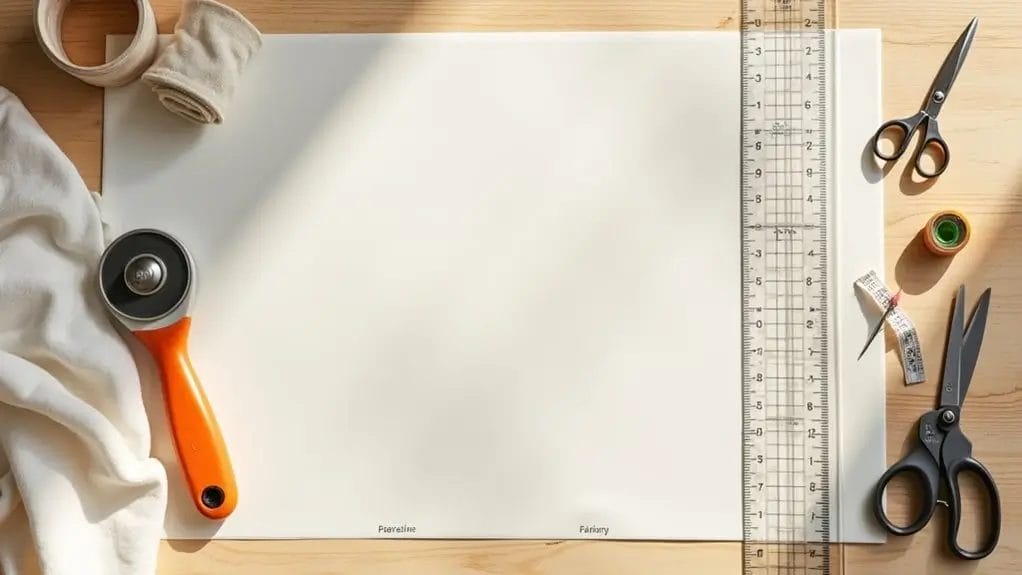
You'll need sharp fabric scissors designed specifically for cutting flannel, as regular household scissors can lead to jagged edges and fraying.
A rotary cutter paired with a self-healing cutting mat can provide exceptional precision when cutting long, straight lines in flannel fabric.
To guarantee accurate measurements, gather a clear acrylic ruler, fabric marking pencils, and straight pins to secure your cutting pattern.
Best Scissors for Cutting Flannel
Since flannel fabric can be thick and prone to shifting, using the right scissors is essential for achieving clean, straight cuts.
You'll want to select high-quality fabric shears that maintain a sharp blade for precise edges.
Choose 8-10 inch fabric scissors with stainless steel blades for peak control and durability.
Invest in professional-grade sewing shears with micro-serrated edges to prevent fabric slipping.
Avoid using dull or household scissors that can damage the cut edge.
Keep a dedicated pair of scissors exclusively for fabric cutting to maintain blade sharpness.
Make sure your scissors are comfortable to hold and allow smooth cutting motion through multiple layers.
Additional Tools for Accurate Cutting
While quality scissors are the primary tool for cutting flannel, several additional implements help confirm perfectly straight cuts.
You'll need a clear ruler or measuring tape to establish accurate measurement points and reference lines. A self-healing cutting mat provides an essential smooth surface for your work.
If you're using a rotary cutter, it's vital to pair it with a non-slip mat to protect your table. Pattern weights keep fabric from shifting during cutting, offering more stability than pins.
Keep pattern pieces and templates nearby to transfer markings and verify precise dimensions as you work.
Preparing Flannel Fabric Before Cutting
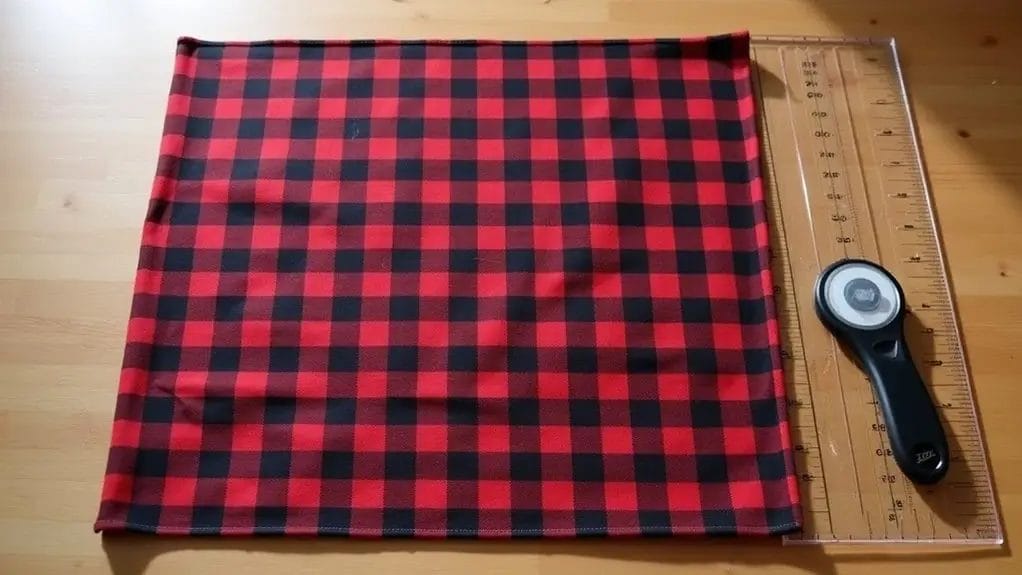
Before cutting your flannel, you'll need to lay the fabric completely flat on a large, clean work surface like a table or cutting mat.
To guarantee straight cuts, align the fabric's grain by finding and following the lengthwise threads that run parallel to the selvage edges.
Once you've smoothed out any wrinkles and confirmed the grain is properly aligned, you can secure the fabric with pattern weights or pins to prevent shifting during cutting.
Laying Out Fabric Flat
Preparing your flannel requires a clean, flat surface large enough to spread out the entire piece of fabric.
Lay your flannel on a table or floor, ensuring there's enough room to work comfortably. The fabric should drape naturally without bunching or hanging off edges.
- Iron the flannel on appropriate heat settings to remove any wrinkles that could affect cutting accuracy.
- Align the fabric's selvage edges parallel to your work surface's edge.
- Smooth the fabric from the center outward using gentle, sweeping motions.
- Use pattern weights around the perimeter to keep the fabric from shifting while you work.
Aligning the Grain for Straight Cuts
The grain line of your flannel directly impacts how straight your cuts will be.
To align the grain properly, find the selvage edge and fold your fabric lengthwise, matching the selvages precisely. If the fold creates wrinkles or doesn't lie flat, your fabric isn't on-grain. Gently pull the fabric diagonally to adjust the grain until it's square.
Test the grain by checking if the crosswise threads run perpendicular to the selvage. Once aligned, iron it flat to set the grain.
Remember that flannel, being a woven fabric, can stretch easily, so handle it carefully to maintain the straight line you've established along the edge of the fabric.
How to Cut Flannel Fabric Straight: A Step-by-Step Guide
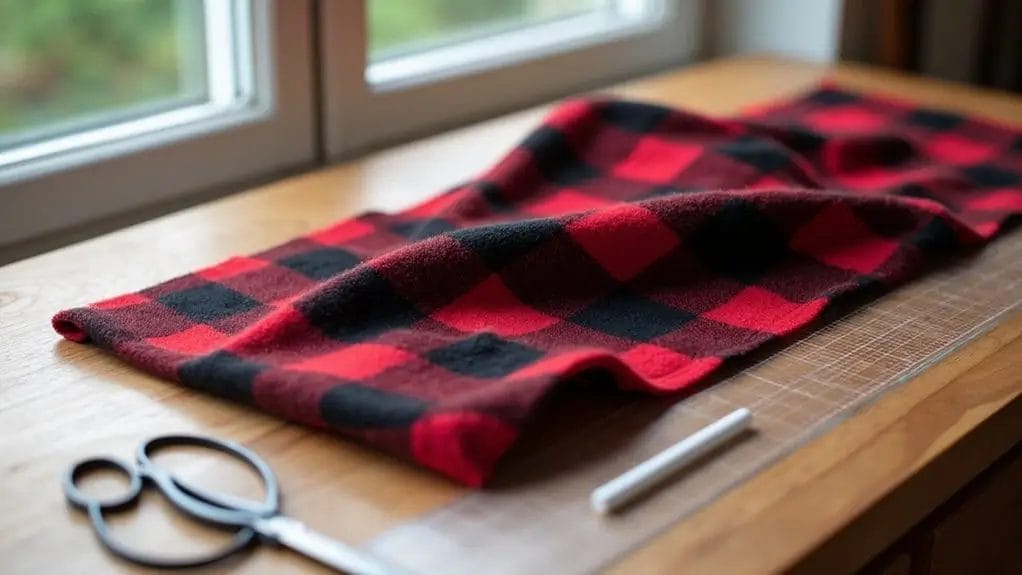
You'll want to begin by marking clear, straight cutting lines using a ruler and fabric marker to establish your guide.
Using sharp fabric scissors, carefully follow your marked line while keeping the flannel flat and stable on your cutting surface. For the most precise cuts, you can opt for a rotary cutter with a self-healing mat, which helps maintain consistent pressure and creates clean, even edges through the flannel's thickness.
Marking the Cutting Line
Before cutting your flannel fabric, carefully mark a clear, straight line to confirm accurate results. Making sure you measure precisely will prevent crooked lines and wasted material. Use a reliable straight edge as your reference while marking.
- Place a ruler or measuring tape along the print pattern to establish your baseline measurement.
- Draw your cutting line using tailor's chalk or fabric marker for accurate visibility.
- Double-check your measurements against the pattern requirements.
- Verify the line is perfectly perpendicular to the fabric's selvage edge.
Follow these guidelines for precise marking to confirm your flannel cuts remain consistently straight and professional-looking.
Techniques to Cut Fabric Straight with Scissors
With your cutting line properly marked, cutting flannel fabric straight requires proper scissor technique and careful attention to detail.
Hold your fabric scissors parallel to your body while keeping the material flat on your work surface. Press down firmly with your free hand about 6 inches from where you'll cut.
Begin with a clean snip at the edge, then glide the scissors smoothly along your marked line without closing the blades completely between cuts. This continuous cutting motion helps maintain a straight edge.
Keep the fabric taut but don't pull or stretch it while cutting.
Using Rotary Cutters for Precision
A rotary cutter offers superior precision when cutting flannel fabric straight, especially for longer cuts and multiple layers. To achieve perfectly straight lines, you'll need a proper setup and technique.
- Position your fabric on a self-healing cutting mat near the edge of the table, ensuring the material stays flat and aligned.
- Hold the ruler firmly with your non-dominant hand, pressing down to prevent slipping as you cut fabric straight.
- Place your rotary cutter at the starting point, maintaining a 45-degree angle as you rotate the blade.
- Continue cutting along the cut line in one smooth motion, keeping consistent pressure and speed to trim cleanly.
Tips to Cut Flannel Perfectly Every Time
To cut flannel fabric perfectly straight, you'll need to prevent the fabric from shifting by using plenty of sharp pins and applying gentle pressure with your free hand as you cut.
Keep your fabric scissors sharp and dedicated only to cutting fabric, as dull blades can cause the flannel to snag or create uneven edges.
You'll achieve the cleanest cuts by working on a large, flat cutting surface and moving the fabric as little as possible during the cutting process.
Avoiding Fabric Shifting
Flannel's fuzzy texture can make it tricky to keep aligned during cutting, but several practical techniques will help you maintain perfect straight lines. To cut fabric perfectly and prevent shifting, follow these essential steps:
- Lay your fabric on a flat surface and gently pull the edges to remove wrinkles.
- Use pattern weights or pins to secure layers before folding fabric in half.
- Place a metal straight edge ruler along your cutting line and apply firm pressure.
- Keep your free hand flat on the fabric near the ruler to prevent uneven movement.
Keeping Scissors Sharp
Sharp scissors are vital for achieving clean, precise cuts in flannel fabric. When your scissors become dull, you'll notice increased frustration as you try to cut a straight line.
Dull blades can cause the fabric to snag and fray, making it tricky to sew later.
To maintain your scissors' sharpness, use them exclusively for fabric cutting. Never cut paper, cardboard, or other materials that can dull the blades.
Get your scissors professionally sharpened once a year, or more frequently if you cut fabric regularly. Before each stitch project, test your scissors on a scrap piece - it's essential to verify they're sharp enough for precise work.
After Cutting: Preparing Fabric to Sew
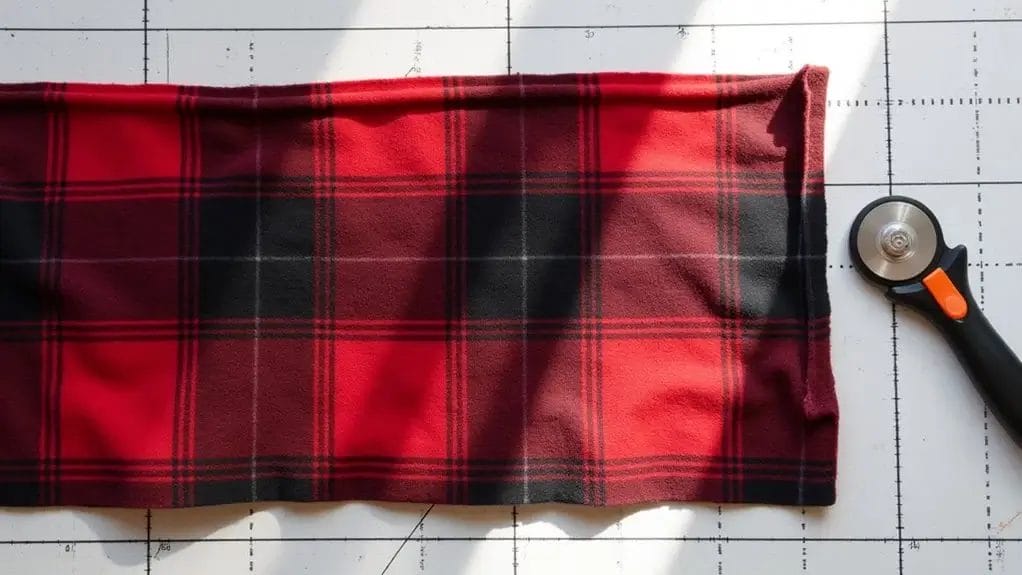
After making your cuts, you'll need to carefully inspect all fabric edges for accuracy and straightness, making sure they align properly with your pattern pieces.
To handle your cut flannel sections effectively, lay them flat and separate pieces by pattern markings to prevent any stretching or distortion of the fabric.
Keep your cut pieces organized and flat until you're ready to begin sewing, as flannel can shift and stretch if handled too much.
Checking Edges for Accuracy
Once you've completed cutting your flannel fabric, take a moment to inspect all edges for accuracy and straightness. Use a straight edge to confirm each cut meets at a 90 degree angle. If you notice any inconsistencies, now's the time to make corrections.
- Compare both sides of your piece of fabric to guarantee they're even and parallel.
- Check that any fold your fabric has maintains straight alignment throughout.
- Look for any small cut imperfections that might affect sewing.
- Measure from one end to the other to verify consistent width.
After confirming all edges are precise, you're ready to tear along any marked guidelines and begin sewing.
Handling Cut Fabric Pieces
When handling your freshly cut flannel pieces, careful organization is essential to prevent fraying and distortion. Stack your pieces at a consistent angle, keeping straight edges aligned. You'll want to minimize movement that could distort the width or cause threads to loosen along the cut edges.
Before you assemble your project, store the pieces flat in a clean, dry area. If you need to transport them, roll the fabric rather than folding to maintain the precise edges you've created.
For larger pieces, use tissue paper between layers to prevent shifting and keep your careful cuts pristine until you're ready to sew.
Frequently Asked Questions
Can Flannel Fabric Be Cut With Regular Scissors?
You can cut flannel with regular scissors, but you'll get cleaner results using sharp fabric shears. Standard scissors may snag or tear the fabric's delicate fibers while cutting.
How Long Can Cut Flannel Pieces Be Stored Before Sewing?
You can store cut flannel pieces for 1-2 years if you keep them in a cool, dry place away from direct sunlight. Wrap them in acid-free tissue paper to prevent yellowing or dust accumulation.
Does the Nap Direction Affect How Flannel Should Be Cut?
Yes, you'll need to cut all pieces in the same nap direction. Run your hand along the fabric - the smoother direction is the nap's direction. Always cut your pattern pieces accordingly.
Will Washing Flannel Before Cutting Affect Its Pattern Alignment?
Yes, pre-washing your flannel can slightly shift the pattern alignment. You'll need to re-square your fabric edges and carefully match pattern repeats before cutting to guarantee proper pattern placement.
Can You Cut Multiple Layers of Flannel at Once?
You can cut 2-3 layers of flannel at once, but don't exceed this limit. Use sharp fabric scissors and secure your layers with pins to prevent shifting while cutting.
Conclusion
You've now mastered the art of cutting flannel fabric straight. With your proper tools, careful preparation, and attention to detail, you'll achieve professional results every time. Remember to maintain consistent tension, follow the grain, and keep your cutting tools sharp. By following these systematic steps and practical tips, you're ready to tackle any flannel project with confidence and precision.
0 comments