

If you're looking to expand your sewing repertoire with a versatile fabric, flannel offers endless possibilities for cozy creations. This soft, woven material comes in various weights and patterns, making it ideal for both practical household items and wearable accessories. You'll find that flannel's natural warmth and durability can transform simple projects into lasting comfort pieces. Let's explore the essential techniques and creative projects that'll help you master working with this timeless fabric.
Key Takeaways
- Create a simple flannel scarf with basic straight stitching, perfect for beginners looking to start their sewing journey.
- Make cozy hand warmers by sewing flannel squares together and filling them with rice or dried beans.
- Craft practical baby items like bibs and burp cloths using double-layered flannel with waterproof backing for functionality.
- Design a patchwork throw blanket from flannel scraps, combining various patterns for a unique and warm covering.
- Sew mug cozies from flannel rectangles to keep drinks warm while adding a personalized, handmade touch.
Introduction to Flannel Fabric
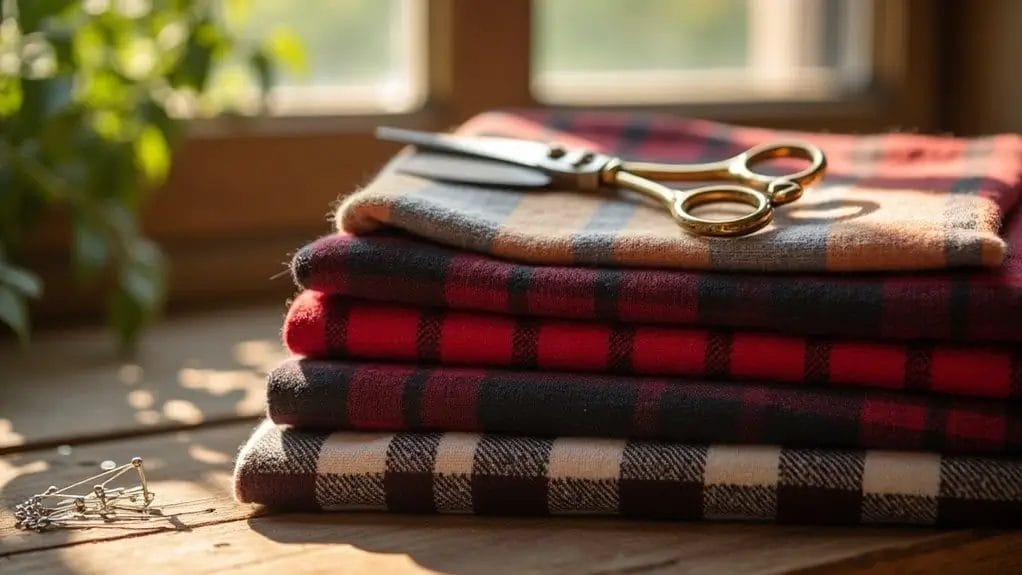
Flannel's distinctive brushed surface and natural fiber composition make it an ideal fabric for both garments and home décor projects you'll want to create.
You'll find that flannel's warmth retention, moisture-wicking properties, and softness provide superior comfort in clothing items like pajamas, shirts, and winter accessories.
The fabric's medium weight and stability during construction allow you to execute precise seams and maintain shape retention in your finished projects.
Why Choose Flannel for Sewing Projects
When it comes to versatile fabrics for home sewing, flannel stands out as an exceptional choice due to its unique combination of softness, durability, and warmth.
You'll find that this cozy cotton fabric offers excellent insulation for winter projects while remaining breathable and comfortable against the skin.
Thick flannel's brushed surface creates a plush texture that's perfect for garments, bedding, and accessories.
Its tight weave provides stability for detailed stitching, while the fabric's natural drape allows for fluid movement in finished pieces.
You'll appreciate how flannel maintains its shape through repeated washing while becoming increasingly softer with each cycle.
Benefits of Using Flannel Fabric
From its traditional woolen origins to modern cotton varieties, flannel fabric offers an impressive range of practical benefits for sewists.
You'll find that flannel fabric is exceptionally easy to sew with its brushed surface creating natural grip between layers. The fabric's signature napped finish provides superior insulation, making it ideal for cozy winter projects. Its versatility extends to both garments and home goods.
This great fabric maintains dimensional stability after washing and resists pilling when properly cared for. The medium weight allows for smooth feeding through sewing machines while being substantial enough to hold shape.
Flannel's forgiving nature makes it perfect for beginners and experienced sewists alike.
Easy and Cozy Flannel Sewing Projects
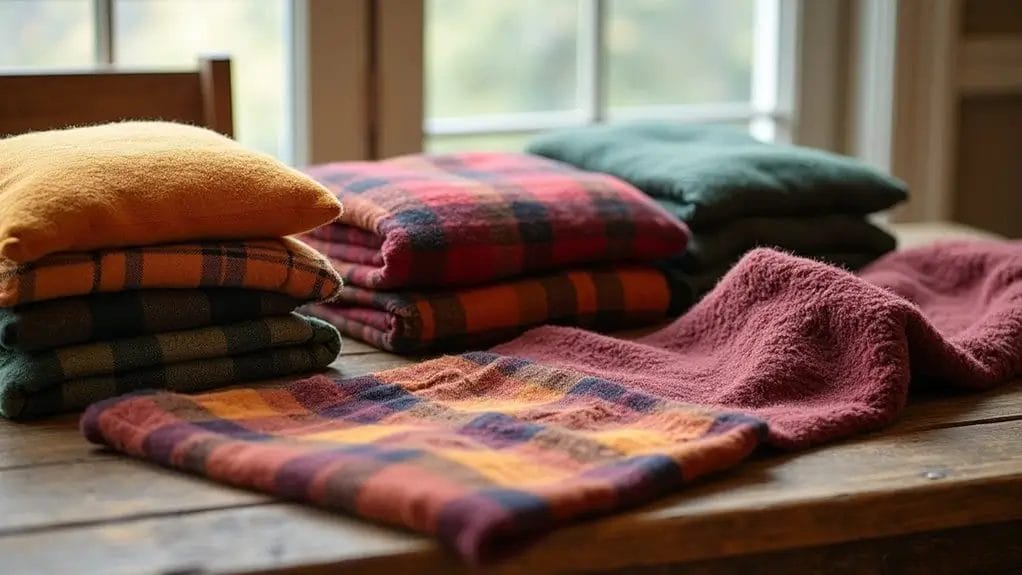
You'll discover three beginner-friendly flannel projects that maximize the fabric's soft, cozy properties.
Start with a basic DIY flannel scarf using straight stitches and hemmed edges. Then progress to constructing a simple throw blanket with mitered corners and a double-fold binding.
For a more advanced undertaking, transform your flannel remnants into a patchwork quilt by cutting uniform squares, arranging them in a pattern, and joining them with quarter-inch seams.
DIY Flannel Scarf: A Simple Sewing Project
A warm flannel scarf makes the perfect introductory sewing project, requiring just basic straight stitching and minimal materials.
Cut two pieces of flannel fabric 12 inches wide by 60 inches long. Place the pieces right sides together, pin the edges, and sew a 1/2-inch seam around three sides. Leave a 4-inch opening on one short end.
Turn the scarf right side out through the opening, pressing the seams flat. Fold the opening's raw edges inward and topstitch around the entire scarf 1/4 inch from the edge for a professional finish.
Sewing a Flannel Throw Blanket
Creating a cozy flannel throw blanket requires minimal sewing skills while delivering maximum comfort. You'll need two pieces of flannel fabric cut to your desired throw blanket size, plus an extra inch for seam allowance.
- Layer your flannel pieces with right sides together, pin the edges, and sew a 1/2-inch seam around three sides.
- Turn the blanket right-side-out through the open end, press the seams flat with an iron.
- Fold the raw edges of the opening inward, pin closed, and topstitch around the entire blanket's perimeter.
This simple project transforms old flannel shirts or new fabric into a warm, durable throw that's perfect for chilly evenings.
Making a Flannel Quilt from Fabric Scraps
While traditional quilts often use cotton, flannel scraps can be transformed into an exceptionally warm and soft quilt with minimal waste.
Begin this sewing project by sorting your flannel scraps by color and size. Cut pieces into uniform 6-inch squares, aligning plaid flannel patterns for visual consistency.
Arrange squares in a pleasing pattern, alternating solid and plaid pieces. Pin squares together in rows, then join rows to form your quilt top.
Add batting and backing fabric, then quilt through all layers using a walking foot. Finish by binding the edges with coordinating flannel strips for a cozy, handmade treasure.
Flannel Projects for Babies and Toddlers

You'll discover that flannel's soft texture and absorbent qualities make it ideal for crafting essential baby items like bibs and burp cloths.
When sewing reusable baby bibs, select double-layered flannel with a waterproof backing and reinforce the neck closure with durable snaps or hook-and-loop fasteners.
For burp cloths, cut 14x18-inch rectangles of high-quality flannel, layer them with absorbent terry cloth, and finish with topstitching around all edges for durability.
Sewing Reusable Baby Bibs with Flannel
Because flannel fabric offers both softness and absorbency, it's an ideal material for making reusable baby bibs that protect clothing during feeding time.
To create durable flannel baby bibs, you'll need to select high-quality cotton flannel and reinforce the stitching around edges and closures.
- Cut two identical bib shapes from coordinating flannel pieces, adding 1/2" seam allowance
- Attach snaps or hook-and-loop fasteners for secure closure around baby's neck
- Double-stitch along curved edges and create topstitching 1/4" from edge for enhanced durability
Consider making matching burp cloths using leftover flannel fabric to create a coordinated set for feeding time.
Making Burp Cloths with Flannel Fabric
Burp cloths made from flannel fabric provide essential protection for parents' clothing while offering gentle comfort for babies during feeding and burping sessions.
To make flannel burp cloths, you'll need a burp cloth pattern measuring 9" x 18". Cut two pieces from soft flannel fabric, placing right sides together.
Pin and sew with a 1/4" seam allowance, leaving a small opening. Turn right-side-out, press seams flat, and topstitch around edges.
For extra absorbency, add a third layer of flannel between pieces before sewing. Create a set of 6-8 burp cloths in coordinating patterns for daily use.
Cozy Flannel Sewing Ideas for Adults

When you're ready to create cozy flannel items for adults, you'll find practical projects ranging from a classic wraparound robe with shawl collar to pocket-sized hand warmers filled with rice or buckwheat.
You can transform flannel remnants into useful accessories like insulated mug cozies with elastic closures or decorative button fasteners.
For a more advanced project, try constructing a flannel button-down shirt complete with collar stand, cuffs, and chest pockets using a commercial pattern.
Sewing a Comfortable Flannel Robe
A cozy flannel robe serves as both a practical sewing project and a luxurious addition to your loungewear collection. Choose a robe pattern that matches your skill level and select high-quality flannel fabric in a complementary print or solid color. This easy sewing project makes a great handmade gift for someone special.
- Cut pattern pieces precisely, adding seam allowances and following grain lines for ideal drape.
- Reinforce stress points like pockets and belt loops with interfacing.
- Double-stitch seams and use French seams on sleeve attachments for durability.
For best results, pre-wash your flannel fabric to prevent shrinkage and promote comfort in the finished garment.
Making Hand Warmers with Flannel Scraps
Small flannel hand warmers provide comfort during chilly weather while making excellent use of leftover fabric scraps.
Cut two 4-inch squares from your flannel pieces and place them right sides together.
Sew around the edges with a 1/4-inch seam allowance, leaving a 1-inch opening.
Turn right side out and fill with rice or dried beans.
Hand-stitch the opening closed using small, tight stitches.
These quick and easy to make hand warmers only take minutes to complete.
Microwave them for 30 seconds to generate soothing warmth.
You'll need multiple pairs of these cozy flannel projects to keep in your pockets during winter months.
Creating a Mug Cozy from Fabric Scraps
Transform your favorite mug into a cozy companion by crafting a custom flannel sleeve that insulates your hot drinks while protecting your hands.
This simple hand sewing project lets you repurpose scrap fabric into a practical accessory.
- Cut two 3x10-inch flannel rectangles, allowing 1/2-inch seam allowance and extra length for cup size adjustments.
- Pin pieces right sides together, sew three edges, turn inside out, then fold raw edges inward.
- Top stitch around all edges, add a button closure or elastic band for a snug fit.
Your mug cozy keeps beverages warm longer while adding a touch of handmade charm.
Sewing a Flannel Shirt
Creating your own flannel shirt combines comfort with customization, allowing you to select the perfect fabric pattern and achieve an ideal fit. When learning to sew a flannel shirt, start by selecting a quality pattern and matching plaid fabric.
Carefully align pattern pieces with the plaid's grid for symmetrical results. Cut interfacing for the collar and cuffs, then assemble the garment following the pattern's order: attach yokes, join shoulder seams, set sleeves, and sew side seams.
Add pockets, collar, and cuffs before finishing buttonholes. This garment sewing project builds essential skills while creating a wearable wardrobe staple.
Tips for Working with Flannel Fabric
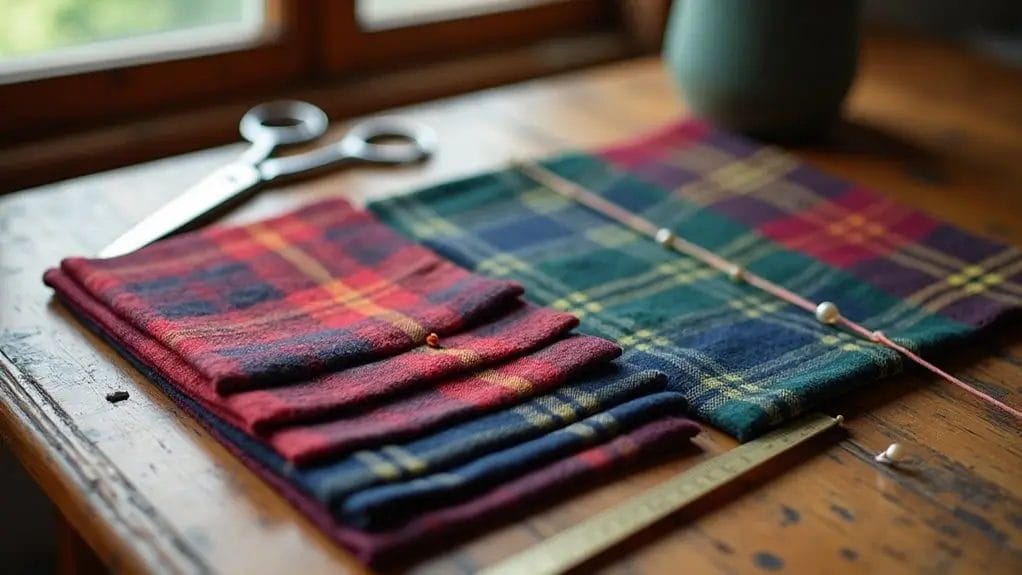
When working with flannel fabric, you'll need to pre-wash and dry your material to prevent future shrinkage and guarantee accurate measurements for your project.
You can minimize fabric waste by carefully laying out your pattern pieces in the same direction as the fabric's nap, while saving smaller scraps for patchwork quilts or appliqué designs.
To achieve professional-looking seams, use a walking foot on your sewing machine and slightly increase your stitch length to 3.0mm, which prevents the fabric layers from shifting during construction.
How to Sew Flannel Easily: Tips for Beginners
Flannel fabric's soft, cozy texture makes it a favorite choice for beginners, but it requires specific techniques for successful sewing. When you learn how to sew flannel, you'll need to adjust your machine sewing settings and tools for best outcomes.
- Use a new size 80/12 universal needle and lengthen your stitch to 3.0mm for stable seams.
- Pin perpendicular to edges every 2-3 inches, as flannel tends to shift while sewing.
- Press seams open with steam and medium heat, moving the iron in straight lines to prevent stretching.
Remember to pre-wash your DIY flannel projects, as the fabric typically shrinks about 10%.
How to Use Fabric Scraps in Flannel Sewing
Three practical ways exist to repurpose leftover flannel scraps into useful items.
Transform small pieces into coasters by cutting 4-inch squares, layering them, and topstitching around the edges.
Convert medium-sized scraps from old clothes into reusable handmade gifts like sachet pouches - cut 5x7 inch rectangles, fold in half, and sew three sides.
For free sewing ideas, combine various-sized scraps into patchwork quilted potholders by arranging pieces in a 8x8 inch grid pattern, adding batting and backing, then quilting through all layers before binding the edges.
Frequently Asked Questions
Can I Mix Flannel With Other Fabrics in the Same Sewing Project?
You can mix flannel with other fabrics, but you'll need to pre-wash both materials and match their weight class. Consider using quilting cotton, denim, or corduroy for compatible drape and stability.
How Do I Prevent Flannel Fabric From Pilling After Multiple Washes?
You'll reduce pilling by washing flannel in cold water, using gentle detergent, turning items inside-out, avoiding fabric softener, and drying on low heat. Pre-wash your fabric before sewing.
Is Flannel Fabric Suitable for Summer Clothing Projects?
You shouldn't use flannel for summer clothing as it's too warm and doesn't breathe well. The fabric's brushed surface and tight weave trap heat, making you uncomfortable in high temperatures.
What Thread Tension Should I Use When Sewing With Flannel?
Start with a medium tension of 4-5 on your machine, then test on scrap flannel. You'll need to adjust slightly higher for thicker flannel or lower for lightweight varieties.
Does Flannel Shrink Differently Depending on the Fiber Content?
Yes, your flannel's shrinkage rate varies by fiber content. Cotton flannel typically shrinks 3-5%, wool flannel shrinks 10-20%, and synthetic flannel blends shrink minimally, usually less than 1%.
Conclusion
You'll find that flannel fabric's versatility makes it ideal for countless DIY projects. Whether you're creating soft baby blankets, warm scarves, or patchwork quilts, remember to pre-wash your fabric, use a sharp needle, and maintain consistent seam allowances. By following proper techniques for handling flannel's napped surface and implementing the appropriate stitch length, you'll master these cozy projects while building essential sewing skills.
0 comments