

When you choose fabric for a project, understanding what is the difference between woven and knit fabrics helps you get the right fit, drape, and comfort. With their interlaced yarns, woven fabrics offer stability and a crisp finish that works well for structured garments. Knit fabrics, with their looped construction, provide stretch and comfort, which is why you see them in cozy sweaters, T-shirts, and activewear.
But there’s more going on than just texture and stretch. Construction affects durability, how you sew the fabric, and even how you care for finished garments. Once you see how these two fabric families compare, you’ll make stronger choices every time you sew.
Key Takeaways
-
Construction: Woven fabrics interlace two yarn sets (warp and weft) in a grid. Knit fabrics interloop a single yarn into rows of loops.
-
Stretch and Structure: Woven fabrics have very little stretch and give a crisp, structured look. Knit fabrics stretch and recover, giving comfort and body-hugging fit.
-
Sewing Experience: Woven fabrics are more stable and often easier for beginners. Knit fabrics can shift and stretch while sewing and need special needles and stitches.
-
Care and Wear: Woven fabrics wrinkle and fray but resist pilling. Knit fabrics resist wrinkling, may pill or snag, and can stretch out if not cared for properly.
-
Best Uses: Woven fabrics suit formal wear, structured garments, bags, and upholstery. Knit fabrics are ideal for casual wear, activewear, underwear, and pull-on garments.
What Is the Difference Between Woven and Knit Fabrics?
When you compare woven and knit fabrics, the main difference is how the yarn becomes fabric. Both types can be made from the same fibers (like cotton, linen, or polyester), but their construction gives them very different behavior when you cut, sew, wear, and wash them.
What Are Woven Fabrics?
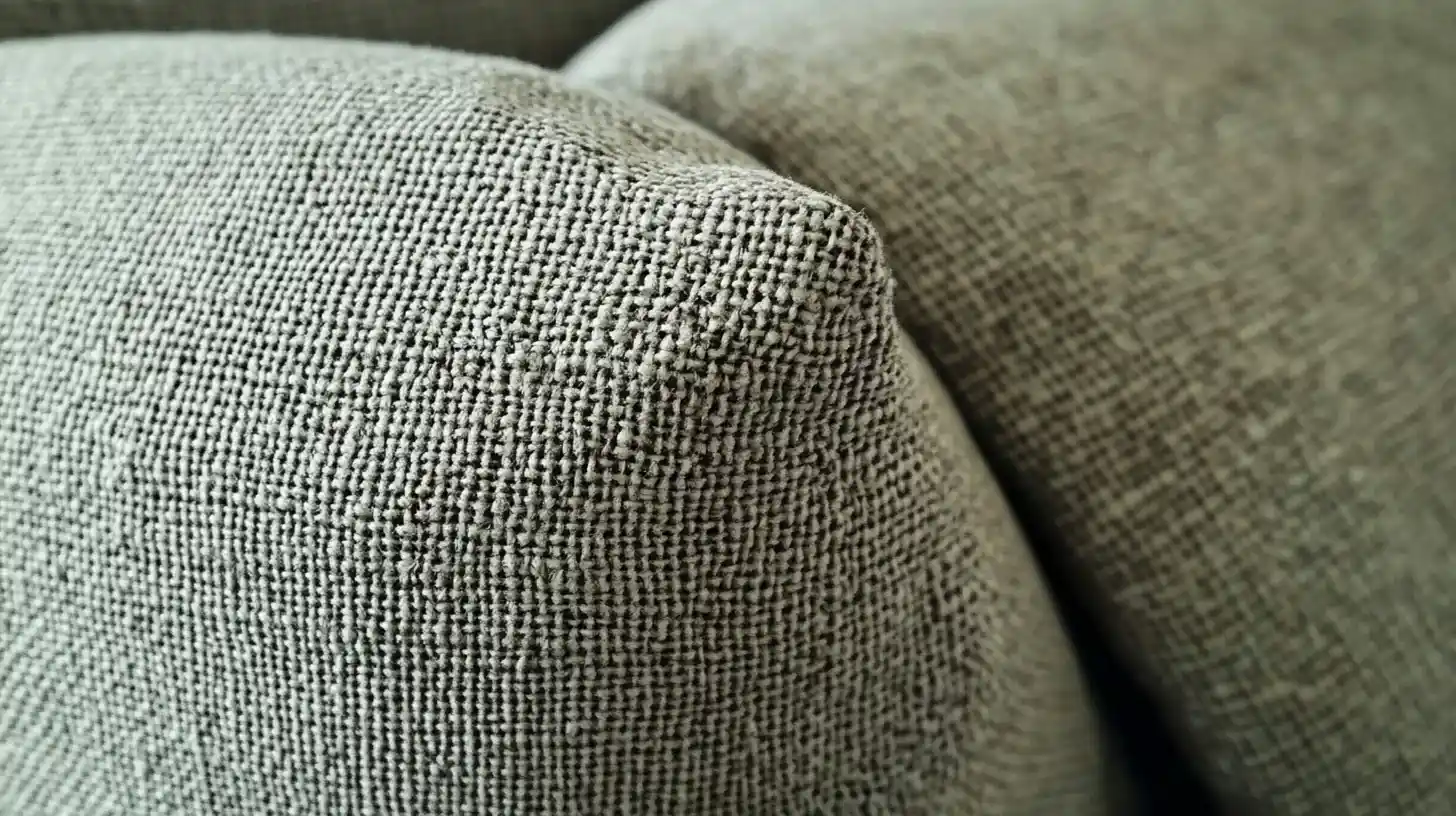
Woven textiles are formed by interlacing two sets of yarns at right angles, known as the warp (lengthwise) and weft (crosswise).
This interlacing creates a grid-like pattern that you can often see if you look closely, and this construction method significantly affects the fabric's strength and durability. It makes woven fabrics:
-
Stable and structured – very little stretch along warp or weft
-
Durable – strong and resistant to wear
-
Prone to fraying – cut edges ravel unless you finish them
Most woven fabrics only stretch noticeably if you pull them on the bias (diagonally across the grain). Because of this stability, they often need darts, seams, closures, and careful pattern shaping for a good fit.
Common basic weave types include:
-
Satin weave – smooth and shiny surface (satin , charmeuse)
On the finished fabric, you can spot the selvage along the long edges, where the weft turns around at the sides. This helps you keep track of the straight grain while cutting patterns.
Their stable structure makes wovens ideal for shirts, dresses with zippers, trousers, outerwear, bags, quilts, and upholstery.
What Are Knit Fabrics?
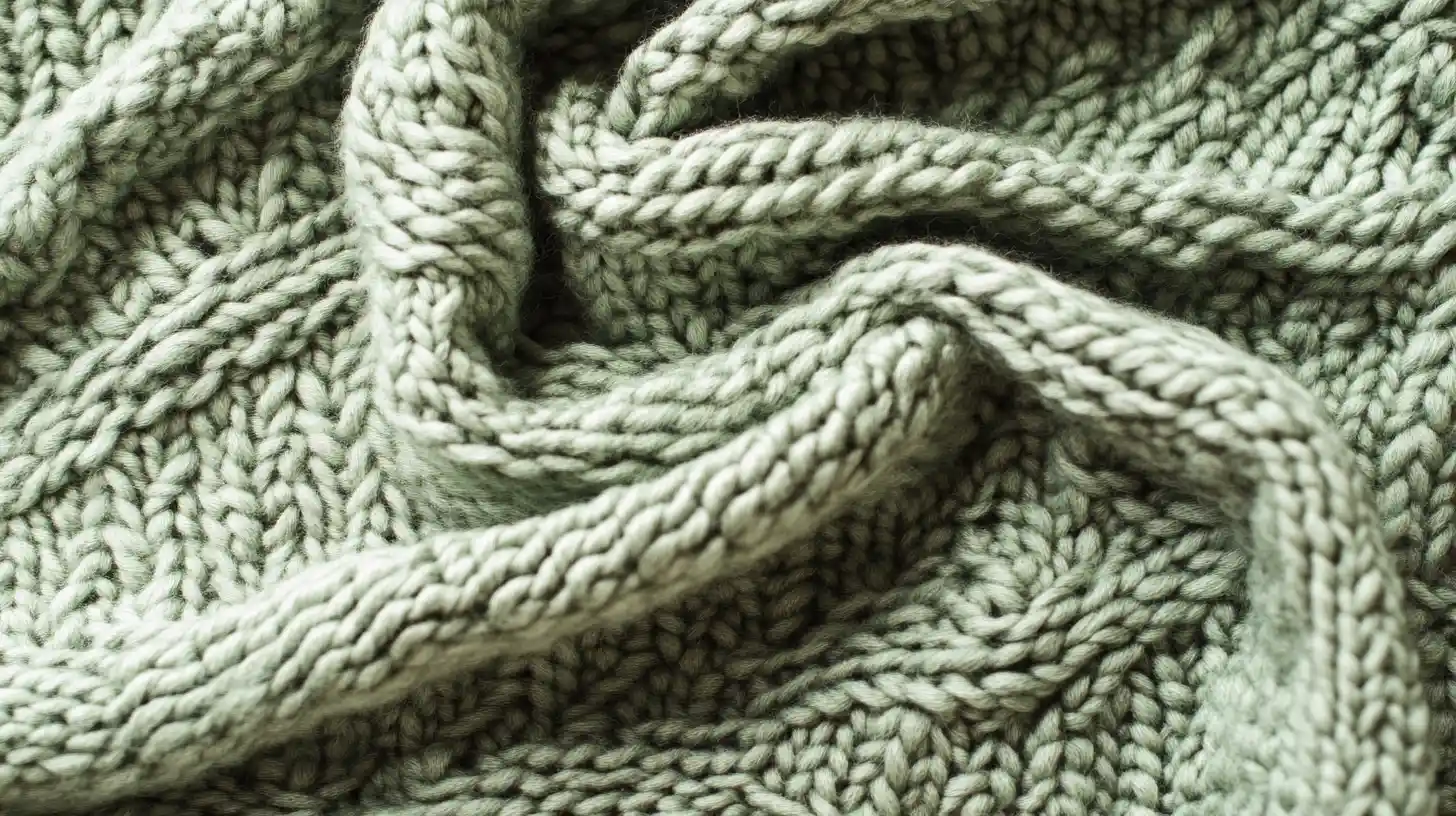
Knit fabrics are formed by interlooping a single continuous thread, which results in a stretchy material that easily returns to its original shape.
Rows of loops are connected to each other, giving knit fabrics:
-
Notable elasticity – often in both width and length
-
Soft drape and comfort
-
Edges that may curl instead of fraying, especially on jersey
There are two main knitting directions:
-
Weft knitting: Loops run across the width (T-shirt jersey, rib knits ).
-
Warp knitting: Loops run lengthwise (tricot and some mesh fabrics).
You’ll find types like single jersey, interlock, rib, French terry , fleece, and ponte . Each offers different levels of stretch, stability, and texture.
Knit fabrics can be made by hand or by machine. Hand knitting builds fabric row by row with needles, while industrial machines create fabric much faster and with very consistent tension.
Because of their multi-directional stretch, knit fabrics are ideal for comfortable, form-fitting garments that you can pull on without zippers or buttons.
Differences in Production Processes

When you look at how woven and knit fabrics are made, you can see why they behave so differently in your sewing room.
Woven Fabric Production
Woven fabric production starts with two types of yarn: warp and weft. On a loom:
-
Warp threads are stretched vertically under tension.
-
Weft threads are passed over and under the warp threads from side to side.
-
A pattern of over-under interlacing creates different weaves like:
-
Plain – simplest and most common
-
Twill – diagonal lines, stronger and more resistant to wear
-
Satin – long floats for shine and smoothness
-
This process results in strong, stable fabrics with a clear grain. Because wovens don’t stretch much, they’re forgiving to cut and press, and they hold crisp details like pleats, collars, cuffs, and structured seams.
Knit Fabric Production
Knit fabric production revolves around interlooping a single continuous yarn into rows of loops.
There are two broad machine methods:
-
Circular knitting machines create tubes of fabric, which are later cut open. They are commonly used for T-shirt jersey, sweatshirting, and ribbing.
-
Flat knitting machines produce flat panels, often used for sweaters, scarves, and heavier knits.
The looped structure provides a soft texture and allows the fabric to stretch and bounce back to its original shape. Unlike wovens, knits tend not to fray, but they can snag and run if a loop is broken.
Different knit constructions—single jersey, interlock, rib, French terry—are designed for specific uses to improve comfort, recovery, and drape. Makers also adjust the gauge (stitches per inch) to create fine, lightweight knits or thicker, cozy versions.
Differences in Characteristics and Properties

Understanding the characteristics of each fabric type helps you predict how your project will look, feel, and wear.
Woven Fabrics
Woven fabrics might seem straightforward at first glance, but they have several distinct properties:
-
Durability and stability: The interlaced grid gives wovens strength and shape retention, even with frequent wear and washing.
-
Limited stretch: Woven fabrics don’t stretch much along warp or weft. They only give a bit on the bias, so you rely on pattern shaping (darts, seams, pleats) rather than stretch for fit.
-
Crisp or structured drape: Many wovens hold sharp lines and structured shapes. Some, like chiffon or rayon challis, drape softly, but they still don’t behave like knits.
-
Wrinkling: Wovens, especially those made from natural fibers like cotton and linen, crease easily and often need pressing.
-
Fraying edges: Raw edges ravel and must be finished with zigzag stitches, overlocking, or other seam finishes.
-
Easy to cut and sew: Their stability makes them easier for beginners to handle, cut accurately, and sew without distortion.
Knit Fabrics
Knit fabrics have a different set of characteristics that make them favorites for casual and performance wear:
-
Impressive stretchiness: The looped structure allows knits to stretch, often in both width and length. Some knits have two-way stretch; others have four-way stretch.
-
Comfort and movement: Knits move with your body, so they work well for close-fitting garments such as T-shirts, leggings, and underwear.
-
Shape retention: Many knits, especially those with spandex, return to their shape after stretching. Poor-quality knits may bag out at knees, elbows, or seat over time.
-
Wrinkle resistance: Knits resist wrinkling. If you crumple them, they usually spring back almost smooth.
-
Less fraying, more curling: Raw edges don’t fray like wovens but may curl toward the right or wrong side, which can be tricky when cutting and sewing.
-
Risk of pilling and snags: Because of the looped yarns, knits can pill or develop runs, especially on high-friction areas.
-
More challenging to sew: The stretch can cause wavy seams, tunneling, or skipped stitches if you don’t use the right needle and stitch settings.
Once you get familiar with these traits, you can often guess whether a mystery fabric is a knit or a woven just by handling it.
Differences in Applications and Uses
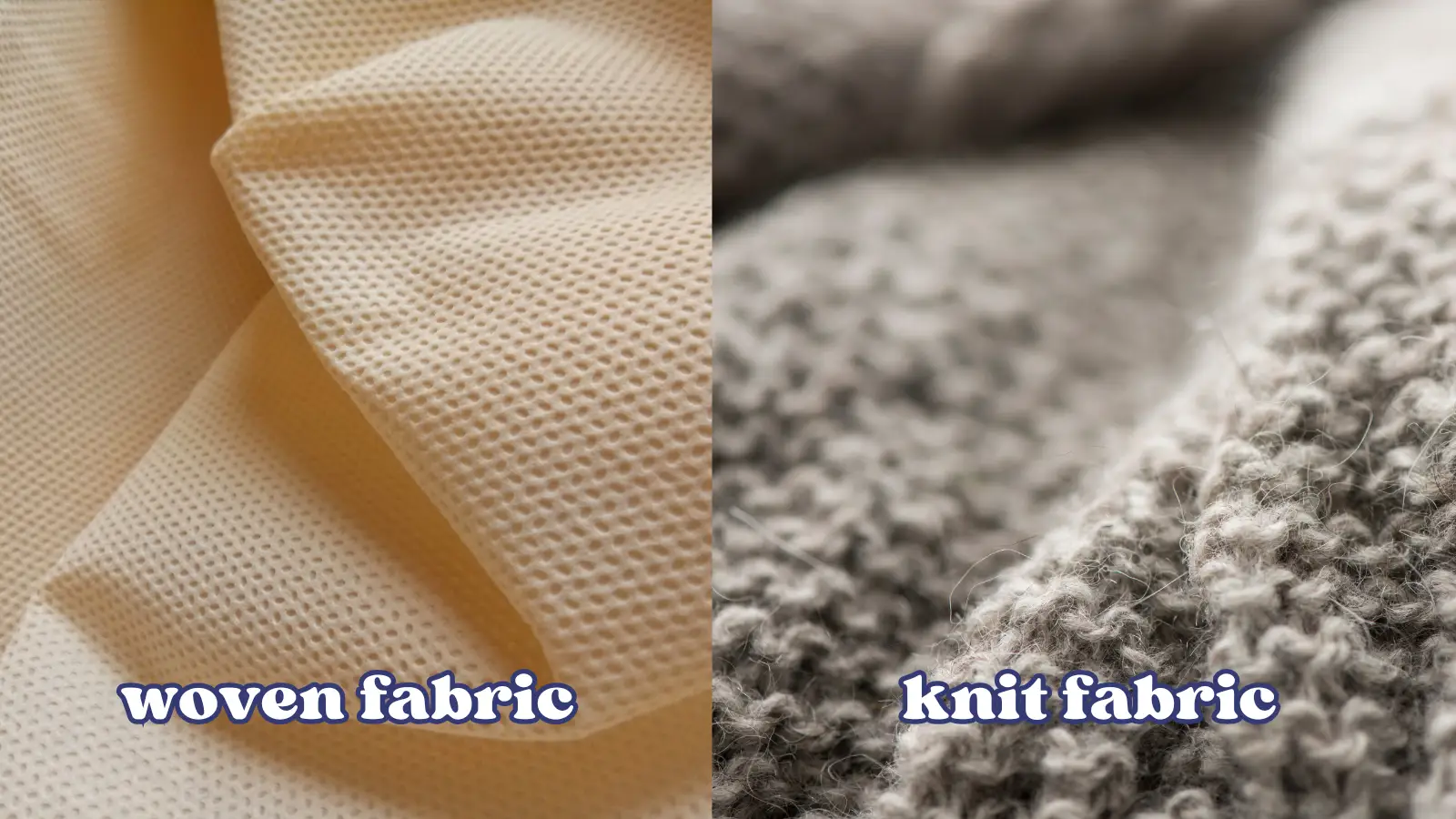
When you choose fabrics, think about how their structure affects how the finished item will look and feel.
Woven Fabrics
Due to their durability and rigidity, woven fabrics are essential for structured garments like button-up shirts, trousers, denim jackets, and fitted dresses.
Because they have minimal stretch, they:
-
Work well for structured pieces that demand a crisp finish
-
Support details like pleats, pockets, collars, cuffs, and waistbands
-
Hold up to heavy use in outerwear, workwear, bags, and upholstery
You’ll also reach for wovens when you sew:
-
Formal attire: blazers, dress pants, skirts, and evening gowns
-
Home décor: curtains, table linens, cushion covers, and quilts
-
Accessories: structured totes, backpacks, pouches, and hats
Knit Fabrics
Thanks to their comfort and flexibility, knit fabrics are the go-to choice for casual wear and activewear.
Their inherent stretch makes them ideal for:
-
Everyday basics: T-shirts, tank tops, knit dresses, cardigans
-
Body-hugging garments: leggings, yoga pants, bike shorts, swimwear
-
Sportswear: running tops, jerseys, compression garments
Knit fabrics also shine in:
-
Layering pieces: hoodies, sweatshirts, pullovers, base layers
-
Loungewear and sleepwear: pajama sets, robes, lounge pants
-
Children’s clothing: onesies, rompers, stretchy pants
Their temperature-regulating properties—especially in wool and performance knits—make them comfortable in many climates, keeping you cozy in the cold and breathable in the heat.
Differences in Care and Maintenance

Woven and knit fabrics each respond differently to washing, drying, and storage. Understanding this helps your handmade garments last longer.
How to Care for Woven Fabrics
Although woven fabrics have a sturdy structure, they need specific care to maintain their quality and appearance.
-
Read the care label: Fiber content (cotton, linen, silk, wool, polyester) matters more than construction for washing temperature.
-
Prewash before sewing: Many wovens—especially cotton and linen—shrink. Wash and dry the fabric as you plan to treat the finished garment.
-
Wash gently: Use cold or warm water and a gentle or normal cycle to limit color fading and shrinkage.
-
Reduce wrinkles: Remove items from the machine promptly and hang or lay flat. Press with low to medium heat, using steam or a pressing cloth when needed.
-
Store properly: Hang structured items like shirts, blazers, and dresses in a cool, dry place. Fold heavier items like jeans to avoid stretching out the waistband.
With the right care, your woven garments can stay crisp and neat for years.
How to Care for Knit Fabrics
To keep your knit fabrics looking their best, you should wash and store them with a bit more attention to stretch and shape.
-
Use cool water: Wash in cold water on a gentle cycle to help prevent stretching, distortion, and fiber damage.
-
Avoid harsh products: Skip bleach, which weakens fibers, and go easy on fabric softener, which can encourage pilling.
-
Support the fabric: Place delicate knits in mesh laundry bags to reduce snagging.
-
Dry with care: Air dry flat on a rack whenever possible, especially for sweaters and heavier knits. If you use a dryer, choose low heat and short cycles.
-
Store smart: Fold heavier knits, like sweaters, instead of hanging them to prevent the shoulders from stretching out. Store in a cool, dry place away from direct sunlight.
A sweater comb or fabric shaver can also help remove light pilling so your knit garments keep looking fresh.
Thoughtful care helps knits maintain their stretch, color, and softness.
Knit Vs Woven: Key Differences At A Glance
Here’s a quick comparison to help you remember what is the difference between woven and knit fabrics:
|
Feature |
Woven Fabrics |
Knit Fabrics |
|---|---|---|
|
Construction |
Interlaced warp and weft threads in a grid |
Interlocking loops from one continuous yarn |
|
Stretch |
Minimal; mostly on the bias |
Moderate to high; widthwise and often lengthwise |
|
Structure |
Crisp, stable, holds shape |
Soft, flexible, conforms to the body |
|
Wrinkling |
Wrinkles easily, needs pressing |
Resists wrinkles, often no ironing needed |
|
Fraying / Curling |
Frays at cut edges |
Edges curl, especially on single jerseys |
|
Durability |
Very strong, resists pilling |
Comfortable but can pill, snag, or run |
|
Sewing Difficulty |
Easier for beginners, stable to handle |
Needs stretch stitches, special needles, more care |
|
Typical Garments |
Shirts, trousers, dresses, jackets, bags, quilts |
T-shirts, hoodies, leggings, underwear, activewear |
|
Fit |
Structured, shaped with seams and darts |
Body-skimming, uses stretch and negative ease |
|
Cost Range |
Wide; many suiting and shirting fabrics cost more |
Wide; basic jerseys can be affordable, some knits pricier |
How To Identify Woven And Knit Fabrics

When you’re standing in a fabric store (or sorting your stash), you can quickly tell whether a fabric is knit or woven with a few simple tests.
Look Closely At The Surface
Hold the fabric up to the light or use a magnifying glass:
-
Knit fabric: You’ll see tiny interlocking loops that look like V-shaped stitches or fine braids.
-
Woven fabric: You’ll see a crisscross grid of straight threads running at right angles, like a tiny basket weave.
Do A Stretch Test
Gently pull the fabric along its width and then along its length:
-
Knit fabric: Stretches easily, especially across the width. Many knits also stretch lengthwise.
-
Woven fabric: Feels firm with almost no give along length or width. It may stretch a little only on the diagonal (bias).
Try The Wrinkle Test
Crumple a corner of the fabric in your hand for a few seconds, then let go:
-
Knit fabric: Springs back with few or no wrinkles.
-
Woven fabric: Tends to hold the creases and stays crumpled until you press it.
Check The Raw Edge
Look at a cut edge of the fabric:
-
Knit fabric: Raw edges may curl but do not usually produce a fringe of loose threads.
-
Woven fabric: Raw edges fray, and you can pull individual threads out to form a fringe.
These quick tests help you confirm what is the difference between woven and knit fabrics when the bolt label is missing or unclear.
Woven Vs Knit Fabrics: Innovations and Trends
As the textile industry evolves, innovations in knit and woven fabrics are transforming clothing and home textiles.
Knit fabrics now feature moisture-wicking technology, boosting activewear's comfort.
Woven fabric advancements focus on eco-friendly textiles using recycled materials.
Smart textiles in both types provide temperature control and health monitoring. Additionally, 3D knitting and digital printing improve sustainability and design options.
Conclusion
Woven and knit fabrics have different structures that affect their characteristics and uses.
Woven fabrics have a strong, grid-like design that doesn't stretch much. This makes them great for structured clothing. Conversely, knit fabrics are stretchy and soft, making them suitable for casual and activewear.
Each type has its own benefits and care requirements. Both are evolving with new ideas and trends, providing various choices for fashion and textile uses.
Learn more fabric knowledge on the Longan Craft Blog, and dive into the fabric world with Longancraft!
FAQs
Which Is Better Woven or Knitted Fabric?
You should choose between woven or knitted fabric based on your needs. If you want durability and structure, go for woven. If comfort and flexibility are priorities, knitted is better. Consider the garment's purpose to decide wisely.
How to Tell if a Fabric Is Knit or Woven?
To identify if a fabric is knit or woven, check its stretch. Knit fabrics stretch easily in all directions, while wovens don't. Look for a looping pattern for knits and crisscross for wovens.
What Are Examples of Knit and Woven Fabrics?
Knit fabrics like jersey and fleece are often used in casual wear, providing comfort and stretch. Woven fabrics such as denim and poplin are often used in structured garments, offering durability and a crisp finish.
Is Knitted or Woven Fabric More Stretchy?
Knitted fabric is definitely more stretchy than woven fabric. It stretches easily in many directions, offering great comfort and flexibility. But the woven fabric is more rigid. It stretches mainly diagonally, making it less accommodating for movement.
0 comments