

When we examine African textiles, we're often confronted with the question of how Ankara and Kente truly differ—a distinction that extends far beyond mere aesthetics. While both fabrics hold cultural weight across the continent, their origins, production techniques, and social functions represent fundamentally different traditions. We'll trace these differences through their historical roots, weaving methods, symbolic meanings, and contemporary applications to understand what sets each fabric apart.
Key Takeaways
- Kente originated in 12th-century Ghana as royal handwoven cloth, while Ankara derives from 19th-century Indonesian batik adapted in West Africa.
- Kente is handwoven on traditional looms using silk or cotton, whereas Ankara is machine-printed using wax-resist dyeing techniques on cotton.
- Kente costs $50+ per yard due to artisanal craftsmanship, while Ankara's mass production makes it affordable at $5-$20 per yard.
- Kente is reserved for ceremonial occasions like weddings and graduations, while Ankara is versatile for everyday clothing and casual wear.
- Kente patterns encode specific cultural meanings and Akan proverbs, whereas Ankara features bold geometric and floral designs emphasizing modern aesthetics.
Ankara Vs. Kente - The Core Differences
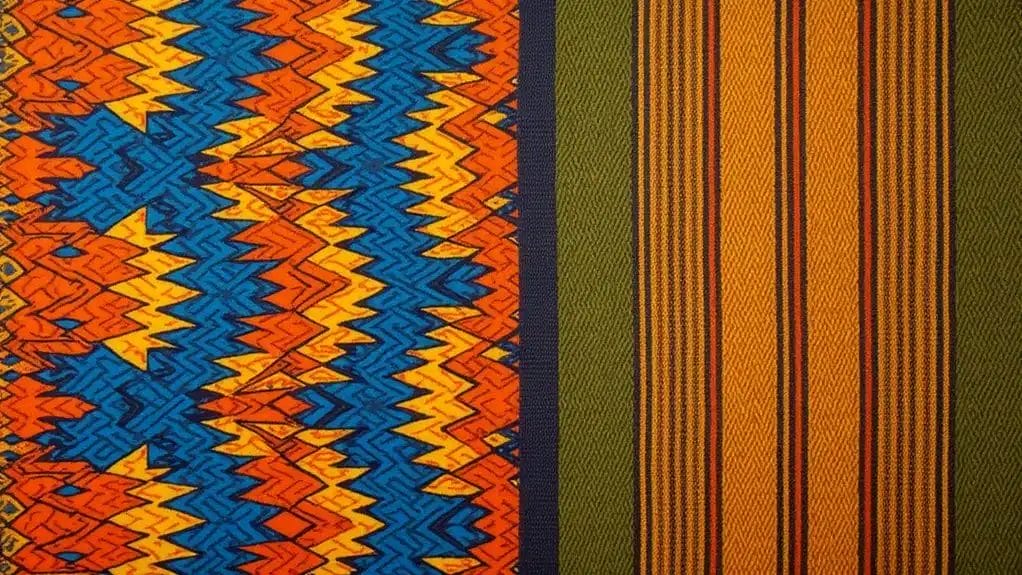
We'll examine the fundamental distinctions between Ankara and Kente by analyzing their geographical origins, manufacturing techniques, cultural applications, and economic positioning in textile markets.
Understanding these core differences reveals how each fabric serves distinct roles in African cultural expression, from Ankara's everyday versatility to Kente's ceremonial significance and premium market value.
Origin and Cultural Roots
Although both fabrics command respect in African fashion today, their origins trace distinctly different historical trajectories.
Kente's origin reaches back to the 12th century among Ghana's Akan people, where it was exclusively woven for royalty. Its cultural significance remains deeply tied to wealth, status, and heritage.
Conversely, Ankara's origin stems from Indonesian batik, gaining popularity in West Africa—particularly among Nigeria's Yoruba people—by the 19th century.
While Kente represents indigenous African weaving traditions with profound symbolic meaning, Ankara reflects cultural adaptation of foreign textile techniques, transforming them into distinctly African expressions through vibrant patterns and contemporary styling.
Production Method: Printed vs. Handwoven
The production methods distinguishing Ankara from Kente represent fundamentally divergent manufacturing philosophies—one rooted in industrial efficiency, the other in artisanal tradition.
Ankara fabric utilizes wax-resist dyeing or digital printing techniques, enabling mass production of vibrant geometric patterns at accessible price points. We'll find its versatility makes it ideal for everyday wear.
Conversely, Kente fabric demands handloom weaving requiring exceptional skill and precision. Each narrow strip embodies specific proverbs and meanings integral to Ghanaian culture.
This labor-intensive craftsmanship results in higher costs but preserves authentic cultural artistry that machine-made textiles can't replicate, distinguishing Kente's ceremonial significance from Ankara's contemporary fashion applications.
Typical Uses and Occasions
When examining how these textiles function within African societies, we discover that Ankara serves primarily as an everyday fabric while Kente maintains its position as ceremonial attire. Ankara's typical uses span casual outings, daily wear, headwraps, and accessories, making it accessible for various occasions. Conversely, Kente's handwoven craftsmanship reserves it for weddings, graduations, and cultural ceremonies where status matters.
| Aspect | Ankara | Kente |
|---|---|---|
| Typical Uses | Everyday clothing, accessories | Ceremonial garments, royal occasions |
| Occasions | Casual events, social gatherings | Weddings, graduations, state functions |
| Accessibility | Affordable, widely available | Exclusive, higher-priced |
Price Range and Market Placement
Since economic accessibility shapes how communities interact with traditional textiles, we must examine the stark price disparities between Ankara and Kente fabrics that reflect their production methods and cultural positioning.
Ankara's price range typically spans $5-$20 per yard for machine-printed variants, positioning it as everyday wear in contemporary markets. Conversely, authentic handwoven Kente commands $50+ per yard due to labor-intensive craftsmanship, while machine-made alternatives occupy a $10-$30 range.
This market placement reflects distinct cultural functions: Ankara dominates casual fashion segments, whereas Kente maintains premium positioning through ceremonial associations and heritage significance.
Origins and Historical Significance
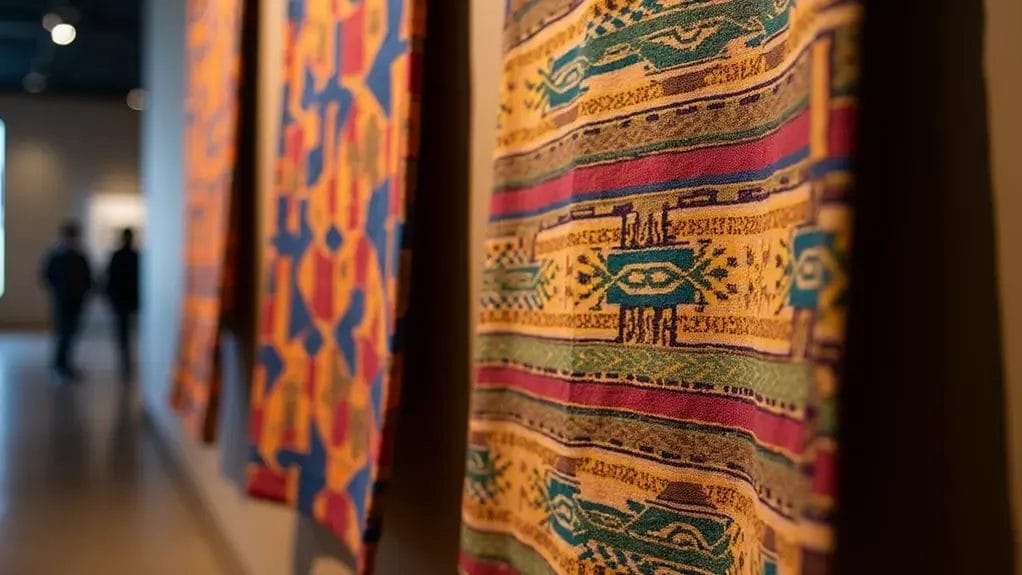
We'll examine how Ankara and Kente emerged from distinctly different historical contexts that shaped their cultural significance.
Ankara's origins trace to Indonesian batik techniques adapted by Dutch manufacturers in the 19th century for West African markets, establishing it as a colonial-era commercial textile.
Conversely, Kente's roots extend to 12th-century Ghana among the Akan people, where it developed as an indigenous craft reserved exclusively for royalty and ceremonial functions within hierarchical Ghanaian societies.
Geographic and Cultural Emergence of Ankara
Although Ankara fabric has become synonymous with African fashion and cultural expression, its origins trace back to Indonesian batik techniques that Dutch colonizers appropriated during the 19th century.
The fabric's geographic emergence follows a distinct trajectory:
- Dutch manufacturers mass-produced wax prints specifically targeting African markets
- West African communities, particularly Nigeria's Yoruba people, embraced these textiles
- Ankara transformed from perceived lower-class material into cultural identity marker
- Contemporary usage spans clothing, accessories, and home décor
Unlike Ghanaian culture and history's authentic Kente weaving traditions, Ankara represents a complex intercultural exchange that Africans ultimately reclaimed and redefined through creative adaptation.
Historical Significance of Kente in Ghanaian Societies
While Ankara's story reflects colonial commerce and cultural adaptation, Kente's narrative emerges from centuries of indigenous Ghanaian tradition and craftsmanship.
We trace Kente's origins to the Akan people in the 12th century, where it became intrinsically linked to Ashanti and Ewe royalty. Each kente pattern carries specific cultural meanings—gold signifies status and glory, while black represents spiritual strength.
This handwoven fabric wasn't merely decorative; it functioned as a visual language communicating wealth, social standing, and cultural pride.
Reserved for ceremonies and special occasions, Kente serves as a tangible expression of Ghanaian heritage and identity.
How Ankara and Kente Fabric Are Made — Step by Step
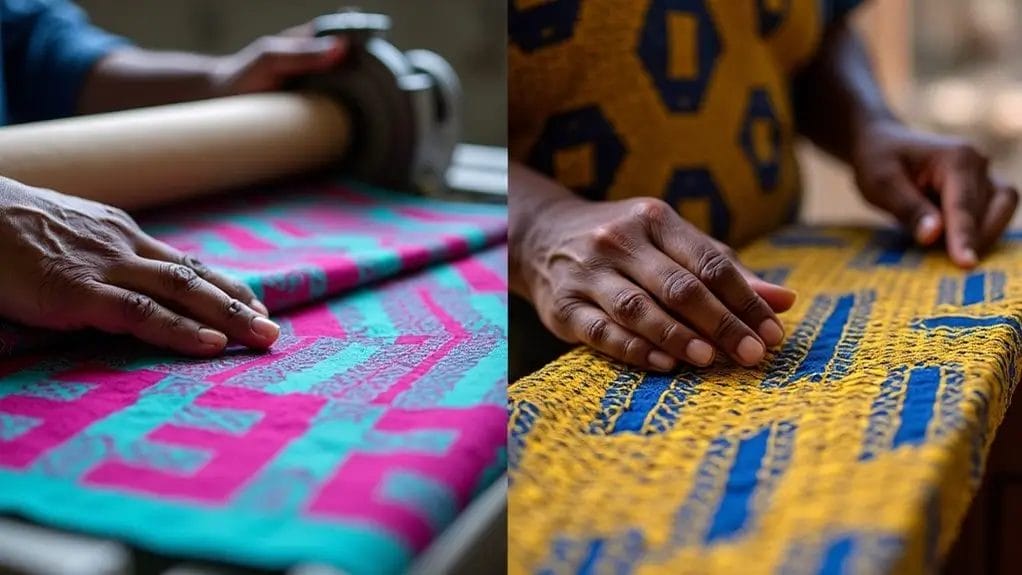
We'll now examine the distinct production methods that give Ankara and Kente their characteristic appearances and textures.
Ankara's creation relies on wax-resist dyeing techniques—ranging from traditional batik applications to contemporary industrial printing processes—that produce its signature bold, multicolored patterns.
In contrast, Kente's fabrication involves the labor-intensive art of handloom weaving, where artisans interlace threads into narrow strips that are subsequently sewn together to form complete cloth pieces with culturally significant designs.
Ankara Printing Processes
The Ankara printing process begins with a traditional wax-resist dyeing technique that creates the fabric's characteristic vibrant patterns and multicolored designs.
We'll explore how these ankara printing processes have evolved:
- Wax Application: Artisans draw designs on fabric using molten wax, creating protected areas that resist dye penetration.
- Multiple Dyeing Rounds: The wax-resist dyeing technique involves successive dye baths, with waxed sections retaining their original colors.
- Modern Digital Printing: Industrial advancements now enable mass production through computerized methods.
- Accessibility: Contemporary techniques have made Ankara more affordable while maintaining its distinctive aesthetic appeal.
Kente Weaving Process
Unlike Ankara's relatively quick printing methods, Kente cloth demands intensive handweaving that can span weeks or months depending on design complexity.
We find that skilled artisans first establish the loom framework, carefully threading warp yarns to enable strip weaving. The weaving process produces narrow fabric strips measuring 4 to 8 inches wide, each displaying intricate geometric patterns and symbolic color combinations.
Once artisans complete multiple strips, they meticulously sew them together, aligning patterns to create larger textile pieces. This labor-intensive craftsmanship distinguishes authentic Kente from mass-produced alternatives, preserving Ghana's traditional textile heritage through meticulous handwork.
Design, Motifs and Symbolism
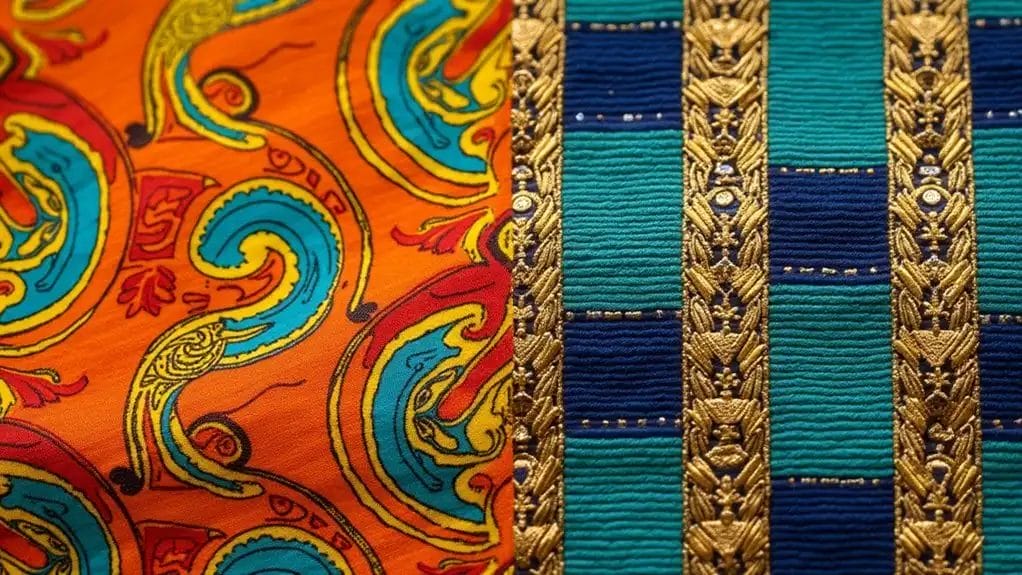
When we examine Ankara and Kente fabrics, we find that their visual languages serve fundamentally different purposes—Ankara celebrates contemporary African aesthetics through bold geometric shapes, florals, and animal motifs, while Kente's intricate patterns encode specific cultural narratives rooted in Akan proverbs and social values.
The symbolism diverges greatly: Kente's color palette carries prescribed meanings (gold signifies status and glory, for example), whereas Ankara's hues prioritize visual impact and modern expression.
We'll now explore how these design philosophies manifest in their typical motifs, pattern systems, and chromatic choices.
Typical Ankara Motifs and Their Inspirations
Ankara fabrics showcase motifs that draw inspiration from Africa's rich cultural tapestry, natural landscapes, and everyday experiences.
These distinctive patterns emerge through wax-resist dyeing techniques, creating multicolored visual representations of African heritage.
Each fabric tells unique stories through its design elements:
- Geometric shapes and abstract patterns reflecting mathematical precision in traditional African art
- Animal motifs including birds (symbolizing freedom) and elephants (representing strength)
- Floral designs inspired by indigenous flora and agricultural traditions
- Traditional symbols conveying prosperity, community values, and social narratives
The vibrant color palette carries specific meanings—red signifies strength and passion, while yellow represents fertility and wealth, making each piece personally significant.
Kente Patterns and the Meanings of Common Motifs
While Ankara fabrics employ wax-resist dyeing to create their distinctive patterns, Kente cloth achieves its symbolic depth through intricate geometric weaving that transforms each strip into a visual repository of Ghanaian philosophy and cultural memory.
We find that each Kente pattern carries deliberate meaning: "Eban" signifies safety, while "Fawohodie" represents independence. The color palette operates symbolically—gold denotes wealth, black conveys spiritual maturity, and green indicates renewal.
Through labor-intensive craftsmanship, weavers expertly sew narrow strips together, creating vibrant combinations that communicate cultural identity through these meticulously encoded geometric designs.
Color Symbolism in Kente vs. Ankara Color Choices
Though both fabrics captivate with their vivid aesthetics, Kente and Ankara employ fundamentally different approaches to color selection that reflect their distinct cultural functions.
Kente's color symbolism operates through deliberate, standardized meanings—gold signifies status and glory, blue represents harmony, green denotes growth, and black conveys spiritual strength. These colors weave narratives tied to proverbs and cultural events.
Conversely, Ankara prioritizes vibrant designs emphasizing visual impact over symbolic depth:
- Geometric patterns showcase personal storytelling
- Floral motifs reflect contemporary themes
- Abstract designs emphasize aesthetic contrast
- Political narratives guide pattern selection
While Kente meticulously preserves traditional color symbolism, Ankara celebrates bold chromatic experimentation.
Characteristics of Ankara and Kente Fabric
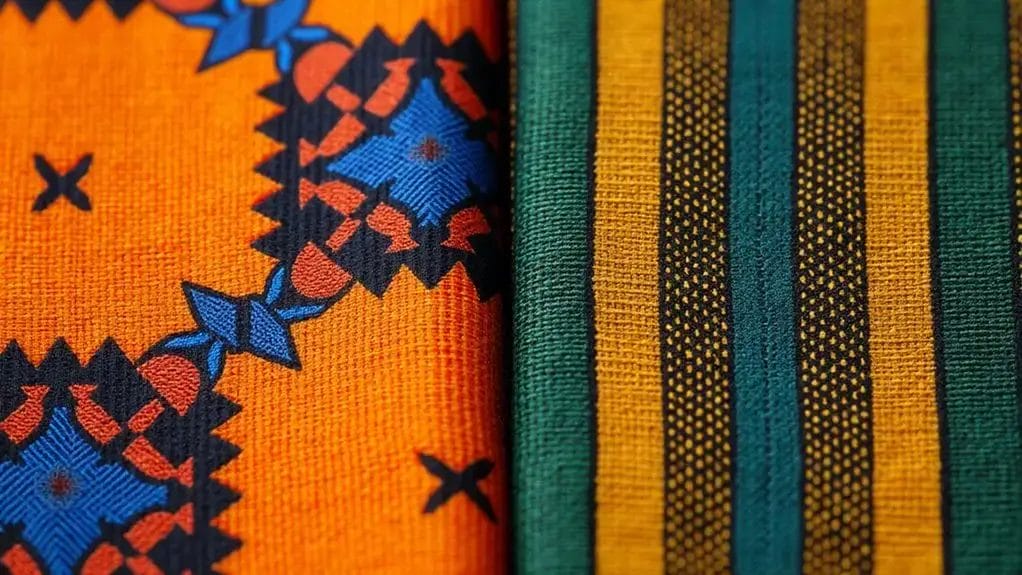
We'll now examine the physical properties that distinguish Ankara from Kente beyond their visual aesthetics.
Understanding material composition, durability, and maintenance requirements enables us to make informed decisions about fabric selection for specific applications.
These characteristics directly influence how each textile performs in everyday wear, ceremonial contexts, and long-term preservation.
Material Composition and Feel
The material composition of Ankara and Kente fabrics fundamentally shapes their tactile qualities and functional applications in African textile traditions.
We'll examine how their distinct fabric composition creates contrasting textures:
- Ankara utilizes cotton with wax-resist dyeing techniques, producing smooth, crisp fabric suitable for mass production and everyday wear.
- Kente employs handwoven silk, cotton, or rayon threads on traditional looms, creating luxurious texture through labor-intensive craftsmanship.
- Ankara's manufacturing process prioritizes affordability and accessibility for contemporary fashion.
- Kente's artisanal methods preserve cultural authenticity while conveying wealth and status.
These compositional differences directly influence each fabric's aesthetic appeal and cultural significance.
Durability, Drape and Performance
When evaluating fabric performance in African textiles, durability and drape characteristics reveal fundamental differences between Ankara and Kente construction methods.
We'll find that Ankara's longevity depends greatly on production techniques—hand-printed versions outlast cheaper machine-printed alternatives. Its cotton composition provides lightweight breathability, making it ideal for everyday wear in hot climates.
Conversely, Kente's handwoven nature minimizes fraying while delivering superior durability through meticulous craftsmanship. The fabric's silk, cotton, or rayon composition creates a luxurious drape preferred for formal occasions.
Both textiles perform well across various climates, though Ankara excels in casual outdoor settings while Kente dominates ceremonial contexts.
Colorfastness
Beyond physical durability and drape, colorfastness represents another critical performance metric that distinguishes these two African textiles.
We've observed that Ankara's wax-resist dyeing process delivers excellent color retention when properly maintained, while handwoven Kente's vibrancy depends considerably on thread quality and craftsmanship.
To preserve both fabrics' colorfastness, we recommend:
- Washing in cold water with mild detergents
- Avoiding prolonged direct sunlight exposure
- Recognizing that industrial Ankara production yields variable colorfastness levels
- Understanding that authentic handwoven Kente typically excels in long-lasting color vibrancy due to superior craftsmanship and materials
Washing, Storage and Maintenance
Proper maintenance protocols for Ankara and Kente fabrics diverge considerably due to their fundamentally different construction methods and cultural contexts.
We recommend machine-washing Ankara in cold water with mild detergents to preserve its vibrant wax prints, while Kente requires hand-washing with gentle soap and shade-drying to protect its handwoven craftsmanship.
For storage, we advise keeping Ankara in cool, dry locations; Kente should be carefully folded or rolled to prevent pattern damage.
During ironing, both fabrics necessitate low heat settings, though Kente benefits from protective cloth coverage.
How to Choose: Use Cases and Styling Tips
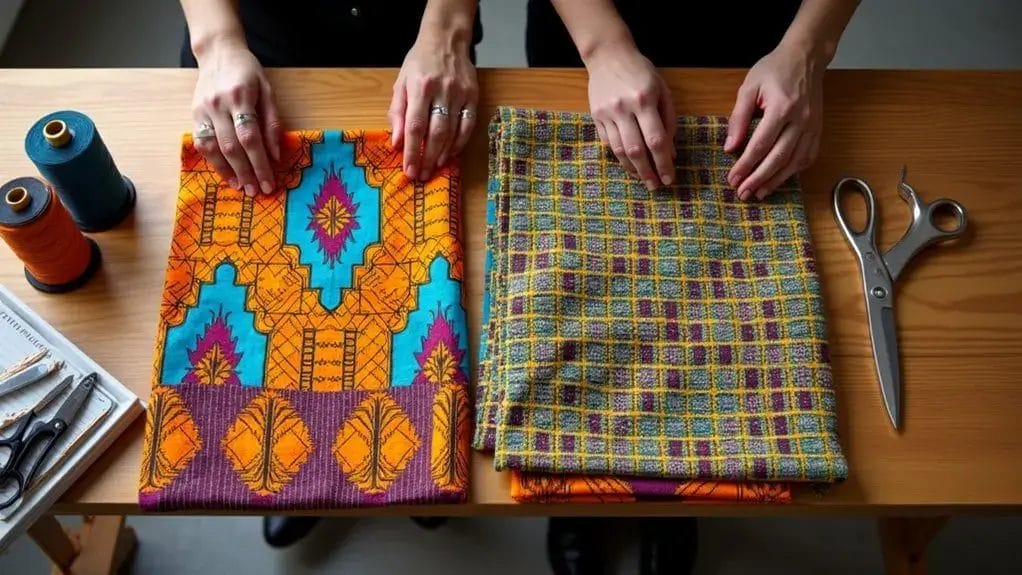
When selecting between Ankara and Kente fabrics, we must consider the distinction between everyday wear and ceremonial applications. Ankara's versatility suits casual garments while Kente's cultural significance makes it appropriate for formal occasions.
We can explore innovative styling approaches that combine both fabrics in single outfits, balancing Ankara's bold prints with Kente's intricate symbolism to create contemporary fashion statements.
Beyond clothing, we'll examine how these textiles extend into accessories and home décor, where their distinct aesthetic qualities serve different functional and decorative purposes.
Everyday Wear vs. Ceremonial Wear
While both fabrics showcase African textile artistry, their practical applications diverge sharply along the everyday-ceremonial spectrum.
We observe that ankara's affordability and versatility position it as our go-to choice for daily wear, while kente's cultural weight reserves it for significant occasions.
Practical Application Guidelines:
- Ankara: We recommend it for casual dresses, headwraps, and contemporary mixed outfits suitable for social gatherings and everyday activities.
- Kente: We select this fabric for weddings, graduations, and cultural ceremonies where its symbolic color meanings—gold representing status, black signifying strength—enhance the event's gravitas and our cultural expression.
Mixing Ankara Fabric and Kente Fabric in Outfits
As contemporary African fashion evolves beyond traditional boundaries, we're witnessing a sophisticated fusion practice where ankara and kente fabrics combine to create statement pieces that honor heritage while embracing modern aesthetics.
We recommend establishing ankara as the dominant textile—typically for dresses or tops—while incorporating kente strategically through accessories like belts or headwraps.
This approach maintains visual equilibrium between ankara's bold prints and kente's structured geometry. Color coordination proves essential; selecting complementary hues prevents pattern competition.
For ceremonial occasions, layering kente over ankara garments achieves regal presentation, whereas casual styling permits experimental cultural expression through intentional fabric juxtaposition.
Accessory Uses and Home Décor
Beyond garment construction, both Ankara and Kente fabrics offer remarkable versatility in accessory design and interior styling, though their applications diverge according to aesthetic purpose and cultural context.
Ankara Applications:
- We can incorporate vibrant Ankara prints into everyday accessories like bags, headwraps, and jewelry for casual-to-formal occasions.
- For home décor, we'll use Ankara in cushion covers, table runners, and wall art to inject cultural dynamism.
Kente Applications:
- We reserve Kente's symbolic patterns for ceremonial accessories including stoles, ties, and commemorative shawls.
- In interior spaces, we employ Kente in elegant curtains and statement pieces emphasizing cultural heritage.
Authenticity and Pricing
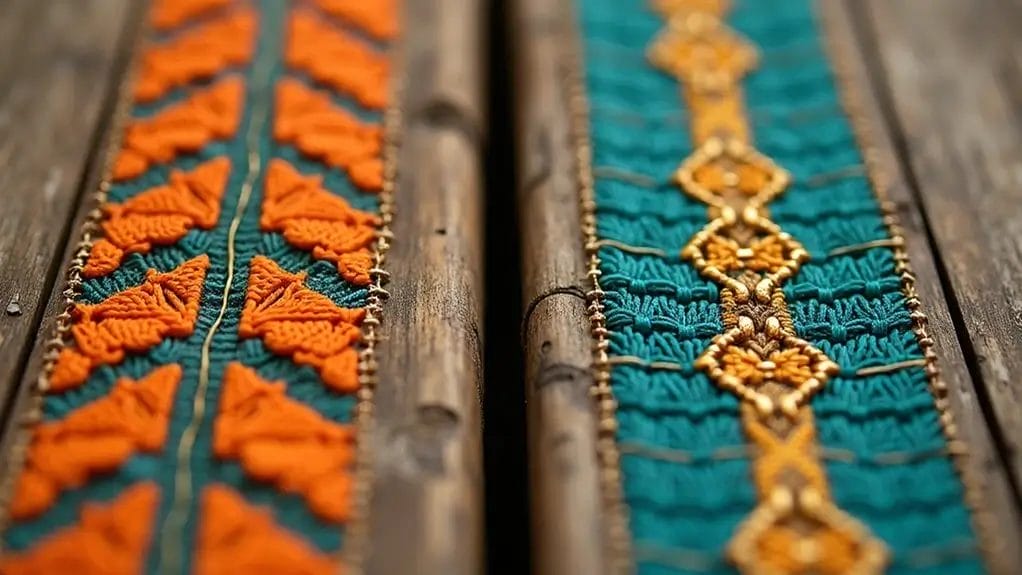
When we examine authenticity in African textiles, we must distinguish between handwoven Kente—identifiable by its characteristic narrow strips, tight weave structure, and visible warp and weft threads—and machine-made replicas that lack these artisanal markers.
For Ankara fabric, quality assessment focuses on the wax-resist application method, color vibrancy, and fabric weight, with authentic African wax prints exhibiting superior crackle effects and double-sided printing compared to lower-grade imitations.
How to Spot Authentic Handwoven Kente vs. Machine-made Imitations
Distinguishing authentic handwoven Kente from machine-made imitations requires examining several technical characteristics that reveal the fabric's production method.
We can identify genuine Kente through these key indicators:
- Strip construction: Authentic handwoven Kente consists of narrow strips (typically 4 inches wide) sewn together, while machine-made imitations produce continuous fabric without seams.
- Pattern irregularities: Handwoven pieces display slight variations and imperfections reflecting human craftsmanship, whereas mass-produced versions show perfect uniformity.
- Textile texture: Genuine Kente exhibits richer, more complex textures from silk, cotton, or rayon threads.
- Pricing differential: Authentic pieces command notably higher prices reflecting labor-intensive weaving processes.
Ankara Fabric Quality Markers and Grading
Quality assessment of Ankara fabric relies on several technical markers that directly influence both authenticity and market value. We identify authentic wax-resist techniques through crisp, vibrant designs that distinguish premium african textile from inferior alternatives. The production method fundamentally determines quality hierarchies.
| Quality Marker | Indicator |
|---|---|
| Print Method | Hand-printed vs. machine-printed |
| Design Clarity | Crisp edges vs. faded appearance |
| Color Complexity | Multiple hues increase value |
| Material Composition | Pure cotton vs. mixed fibers |
| Price Range | $5-$15 (standard) to $30+ (premium) |
We've observed that pattern intricacy correlates with pricing, while material verification prevents purchasing compromised fabrics misrepresented as authentic Ankara.
Modern Trends and Design Innovation
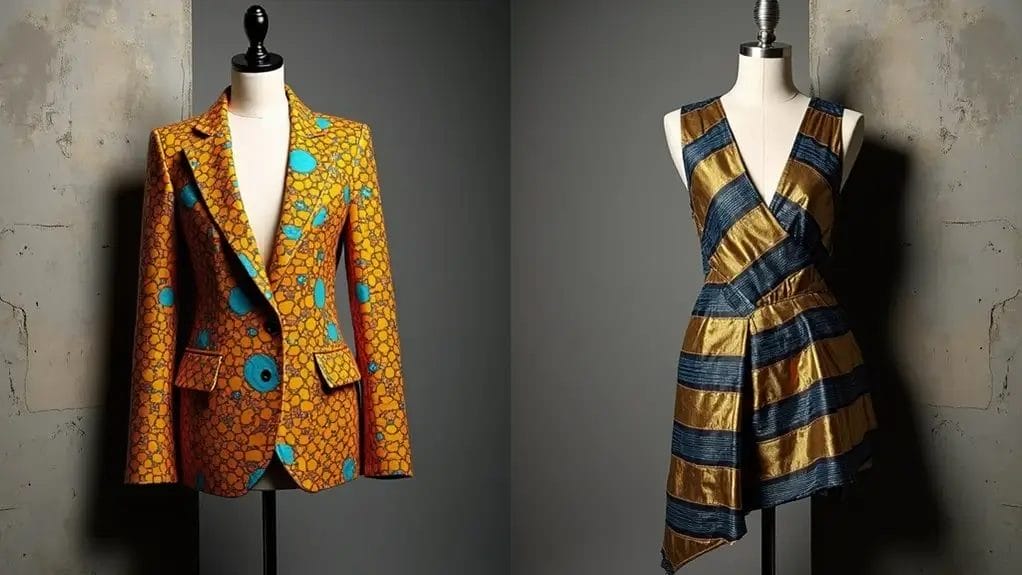
We're witnessing contemporary designers create innovative fusion pieces that integrate both Ankara's bold wax prints and Kente's symbolic weaving patterns into unified garments that honor both traditions.
Beyond fashion, these textiles have expanded into interior design applications—from upholstered furniture to architectural accents—and product design ranging from tech accessories to luxury goods packaging.
This evolution raises critical questions about ethical sourcing practices and ensuring that increased commercial demand directly supports the artisan communities who've preserved these textile-making traditions across generations.
Contemporary Designers Blending Ankara and Kente Fabric
While traditional applications of Ankara and Kente fabrics have historically remained distinct, contemporary designers are now merging these textiles in innovative ways that reshape African fashion's global presence.
This ankara kente fusion manifests through:
- Limited-edition collaborations between traditional artisans and modern designers preserving cultural authenticity
- Geometric Ankara patterns integrated with Kente's symbolic weaving techniques
- African fashion shows showcasing hybrid garments that celebrate dual heritage
These innovations create garments resonating with cultural identity while appealing to contemporary aesthetic sensibilities, bridging heritage preservation with modern design innovation.
Interior Design, Product Design and Non-apparel Uses
Beyond fashion runways, Ankara and Kente fabrics have transformed contemporary interior and product design landscapes through strategic applications that preserve cultural significance while meeting modern aesthetic demands.
We're observing Ankara's vibrant patterns integrated into curtains, cushions, and upholstery, creating bold visual statements in residential spaces. Kente's intricate symbolism now appears in artisan handbags and home accessories, where handwoven craftsmanship commands premium positioning.
Designers leverage Ankara's versatility for table runners and wall art, maximizing its eye-catching motifs.
Current trends showcase fabric fusion approaches, blending traditional African aesthetics with contemporary design principles to create culturally grounded yet commercially viable furnishings.
Ethical Sourcing and Supporting Artisan Communities
The commercial expansion of Ankara and Kente into interior design and product markets has generated increased scrutiny of supply chain ethics, prompting designers and retailers to implement transparent sourcing frameworks that directly benefit artisan communities.
We're witnessing critical shifts in production paradigms:
- Fair trade certifications ensuring equitable compensation for handcrafted textiles
- Designer-artisan collaborations preserving traditional weaving techniques through intergenerational knowledge transfer
- Responsible material sourcing incorporating organic and recycled fabrics
- Consumer demand driving market growth for authentically produced, culturally significant textiles
These ethical sourcing initiatives sustain livelihoods while maintaining cultural integrity and reducing environmental impact across artisan communities.
Frequently Asked Questions
What Is the Difference Between Kente and Ankara?
We'll find that Kente's hand-woven strips carry specific cultural meanings and higher costs, while Ankara's mass-produced wax prints offer vibrant, affordable everyday wear. Kente traditionally signifies royalty; Ankara represents contemporary African fashion trends.
What Is Ankara Called in Ghana?
In Ghana, we typically call Ankara "African Print" or "Dutch Wax Print," referencing its mass-production origins. You'll find that many Ghanaians use various local names for this vibrant fabric, depending on regional preferences and styles.
Who Is Allowed to Wear Kente Cloth?
While Kente cloth was historically reserved for Ghanaian royalty, we now see it worn by anyone wishing to honor African heritage. However, we must respect its cultural significance by understanding the symbolism behind specific patterns and colors.
Conclusion
We've explored how Ankara and Kente represent distinct textile traditions within African culture. While Kente's handwoven construction and ceremonial significance reflect Ghana's Akan heritage, Ankara's machine-printed versatility demonstrates textile globalization across West Africa. Understanding these differences—from production techniques to symbolic meaning—enables us to appreciate each fabric's cultural authenticity and appropriate contexts for use. Whether selecting textiles for formal ceremonies or everyday wear, we're now equipped to make informed choices that honor their respective traditions and craftsmanship.
0 comments