

You've likely worn pique fabric without realizing its distinctive characteristics. This specialized textile features raised parallel cords and geometric patterns created through a unique double-cloth weave construction. While cotton pique dominates the market with its 2x2 or 4x4 waffle-like texture, the fabric's versatility extends beyond its traditional applications. Understanding pique's technical specifications and manufacturing processes will enhance your fabric selection decisions for both performance and aesthetic requirements.
Key Takeaways
- Pique fabric is a textured textile with raised parallel cords and geometric patterns, typically made from cotton or cotton-polyester blends.
- The fabric features a distinctive three-dimensional honeycomb-like surface created through specialized weaving techniques using multiple yarn sets.
- Common varieties include cotton pique, polyester pique, and blended pique.
- Pique offers excellent breathability and moisture-wicking properties, making it ideal for polo shirts, sportswear, and casual clothing.
- The fabric maintains its shape well and is highly durable, thanks to its structured weave and double-cloth construction methods.
What Is Pique Fabric?
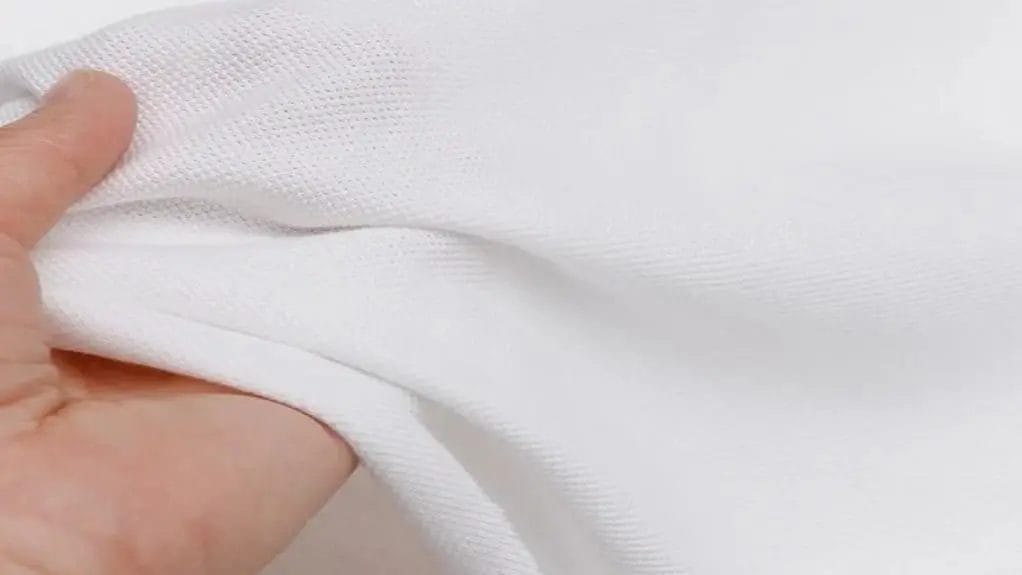
Pique fabric is a woven or knitted textile characterized by raised parallel cords, geometric patterns, or waffle-like textures created through a double cloth construction method.
You'll find this durable fabric features a distinctive three-dimensional surface texture achieved by using multiple yarn sets and specialized weaving or knitting techniques.
The structured textile commonly incorporates cotton fibers woven in a dobby or jacquard pattern, resulting in the signature textured surface that's both decorative and functional.
Definition of Pique Fabric
The distinctive raised pattern of woven textiles known as pique fabric features a characteristic ribbed or waffle-like texture created through a double cloth weaving technique.
This unique weave structure utilizes two sets of yarn - one for the face and another for the backing. The lengthwise and crosswise yarns interlace to form raised geometric patterns while creating a durable knit construction.
Key Characteristics of Pique
Known for its distinctive honeycomb-like surface, high-quality pique fabric exhibits a raised geometric pattern with pronounced ribbing that's created by the interlacing of two distinct yarn layers.
You'll find its textured surface offers exceptional breathability through strategically placed air pockets.
The double-layer construction makes pique remarkably durable, while its moisture-wicking properties help regulate temperature and manage perspiration effectively.
How Pique Fabric Is Made

You'll find pique fabric primarily constructed from cotton yarns, though polyester and cotton-poly blends are also common in modern manufacturing.
The distinctive raised pattern emerges through a double cloth weaving technique, where two layers of fabric are interwoven to create the characteristic waffle or honeycomb texture.
The warp yarns are typically set at 60-80 ends per inch while the filling yarns are interlaced at varying tensions to produce the dimensional surface effect.
Materials Used in Pique Fabric
Manufacturing pique fabric requires specific materials strategically woven to create its distinctive raised pattern.
You'll find that cotton-polyester blends dominate commercial production, while premium varieties use pure organic cotton or recycled polyester.
- 100% cotton pique offers superior breathability and moisture absorption.
- Cotton-polyester blends typically use 60/40 or 65/35 ratios for durability.
- Recycled polyester pique reduces environmental impact while maintaining textile integrity.
Weaving Techniques for Pique
The creation of pique fabric relies on three distinct weaving techniques: double cloth, warp-faced, and weft-faced constructions.
You'll find the warp and weft yarns interlace on the loom to form raised geometric patterns.
The double cloth weave structure creates two separate layers that merge at specific points, while the faced techniques emphasize either vertical or horizontal threads for textural depth.
Different Types of Pique Fabric
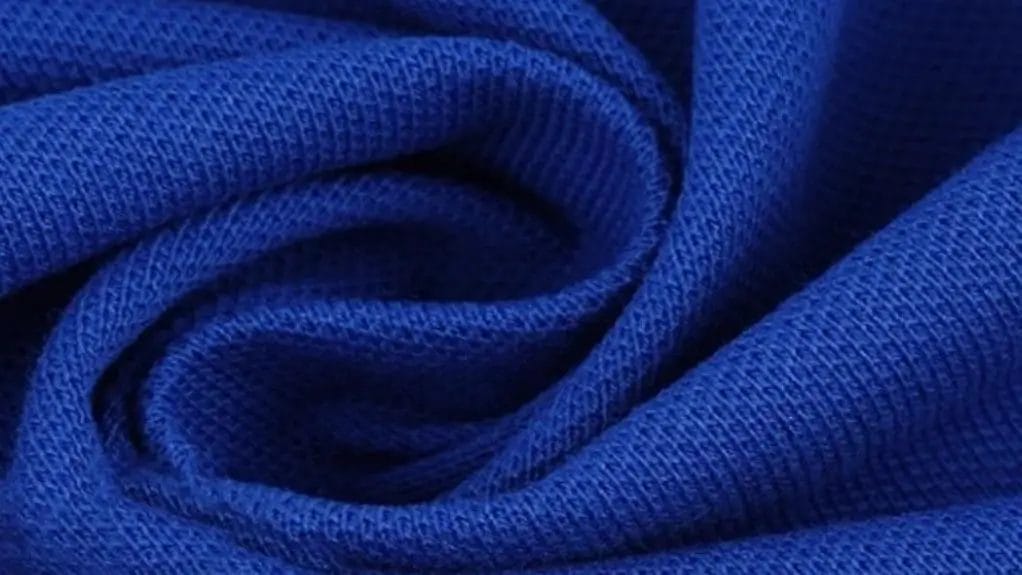
When selecting pique fabric, you'll encounter several distinct variations, including single-fiber options like 100% cotton pique and 100% polyester pique, as well as synthetic blends that combine multiple fiber types.
Baby pique features a finer, more delicate weave with smaller diamonds measuring 2-3mm, while micro pique utilizes an even tighter weave construction with minimal surface texture.
The fabric weight typically ranges from 5-7 ounces per square yard, with cotton pique being the heaviest and micro pique the lightest of these variations.
Cotton Pique
Among pique fabric varieties, cotton pique stands as the most widely produced and versatile option, characterized by its distinctive raised parallel cords or geometric patterns woven into the material.
Made from 100% cotton fibers, this textile offers superior breathability.
Features lengthwise wales ranging from 2-4mm in width, creating its signature dimensional texture.
Maintains structural integrity through a double-layer weave construction with high thread count (40s-60s).
Polyester Pique
Polyester pique fabric emerged as a synthetic alternative to cotton pique in the 1960s, featuring a lightweight construction with enhanced durability and moisture-wicking properties.
The synthetic polyester fibers create a quick-drying surface that keeps you cool and dry during physical activity.
You'll find this material commonly used in activewear, as it maintains its shape and resists pilling even after repeated washing cycles.
Blended Pique
Since manufacturers sought to combine the best properties of different fibers, blended pique fabrics emerged as a versatile compromise between natural and synthetic materials.
You'll find most high-quality blends feature cotton and polyester in varying ratios, typically 60/40 or 65/35.
- Cotton-polyester blend offers superior moisture-wicking while maintaining breathability.
- Fiber composition helps reduce shrinkage and wrinkles common in pure cotton pique.
- Enhanced durability compared to 100% polyester pique while retaining softness.
Baby Pique
Baby pique stands out as the lightest weight variant in the pique fabric family, featuring a distinctive honeycomb weave pattern that's tighter and more refined than standard pique.
This knit fabric achieves its stretchy characteristics through a specialized textile industry process.
You'll find this lightweight pique material is used extensively in infant clothing, summer garments, and athletic wear where breathability is paramount.
Micro Pique
Micro pique represents a modern evolution in knit textile engineering, featuring an ultra-fine honeycomb texture with approximately 100-150 microfibers per square inch.
This lightweight type of pique fabric made with advanced knitting technology offers superior moisture-wicking properties.
- Creates a subtle waffle-like texture that's less pronounced than traditional pique weaves.
- Delivers enhanced breathability and stretch for sportswear and activewear applications.
- Maintains durability while being 30-40% lighter than standard pique constructions.
Jacquard Pique
While standard pique relies on basic geometric patterns, jacquard pique elevates the textile through intricate multi-layered designs woven directly into the fabric's structure.
You'll find this sophisticated woven fabric incorporates complex jacquard weaving and knitting techniques to create unique texture patterns. The distinctive raised motifs can include florals, paisley, or custom designs, offering more decorative possibilities than conventional pique fabric.
Stretch Pique
To meet modern performance demands, stretch pique incorporates elastane or spandex fibers into the traditional waffle-weave structure. This knit construction adds a bit of stretch while maintaining the classic texture.
The modified composition enhances garment drape and comfort in athletic apparel.
- Contains 3-8% elastane content for ideal 4-way stretch.
- Features moisture-wicking properties perfect for performance wear.
- Maintains dimensional stability with recovery up to 98% after stretching.
Double Pique
Double pique fabric features two distinct woven layers joined by interconnecting yarns, creating a heavier weight textile with enhanced insulation properties.
You'll find this durable pique variation made using a double-knit construction that reduces wrinkle tendency. The structured surface makes it ideal for premium polo shirts, offering superior drape and shape retention compared to standard single-layer pique fabrics.
Uses of Pique Fabric in Apparel
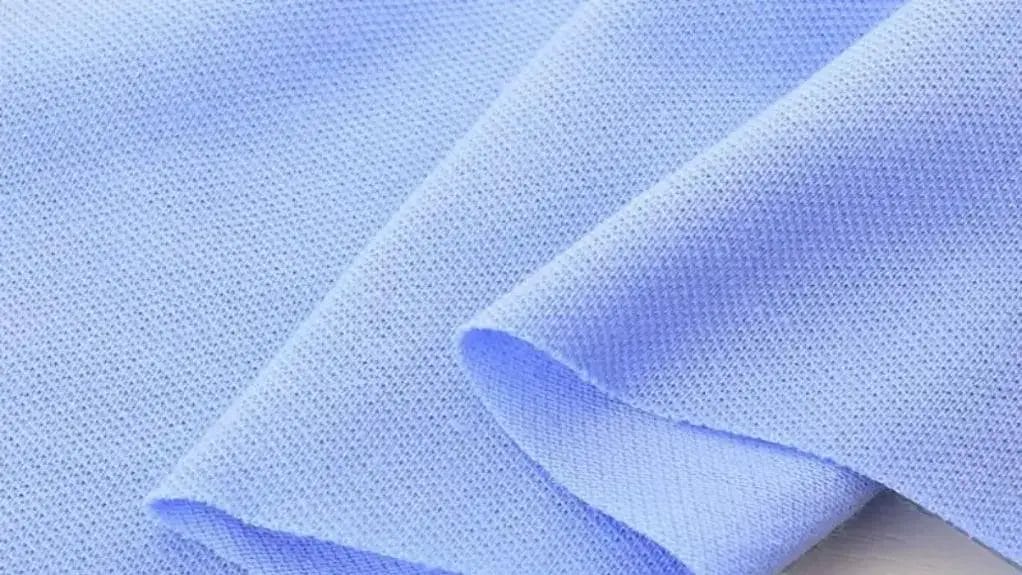
Pique fabric's textured weave makes it a top choice for performance-oriented garments like polo shirts and golf apparel.
You'll find this versatile textile implemented across a spectrum of casual wear, from A-line dresses with 2x2 basket weave pique to children's playwear utilizing single-sided honeycomb pique constructions.
The fabric's structured surface texture and breathability at 160-200 GSM make it particularly suitable for athletic jackets and tennis wear, where the raised geometric patterns provide enhanced ventilation during activity.
Polo Shirts
The iconic polo shirt stands as the most recognizable application of cotton pique fabric in modern apparel.
You'll find pique polos everywhere from casual wear to athletic uniforms, prized for their distinctive waffle-weave texture and breathability.
- Double-mercerized cotton pique creates a luxurious sheen on premium golf shirts.
- Standard polo construction features 2-3 buttons with ribbed collar and cuffs.
- Moisture-wicking pique mesh variations offer enhanced ventilation for performance polos.
Casual Dresses
While primarily associated with sportswear, cotton pique has emerged as an excellent choice for casual summer dresses due to its structural integrity and textural interest.
You'll find pique in A-line tennis dresses and skirt designs where the fabric's raised geometric weave provides structure while remaining cool and comfortable.
The material's natural body helps maintain shape in casual dresses without requiring heavy interfacing.
Sporty Jackets
Modern athletic jackets frequently incorporate double-knit pique fabric due to its exceptional moisture-wicking properties and structural stability.
The heavyweight pique, with its waffle-like texture, offers prime performance for sports apparel.
- Honeycomb pattern construction enhances ventilation zones in high-intensity workout areas.
- Double-layer pique provides superior thermal regulation in variable conditions.
- Strategic mesh panels utilize lightweight pique variants for targeted breathability zones.
Children's Clothing
Durability meets comfort in pique fabric's widespread use for children's garments.
Since pique fabric is a knit construction, it provides excellent flexibility for active kids while maintaining shape retention. You'll find it in garments like polo shirts, dresses, and shorts across various colors and weights, making it ideal for playtime and school uniforms.
Its moisture-wicking properties suit tennis lessons and outdoor activities.
Golf and Tennis Wear
Since the 1930s, pique fabric has dominated golf and tennis apparel due to its exceptional moisture management and breathability.
You'll find pique options ideal for polo shirts and performance wear when you need to stand for hours on the court or course. The waffle-weave texture provides visual interest but also enhances ventilation.
- Double-knit pique construction offers 4-way stretch with 92% polyester/8% spandex blend.
- Mercerized cotton pique maintains crisp appearance after multiple wash cycles.
- Bird's eye pique pattern creates micro-ventilation channels for superior thermal regulation.
Frequently Asked Questions
Can Pique Fabric Be Used for Winter Clothing?
You'll find pique's waffle-textured knit construction isn't suitable for cold weather, as its raised geometric patterns and cotton composition don't provide adequate thermal insulation for winter temperatures.
Is Pique Fabric Suitable for People With Sensitive Skin?
You'll find pique's raised geometric texture can irritate sensitive skin, especially when the weft yarns create prominent ridges. Consider mercerized cotton pique variants, which offer smoother surface contact against epidermis.
How Do You Remove Stains From Pique Fabric?
Pre-treat with enzyme-based detergent, blot stains gently with cold water, launder in warm water (30°C), and air-dry. For oil stains, use spot treatment with cornstarch before washing your piqué garment.
Does Pique Fabric Shrink in the Washing Machine?
You'll find pique fabric can shrink up to 3-5% when machine washed, particularly in hot water. Pre-wash your pique garments in cold water and tumble dry on low to minimize dimensional changes.
What's the Average Cost per Yard of Pique Fabric?
You'll find pique fabric typically costs between $8-25 per yard, with cotton pique averaging $12/yard and higher-end polyester-cotton blends reaching $20/yard at specialty textile merchants.
Conclusion
You'll find pique fabric's distinctive raised geometric patterns and moisture-wicking properties make it an invaluable textile across multiple applications. Whether you're working with double-knit cotton pique or lightweight polyester pique with 4-way stretch, this versatile weave construction offers superior breathability and durability. Its waffle-textured surface and dimensional stability continue to make it the preferred choice for performance wear and classic garments.
0 comments