

You've likely encountered peachskin fabric in your wardrobe without realizing its unique composition. This specialized polyester textile features a brushed surface that creates an ultra-soft hand feel similar to a peach's fuzzy exterior. While its primary makeup consists of synthetic fibers, peachskin's engineered construction delivers a specific combination of durability, drape, and moisture-wicking properties that sets it apart from standard polyester materials. Let's examine why this versatile fabric has gained prominence in both apparel and home goods.
Key Takeaways
- Peachskin fabric is a woven polyester material featuring a soft, brushed surface texture that resembles the fuzz on a peach.
- The fabric offers excellent drape, wrinkle resistance, and moisture-wicking properties while maintaining a lightweight, comfortable feel.
- Manufactured using polyester microfibers in a tight twill weave, peachskin undergoes specialized brushing to create its signature texture.
- Common uses include clothing like blouses and dresses, as well as home decor items such as window treatments and bedding.
- Peachskin is low maintenance, machine washable, and maintains its softness through repeated washing when properly cared for.
What Is Peachskin Fabric?
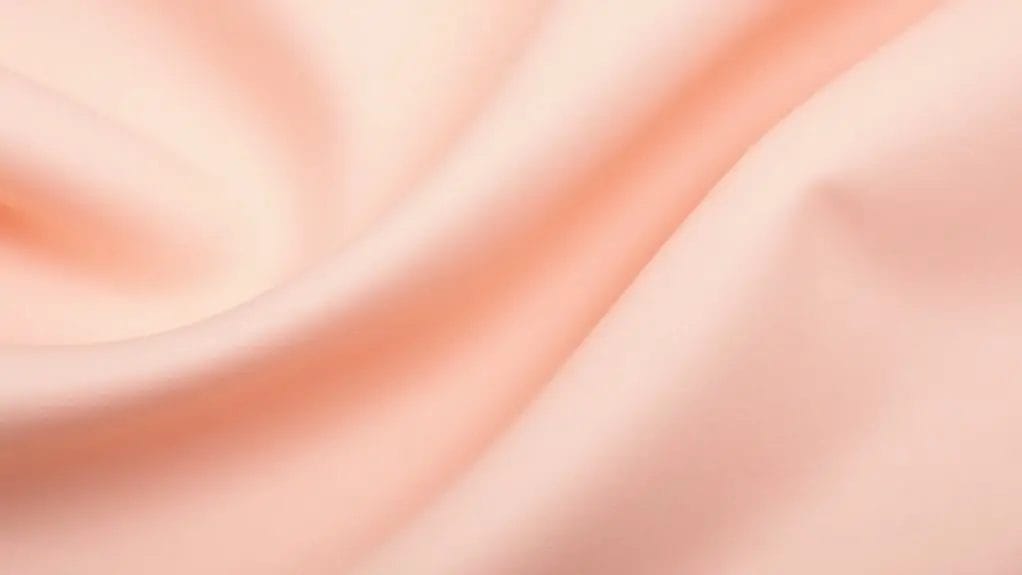
Peachskin fabric is a woven polyester material with a brushed surface that creates an ultra-soft, suede-like texture resembling the fuzzy exterior of a peach.
You'll find this synthetic fabric offers excellent drape, wrinkle resistance, and durability, making it popular for garments and home textiles.
While peachskin's advantages include its affordability and low maintenance requirements, its main drawbacks are its tendency to generate static electricity and potential pilling after repeated washing.
Definition of Peachskin Fabric
A synthetic textile commonly known as peachskin fabric features an exceptionally soft, brushed surface that mimics the delicate fuzz found on peach fruit.
This polyester-based material undergoes specialized mechanical brushing to create its signature fuzzy texture.
You'll find that peachskin fabric's tightly woven synthetic fibers produce a lightweight, drapable soft fabric with a subtle sheen and matte finish.
Advantages and Disadvantages of Peach Skin Fabric
Several key advantages and disadvantages characterize peachskin fabric's performance in garment applications.
You'll find this material offers excellent moisture absorption and breathable properties, while maintaining a soft and smooth texture.
It's also naturally antistatic, reducing clingy garments.
However, while it's water-resistant, it's not fully waterproof, which can limit its use in extreme weather conditions.
How Peachskin Fabric Is Made

The manufacturing process for peachskin fabric begins with polyester microfiber filaments that are woven into a fine, tight twill weave.
The polyester fibers are interlaced using a water jet loom to create the distinctive diagonal pattern.
After weaving, the textile undergoes a specialized brushing process on both sides, which breaks up the fiber ends to create its signature soft, fuzzy surface texture.
Characteristics of Peachskin Fabric

You'll find that peachskin fabric's signature brushed surface creates an exceptionally soft, suede-like texture that mimics the fuzzy exterior of a ripe peach.
The fabric's polyester microfilament construction produces a lightweight material that allows air circulation while maintaining its structural integrity.
Its tightly woven fibers form a natural barrier against moisture, making it water-resistant without requiring additional chemical treatments.
Soft and Smooth Texture
Running your fingers across peachskin fabric reveals its defining characteristic - an extraordinarily soft, suede-like texture that mimics the delicate fuzz of a ripe peach.
The fabric's plush texture comes from a specialized brushing process that creates a tactile microfiber surface.
You'll notice it feels smooth and waxy on one side while maintaining a softer texture with a fuzzy peach-like finish on the other.
Lightweight and Breathable
Despite its plush texture, peachskin fabric maintains remarkable breathability due to its microfiber construction and specialized weaving techniques.
You'll find the fabric's fine denier fibers create a lightweight structure that allows air to flow freely through the material.
The unique construction gives peachskin excellent drape while maintaining breathability, making it comfortable for both fitted and flowing garments.
Water-Resistant
One of peachskin fabric's notable characteristics is its inherent water-resistant properties, achieved through the tight weaving of its microfibers and specialized finishing treatments.
- The fabric's polyurethane coating enhances its three-proof protection against water, oil, and dirt.
- You'll find the fabric can be used effectively in outdoor gear and rainwear.
- The water-resistant finish makes the fabric perfect for umbrellas and light jackets.
- Your garments will maintain their protective qualities through multiple washes.
Common Types of Peach Skin Fabric
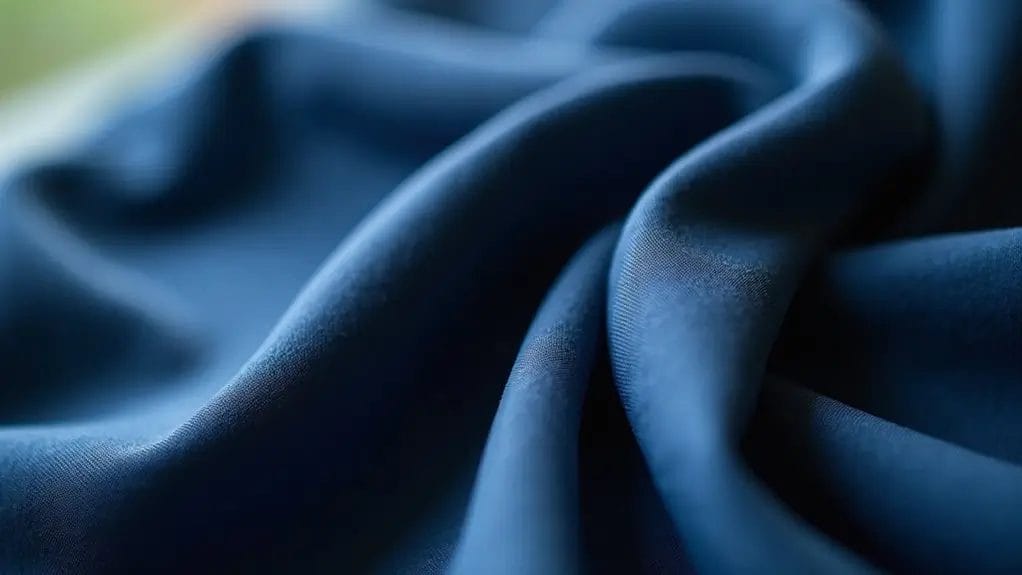
You'll find three primary variations of peachskin fabric in today's textile market: matte, glossy, and brushed.
Matte peachskin features microfiber polyester with a flat, non-reflective surface finish, while glossy peachskin incorporates specialized finishing techniques to create a subtle sheen.
Brushed peachskin undergoes additional mechanical processing to raise surface fibers, resulting in an ultra-soft, velvety texture that most closely mimics the fuzzy exterior of an actual peach.
Matte Peachskin
Matte peachskin represents the most common and versatile variant of peach skin fabric, featuring a micro-brushed surface that creates its signature soft, velvety finish.
- You'll find its surface has minimal sheen compared to other varieties.
- The fabric is soft yet durable due to its tightly woven polyester construction.
- It accepts matte colors exceptionally well during the dyeing process.
- The surface of the fabric maintains its texture through repeated washings.
Glossy Peachskin
While traditional peachskin embraces a matte appearance, glossy peachskin introduces a distinct sheen to the fabric's characteristic soft hand.
You'll find this variant incorporates a satin weave structure, creating a fabric that has a high-luster surface similar to velvet.
The glossy peach skin maintains its signature fuzzy texture beneath the sheen, offering a unique blend of luminosity and softness.
Brushed Peachskin
Brushed peachskin represents the most common variant of this textile, featuring a mechanical brushing process that raises surface fibers to create its signature ultra-soft hand feel.
- Surface fibers are carefully abraded using specialized rotating brushes.
- The raised fibers create a velvety texture similar to a peach's fuzzy skin.
- Multiple passes with fine-grade brushes, similar to sandpaper, guarantee even fiber distribution.
- The controlled brushing process maintains fabric integrity while maximizing softness.
Difference Between Peach Skin and Other Fabrics

When comparing peachskin to artificial suede, you'll notice that peachskin has a more uniform, directional nap while artificial suede exhibits a denser, multidirectional pile structure.
Unlike velvet's raised loops and cut fibers that create a deep pile surface, peachskin achieves its soft texture through a brushing process that raises a subtle layer of microfibers.
The key distinction lies in the fabric construction: peachskin typically uses polyester or polyester blends in a plain or twill weave before brushing, while both artificial suede and velvet require more complex manufacturing processes to create their distinctive textures.
Peachskin vs Artificial Suede
Both peachskin and artificial suede fabrics feature soft, brushed surfaces, but their construction and properties differ markedly.
- Peachskin fabric is made from polyester microfibers woven in a plain weave, then brushed to create its signature texture.
- Artificial suede uses split fibers in a non-woven matrix to mimic natural suede.
- Raw material density in peachskin is lighter than artificial suede's compressed structure.
- While similar to peach skin, suede fabric offers greater durability and resistance to pilling.
Peachskin vs Velvet
Peachskin and velvet represent two distinct approaches to creating soft, tactile fabrics.
While peach skin cloth features a brushed polyester surface with fine, short fibers, skin velvet has a deeper pile with longer, dense fibers standing perpendicular to the base.
You'll find that both fabrics excel in solid colors, but peach skin fabric is perfect for draping, while velvet offers more structural weight.
Common Uses of Peachskin Fabric

Peachskin fabric's versatility allows you to incorporate it into apparel ranging from blouses and dresses to lightweight jackets, where its soft drape and matte finish excel.
You'll find this durable textile enhancing home décor applications, particularly in window treatments, bedding, and upholstered accent pieces due to its wrinkle-resistant properties.
The fabric's medium weight and smooth surface make it an ideal choice for DIY crafting projects, including decorative pillows, table linens, and accessories that require a professional-looking finish.
Apparel and Fashion
Anyone familiar with fashion design recognizes the versatility of this synthetic microfiber in modern apparel.
You'll find peachskin fabric in garments that require elegant drape and soft texture.
- Flowing blouse designs with precise seam finishes
- A-line skirts that maintain shape while moving
- Evening wear requiring matte surface appearance
- Professional apparel needing wrinkle resistance
Home Textiles and Upholstery
Beyond its success in fashion, peachskin's durability and softness make it an excellent choice for home furnishings.
You'll find this tightly woven fabric in high-end bedding collections, where its silky texture enhances sleep comfort.
The fabric's dense weave structure also makes it ideal for curtains, as it provides natural light filtering.
In home décor, peachskin's draping quality adds sophistication to upholstered accent pieces.
Craft and DIY Projects
Creative crafters find peachskin fabric's versatility ideal for numerous DIY applications, from custom handbags to decorative throw pillows.
- Sewing with peachskin fabric produces professional-looking shirts due to its high flow and drape characteristics.
- Its smooth surface readily accepts dye sublimation printing for custom designs.
- You'll find it perfect for embossed craft projects requiring texture variation.
- The fabric's stability makes it excellent for structured accessories like totes and cases.
Caring for Peachskin Fabric

To maintain your peachskin fabric's signature soft texture, you'll need to machine wash it in cold water with mild detergent and tumble dry on low heat.
When faced with stains, treat them immediately by gently blotting the area with a clean cloth and appropriate stain remover suitable for polyester-based fabrics.
Store your peachskin garments flat or hung in a cool, dry space away from direct sunlight to prevent color fading and maintain the fabric's distinctive brushed finish.
Cleaning and Washing Tips
Since peachskin fabric consists of tightly woven polyester microfibers, you'll need to follow specific care instructions to maintain its signature soft texture and durability.
- Wash this fabric in cold water on a gentle cycle to avoid any puckering and protect vibrant colors.
- Turn your garment inside out before washing to prevent surface abrasion.
- Use mild detergent without bleach or fabric softeners.
- Air dry or tumble dry on low heat to maintain the peachskin fabric's microfiber structure.
Stain Removal Methods
Dealing with stains on peachskin fabric requires quick action and specific techniques due to the material's tightly woven microfiber construction.
For water-based stains, blot the area with a clean white cloth and use a mild soap solution.
Oil-based stains need a specialized solvent safe for nylon and superfine plain weave fabrics.
Always test cleaning solutions on an inconspicuous area first to prevent printing damage.
Storage Recommendations
Proper storage plays a major role in maintaining peachskin fabric's signature soft texture and durability.
To preserve your flame retardant peach skin material's graceful flow and weft integrity:
- Store flat in a cool, dry place away from direct sunlight.
- Avoid folding to prevent permanent creases that affect sew quality.
- Use acid-free tissue paper between layers when stacking.
- Keep in breathable cotton bags rather than plastic containers.
Frequently Asked Questions
Is Peachskin Fabric Environmentally Sustainable?
You'll find peachskin fabric isn't very sustainable since it's typically made from petroleum-based polyester fibers through chemical processing, though some manufacturers now offer recycled polyester versions to reduce environmental impact.
How Much Does Peachskin Fabric Typically Cost per Yard?
You'll find peachskin fabric ranging from $6-15 per yard for standard polyester versions, while premium blends with natural fibers can cost $15-30 per yard at retail fabric stores.
Can People With Sensitive Skin Safely Wear Peachskin Fabric?
You'll find peachskin fabric's polyester microfibers generally safe for sensitive skin, as they're smooth and non-irritating. However, test a small fabric sample first since individual sensitivities can vary.
Which Countries Are the Largest Manufacturers of Peachskin Fabric?
You'll find China, South Korea, and Taiwan dominate peachskin fabric manufacturing, utilizing advanced microfiber polyester technology. Japan and India also contribute considerably to global peachskin textile production.
Does Peachskin Fabric Shrink After the First Wash?
You'll experience minimal shrinkage with peachskin fabric due to its polyester microfiber composition. Pre-washing in cold water and tumble-drying on low heat will help maintain your garment's dimensional stability.
Conclusion
You'll find peachskin fabric to be a technical marvel in textile engineering, combining 100% polyester microfibers with specialized brushing techniques to achieve its signature hand-feel. Its 75-150 GSM weight range, moisture-wicking properties, and balanced fiber density make it an ideal choice for both apparel and decorative applications. When properly maintained at recommended washing temperatures of 30°C, it'll retain its distinctive characteristics through multiple wear cycles.
0 comments