

You've likely encountered dobby fabric without realizing it's unique characteristics. This specialized textile, produced on a dobby loom, features small geometric patterns woven directly into the material's structure. While it's often confused with jacquard, dobby fabric maintains its own distinct identity through less complex designs and a specialized manufacturing process. Understanding its properties and applications will help you make informed decisions for your next textile project.
Key Takeaways
- Dobby fabric is a textured woven material featuring small geometric patterns created using a specialized dobby loom attachment.
- The fabric can be made from various fibers including cotton, polyester, and silk, making it versatile for different applications.
- Common uses include dress shirts, home textiles, and lightweight apparel due to its durability and breathable nature.
- Dobby patterns are simpler than jacquard designs, typically featuring dots or small figures woven directly into the fabric.
- The fabric requires specific care based on fiber content and should be handled carefully to preserve its distinctive textural patterns.
What Is Dobby Fabric?
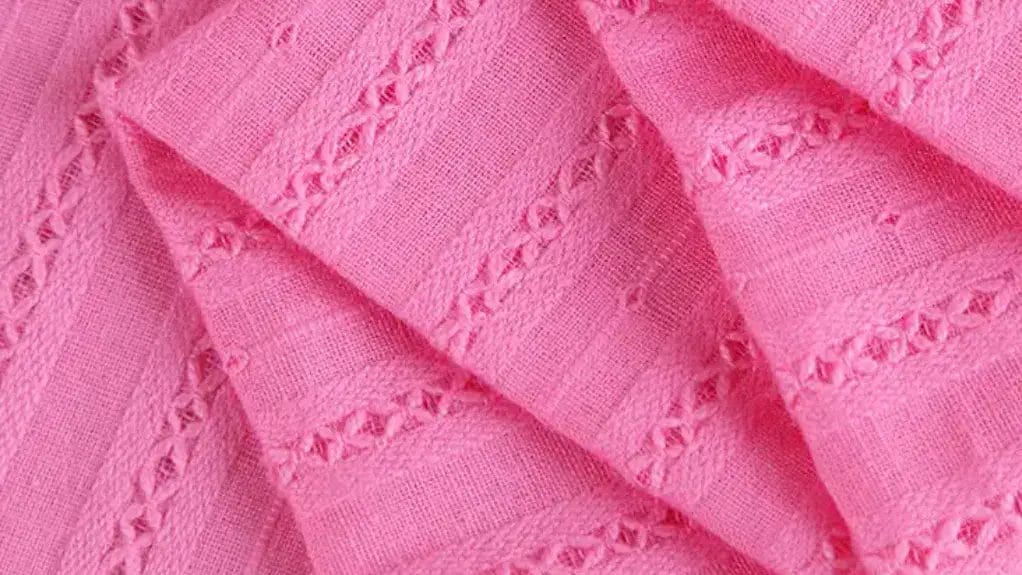
Dobby fabric is a textured woven material created using a specialized dobby loom attachment that controls individual warp yarns to produce small geometric patterns and designs.
You'll find that dobby weaves are less complex than jacquard patterns, typically featuring small-scale repeating designs like dots, diamonds, or simple florals within the fabric's surface.
While jacquard looms can create intricate, large-scale designs using hundreds of warp threads, dobby mechanisms are limited to smaller patterns using 20-40 harnesses, making them more efficient for simpler decorative textiles.
Definition and Basic Concept of Dobby Fabric
A specialized woven textile, dobby fabric features small geometric patterns created through a unique mechanical weaving process that employs a dobby loom attachment.
The dobby loom uses a series of preset pattern bars that control individual warp threads, allowing them to be raised or lowered independently. This mechanical control creates intricate designs like dots, small figures, and textural patterns woven directly into the fabric's structure.
Unlike jacquard weaving, dobby patterns are smaller and less complex, typically repeating in a regular sequence across the fabric's surface.
You'll find these distinctive weaves commonly in shirting, home textiles, and lightweight apparel.
Difference Between Dobby Fabric and Jacquard Fabric
While both dobby and jacquard fabrics involve specialized weaving techniques, their fundamental differences lie in pattern complexity and mechanical operation.
Dobby weaves create smaller, geometric patterns using a limited number of harnesses, typically 24 or fewer. You'll find these designs repeating in regular intervals across the fabric.
In contrast, jacquard weaving allows for intricate, large-scale patterns by controlling individual warp yarns through a complex mechanical or electronic system. The jacquard weaving process can produce elaborate florals, landscapes, and pictorial designs.
This distinction makes dobby patterns simpler to produce and more economical, while jacquard fabrics command higher prices due to their complexity.
How Is Dobby Fabric Made?
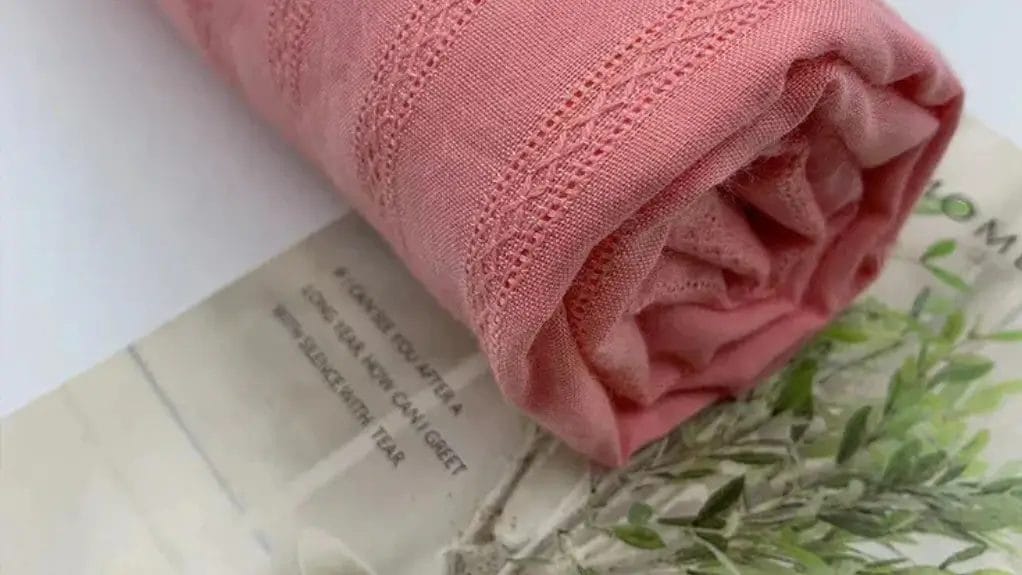
In dobby fabric production, you'll begin by precisely aligning individual warp threads on a beam and threading them through heddles controlled by the dobby head mechanism.
The specialized dobby loom manipulates these warp threads using pre-programmed mechanical or electronic patterns, allowing up to 24 harnesses to create intricate geometric designs and textural effects as the weft threads interlace.
After weaving, the fabric undergoes specific finishing processes like mercerization, calendering, or heat-setting to enhance its dimensional stability and surface characteristics.
Preparing the Warp Threads
Before dobby weaving can begin, each warp thread must be carefully arranged through individual heddles on the loom's harness system.
You'll need to position the warp yarns parallel to each other, maintaining consistent tension across all threads. The preparation process requires precise threading through heddle eyes according to your dobby pattern draft. Each warp thread's position directly impacts the final fabric design.
You must guarantee proper spacing between threads to prevent tangling and maintain clean shed formation.
This setup phase is vital - any mistakes in warp preparation will show as flaws in your finished dobby fabric.
Weaving Process Using Dobby Weaves
Once the warp threads are properly configured, the dobby weaving process begins by coordinating the mechanical harnesses that control individual warp thread movement.
The dobby attachment operates the lifting mechanism that creates geometric patterns in the fabric.
- You'll notice the dobby head selecting specific harnesses to lift designated warp threads, creating precise sheds
- The weft yarn passes through these sheds, interlacing with raised and lowered warp threads
- The reed beats the weft into place, securing each line of the pattern
- Your fabric's design emerges as the process repeats, with harnesses lifting in programmed sequences
Creating Unique Patterns
Dobby patterns emerge through precise mechanical control of up to 24 harnesses, each manipulating separate groups of warp threads.
You'll find these harnesses create small, woven geometric designs that repeat across the fabric's surface. When you examine dobby fabric closely, you'll notice unique patterns formed by the intersection of raised and lowered threads.
The dobby mechanism allows you to program specific harness combinations, resulting in distinctive geometric patterns like diamonds, dots, and small figures.
Unlike jacquard weaving, dobby patterns are smaller and less complex, but they're more intricate than basic weaves.
Finishing Processes Affecting Texture and Appearance
The finishing processes transform raw dobby-woven fabric into a refined textile product with enhanced performance and aesthetic qualities.
These critical steps determine the final texture, durability, and appearance of your fabric.
- Chemical treatments strengthen fibers and add wrinkle resistance while preserving the dobby pattern's intricate details.
- Heat-setting stabilizes synthetic components and locks in dimensional stability.
- Mechanical finishing like calendering smooths the surface while maintaining the characteristic raised design.
- Specialized softeners enhance drape and hand-feel without compromising the fabric's structural integrity.
These treatments guarantee your dobby fabric maintains its distinctive texture through repeated use and care.
Types of Dobby Fabric
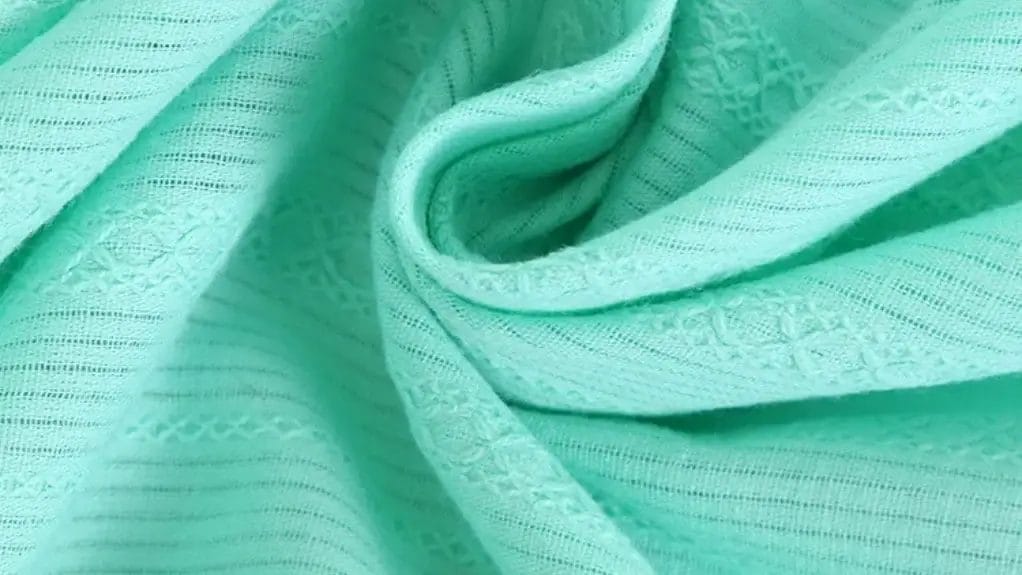
You'll find several distinct fiber compositions in dobby fabrics, each offering specific performance characteristics suited to different end-uses.
Cotton dobby delivers exceptional breathability and moisture-wicking properties, while polyester dobby provides superior durability and wrinkle resistance that's ideal for technical applications.
Silk dobby creates elegant surface effects with natural luster, and blended dobby fabrics combine multiple fiber properties to achieve enhanced performance characteristics like comfort with strength or drape with durability.
Cotton Dobby: Lightweight and Breathable
Popular among garment manufacturers, cotton dobby fabric features a distinctive woven pattern created by manipulating individual cotton warp threads during production.
You'll find this lightweight textile used extensively in fashion and home goods due to its superior breathability and unique textural qualities.
- The cotton dobby weave creates small geometric patterns that enhance fabric durability.
- Natural cotton fibers allow moisture to evaporate quickly, making it ideal for summer clothing.
- The specialized dobby weaving process results in a fabric weight of 3-5 oz per square yard.
- Air pockets formed by the raised patterns improve ventilation while maintaining structural integrity.
Polyester Dobby: Durable and Easy-Care
While cotton dobby offers natural breathability, polyester dobby fabric emerges as a powerhouse for durability and low maintenance.
You'll find that polyester fibers create a robust dobby weave that's highly resistant to wrinkles, stretching, and everyday wear. The synthetic composition means you won't need to iron it frequently, as the fabric maintains its shape even after multiple washes.
This fabric's molecular structure makes it stain-resistant and colorfast, ensuring your garments stay vibrant longer.
The polyester dobby's tight weave construction also provides enhanced tear strength and dimensional stability, making it ideal for activewear, luggage, and professional uniforms.
Silk Dobby: Luxurious Texture and Sheen
Known for its incomparable elegance, silk dobby fabric represents the pinnacle of luxury in textile manufacturing. The intricate weaving process creates distinctive raised patterns on the smooth and luxurious silk surface, enhancing both texture and appearance.
- You'll find the dobby weave elevates natural silk's inherent luster by creating subtle geometric patterns.
- The fabric's surface features delicate raised designs that catch light differently than the base weave.
- Manufacturing requires specialized dobby looms equipped with precise tension control for silk handling.
- Each dobby pattern maintains silk's characteristic drape while adding dimensional interest.
Blended Dobby Fabrics: Combining Benefits of Different Fibers
Manufacturers combine multiple fiber types in dobby weaves to create blended fabrics that maximize performance and aesthetic qualities.
You'll find popular blends like cotton-polyester dobby that merge natural comfort with synthetic durability. Cotton-spandex combinations offer stretch while maintaining the fabric's distinctive geometric patterns.
Polyester-rayon dobby blends give you the best of both worlds - the strength of synthetic fiber with rayon's silky drape.
These hybrid textiles enhance versatility in both fashion and technical applications. Common ratios include 65/35 and 80/20 fiber compositions, allowing mills to fine-tune characteristics like moisture-wicking, wrinkle resistance, and fabric weight for specific end uses.
Advantages of Dobby Fabric
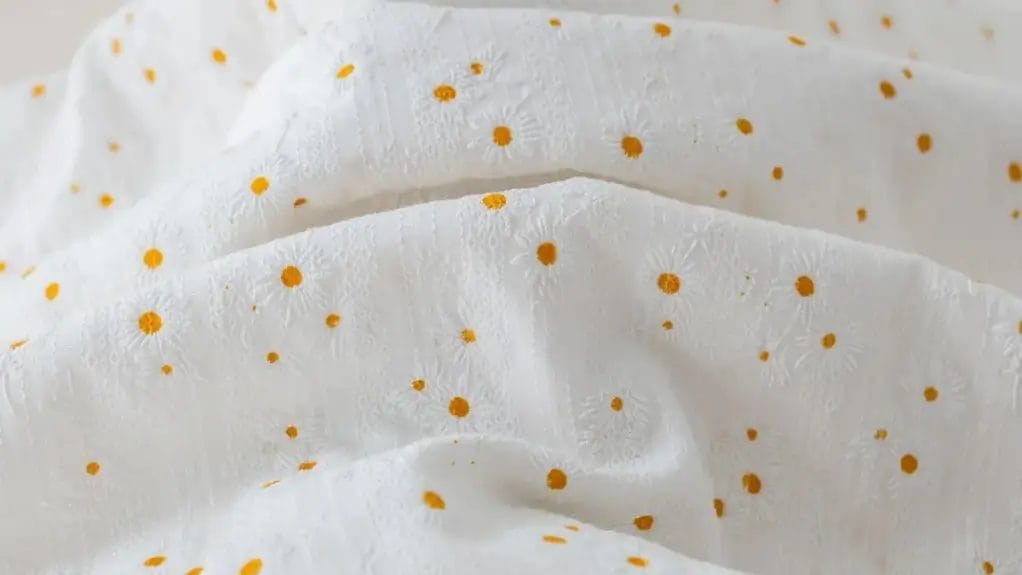
When you examine dobby fabric's advantages, you'll find that its specialized weaving technique creates a durable textile with exceptional tensile strength and resistance to wear.
The dobby loom's ability to control individual warp yarns produces intricate geometric patterns and textural variations that enhance both visual appeal and tactile interest.
You'll appreciate how the fabric's engineered construction allows for extensive pattern versatility while maintaining ideal breathability through strategic yarn placement and weave structure.
Durability and Strength
Dobby fabric's exceptional durability stems from its unique weaving construction, where the pattern is woven directly into the material rather than printed on the surface.
- The interlocked thread arrangement in dobby's woven fabric structure creates a tight, resilient bond that resists wear and tear.
- You'll find the textile manufacturing process creates reinforced areas where design elements intersect, enhancing structural integrity.
- The raised geometric patterns provide additional material density in high-stress areas, preventing premature breakdown.
- Your dobby fabric's strength comes from multiple warp and weft threads working together to distribute tension evenly across the surface.
Unique Texture and Visual Appeal
The intricate geometric patterns and raised designs inherent in dobby fabric create distinctive visual depth and tactile appeal.
You'll notice small repeating patterns woven directly into the fabric's surface, producing a raised texture that catches light differently from various angles. These geometric patterns can range from simple diamonds and dots to complex herringbone and small figures.
The dobby weave's unique construction allows for versatile design possibilities while maintaining a refined appearance.
When you run your hand across the surface, you'll feel subtle variations in texture that distinguish it from plain weaves, making it particularly suitable for upscale garments and home textiles.
Versatility in Patterns and Designs
One major advantage of dobby weaving lies in its programmable design capabilities, allowing manufacturers to create up to 24 distinct pattern variations within a single setup.
- You'll find geometric designs ranging from simple squares to complex diagonal arrangements, with precise pattern repeats across the fabric surface.
- The dobby head can produce intricate designs by independently controlling up to 24 harnesses, creating small-scale motifs and textural elements.
- You can achieve versatile patterns through the manipulation of warp and weft floats, enabling both subtle and bold surface effects.
- The design flexibility lets you incorporate raised patterns, creating dimensional textures that complement various fiber compositions.
Breathability and Comfort
Due to its unique construction method, dobby fabric delivers superior breathability through strategically placed floats and pattern variations that create microscopic air channels.
You'll find these channels facilitate enhanced air circulation between the fabric and your skin, making dobby an excellent choice for summer clothing and warm weather garments.
The raised geometric patterns on dobby fabric don't just create visual interest - they also increase the surface area exposed to air movement.
This structural advantage allows moisture to evaporate more efficiently while maintaining the fabric's dimensional stability.
When wearing dobby garments, you'll experience better temperature regulation and reduced clamminess compared to traditional flat-woven fabrics.
Disadvantages of Dobby Fabric
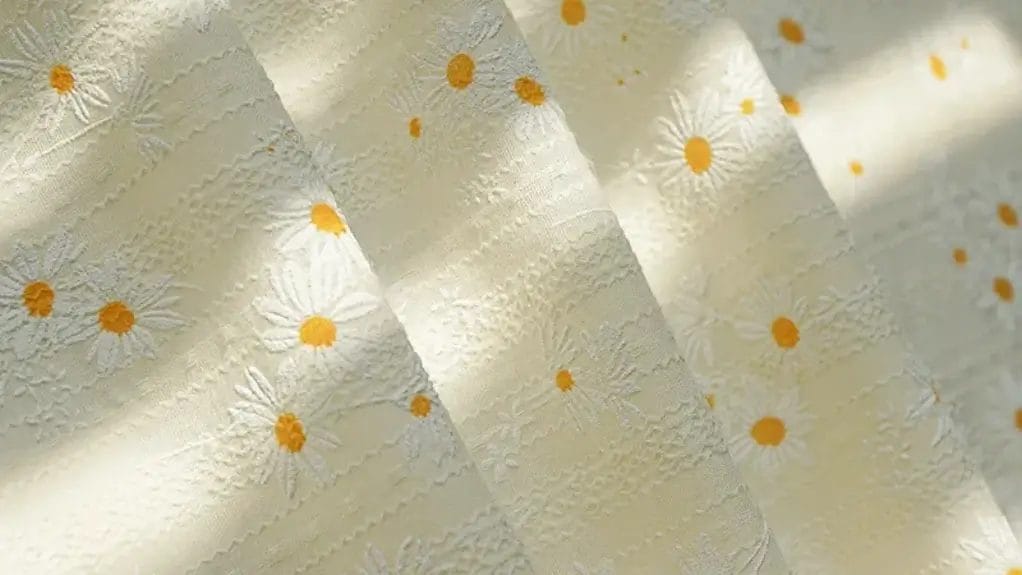
When you're working with dobby fabrics, you'll encounter increased sewing complexity due to their raised geometric patterns and textural variations that can cause uneven feed through machines.
The intricate weave structures make dobby textiles more susceptible to snagging and surface damage, particularly in high-stress areas of garments or upholstery.
The specialized dobby head attachment and complex pattern programming required during manufacturing result in higher production costs compared to basic plain weave fabrics.
Complexity in Sewing Due to Texture and Patterns
Although dobby fabric's intricate patterns create visually stunning designs, these same characteristics present significant challenges during the sewing process. When you're working with this special loom-created textile, you'll encounter several technical hurdles that require careful attention.
- Pattern matching becomes complex due to the raised geometric designs, requiring precise alignment at seams.
- The fabric's unique drape characteristics can cause shifting during cutting and stitching.
- Thread tension needs frequent adjustment to accommodate textural variations in the garment.
- Needle size selection is critical, as the wrong gauge can damage the distinctive weave structure.
Potential for Snagging or Damage
Despite its elegant appearance, dobby fabric's raised patterns and textural variations make it particularly susceptible to snagging and surface damage.
You'll need to handle this stylish material with care, as the elevated weave patterns can catch on rough surfaces, jewelry, or sharp objects.
The intricate geometric designs that enhance the fabric's appeal also create vulnerable points where threads can pull or break.
When wearing dobby garments, avoid contact with abrasive surfaces and take extra precautions during washing and storage.
Regular inspection of the fabric's surface will help you identify and address any snags before they develop into larger issues.
Higher Production Cost Compared to Plain Weaves
The manufacturing costs of dobby fabrics typically run 15-30% higher than basic plain weave constructions due to their complex production requirements. The intricate geometric patterns require specialized dobby mechanisms and precise programming for unique weaving sequences.
- You'll find that dobby looms need additional time and effort for setup and pattern changes.
- The production methods demand more sophisticated electronic controls and mechanical components.
- Your fabric requires extra yarn preparation steps to achieve the raised designs.
- You must factor in higher maintenance costs for the specialized dobby head mechanisms.
These factors contribute to increased operational expenses and extended production timelines compared to simple weave structures.
Sewing Tips for Dobby Fabric
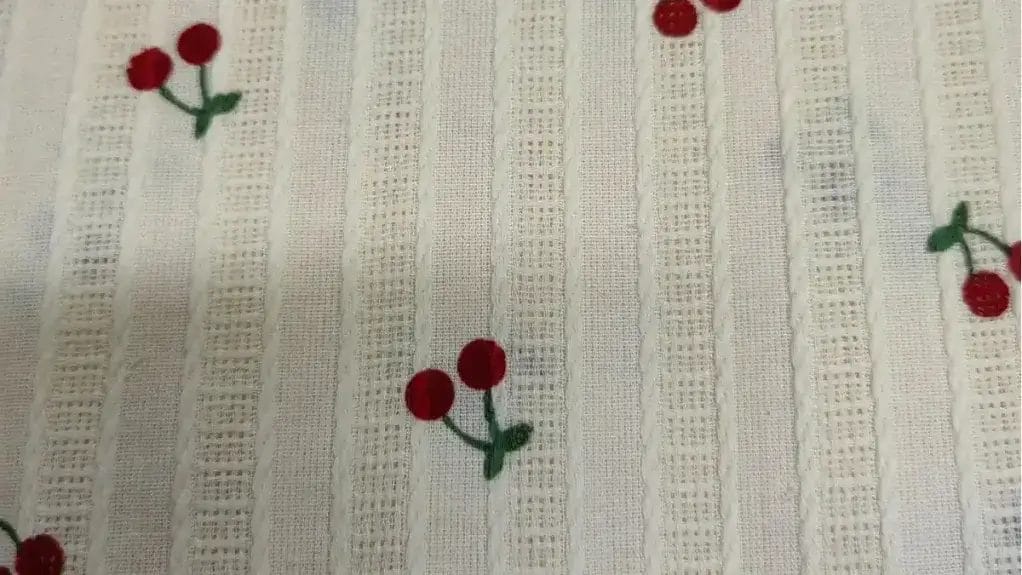
When you're preparing to sew dobby fabric, you'll need to pre-wash your yardage and implement stabilizers for lightweight varieties to guarantee excellent results.
You'll achieve the cleanest stitches by selecting sharp or Microtex needles and setting your machine to medium or longer stitch lengths.
To prevent damage to the fabric's distinctive raised patterns, minimize the use of pins or clips, placing them only in seam allowances when necessary.
Pre-wash to Prevent Shrinkage and Color Bleeding
Because dobby fabric contains intricate woven patterns and multiple yarn types, pre-washing becomes essential to prevent future structural changes.
When working with cotton and linen dobby textiles, you'll need to take specific precautions before cutting or sewing your project.
- Pre-wash your dobby fabric in cold water to minimize fiber stress and maintain pattern integrity.
- Use color-catching sheets when washing dark or vibrant linen dobby to prevent dye transfer.
- Air-dry your textile flat to maintain the original dimensions and prevent distortion.
- Press the fabric while slightly damp to restore the characteristic dobby texture and prepare for cutting.
Use Stabilizers for Lightweight Dobby Fabrics
Lightweight dobby fabrics require strategic stabilization to prevent distortion during the sewing process.
When creating a shirt or blouse, you'll need to apply fusible interfacing to collar stands, cuffs, and button plackets. Choose a lightweight tricot or woven interfacing that matches your dobby fabric's drape characteristics.
For areas prone to stretching, like shoulder seams and necklines, use clear stabilizing tape or stay tape.
If you're working with particularly delicate lightweight dobby fabrics, consider using wash-away stabilizer strips along seam lines to prevent puckering and maintain precise stitching during construction.
Choose Sharp or Microtex Needles
To achieve clean stitches through dobby fabric's raised patterns and textures, you'll need either sharp or microtex needles in sizes 60/8 to 70/10.
Since dobby fabric is made using various fibers and complex weaving techniques, proper needle selection prevents snags and skipped stitches.
- Use sharp needles for tightly woven cotton dobby fabric produced with natural fibers.
- Select microtex needles for synthetic dobby blends and ultra-fine patterns.
- Change needles every 4-6 hours of continuous sewing to maintain sharp points.
- Match needle size to fabric weight - 60/8 for lightweight sheers, 70/10 for medium weights.
Use Medium or Longer Stitch Length
When working with dobby's dimensional weave patterns, you'll need to adjust your stitch length to 2.5-3.5mm for ideal seam stability.
The raised texture created by weft threads requires longer stitches to maintain proper fabric integrity and prevent puckering along seam lines.
Set your machine to accommodate the variation in thickness where weft yarn passes create the signature dobby pattern.
A medium to longer stitch length allows your needle to navigate these dimensional changes without compromising the fabric's structure.
You'll find this adjustment particularly important when sewing across areas where multiple weft threads intersect to form the characteristic geometric designs.
Use Pins or Clips Sparingly to Prevent Snagging
Strategic pin placement becomes essential with dobby fabric, as its dimensional weave pattern makes it susceptible to snagging and distortion.
When working with this delicate fabric structure, you'll need to minimize contact points where pins or clips interact with the weave.
- Position pins only within seam allowances where the nylon and other fibers are most stable.
- Use fabric clips along straight edges where the fabric allows for better grip.
- Space fasteners at least 4 inches apart to reduce stress points on the weave.
- Remove pins immediately after stitching each section to prevent snag damage.
Finish Seams with Serging or French Seams to Avoid Fraying
The dimensional weave structure of dobby fabric requires proper seam finishing techniques to prevent edge fraying and maintain the fabric's integrity.
You'll need to use either a serger or French seams when working with this woven textile, especially for home textiles projects.
For serging, set your machine to a 3-thread overlock with balanced tension.
If you're using French seams, first sew wrong sides together with a 1/4" seam, trim to 1/8", then fold right sides together and sew a 3/8" seam.
This encases raw edges completely, giving you everything you need for professional-looking results.
Uses of Dobby Fabric
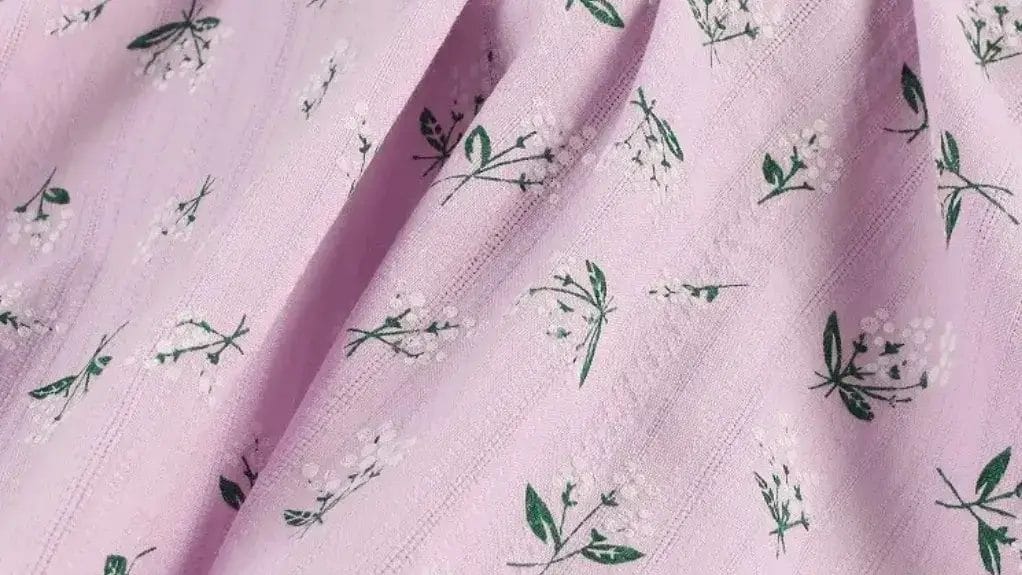
You'll find dobby fabric prominently featured in fashion applications, from tailored dress shirts and structured blouses to both casual and formal wear garments that benefit from its subtle geometric patterns.
In home décor, dobby's distinctive weave construction makes it an excellent choice for window treatments, decorative cushion covers, and sophisticated table linens that require both durability and visual interest.
The fabric's controlled texture and professional appearance also make it ideal for institutional uniforms and fashion accessories where a refined, woven pattern enhances the end product's quality.
Fashion: Shirts, Dresses, Blouses, Casual and Formal Wear
Versatile in both casual and formal applications, dobby fabric has become a cornerstone material in modern fashion manufacturing.
You'll find it extensively used across diverse clothing categories, where its distinctive geometric shapes enhance visual appeal while maintaining comfort and durability.
- Polo shirts featuring subtle geometric patterns that elevate everyday casual wear
- Business attire incorporating dobby weaves for textural depth and professional aesthetics
- Women's blouses with intricate dobby designs that create dimensional surface interest
- Formal wear utilizing dobby's light-catching properties to add sophistication without overwhelming embellishment
The fabric's ability to balance structure with flexibility makes it ideal for garments requiring both form and function.
Home Décor: Curtains, Cushion Covers, Table Linens
Dobby fabric's intricate raised patterns and dimensional textures make it an exceptional choice for home décor applications.
You'll find this versatile textile enhancing window treatments with its subtle geometric designs and light-filtering properties.
When crafting cushion covers, the fabric's durability and textural interest create sophisticated accents while preserving shape retention.
For table linens, dobby weaves offer stain resistance and easy care, making them practical for both casual dining and formal settings.
The fabric's structured surface adds visual depth to runners, placemats, and napkins.
Its tight weave construction guarantees longevity while maintaining the elegant appearance that elevates your home's interior aesthetic.
Specialty Uses: Uniforms and Accessories
Thanks to its structured weave patterns and superior durability, manufacturers widely utilize dobby fabric in professional uniforms and functional accessories.
As a woven textile that balances aesthetics with performance, it's become indispensable in both fashion and interior design applications.
- Commercial uniforms: Restaurant server attire, hotel staff clothing, and corporate workwear
- Medical scrubs and lab coats: Enhanced breathability and easy-care properties
- School uniforms: Durable shirts and skirts that maintain shape through repeated washing
- Professional accessories: Business bags, laptop cases, and durable portfolio carriers
This versatile fabric adapts well to both clothing and home goods, offering practical solutions for institutional and commercial use.
Care and Maintenance of Dobby Fabric
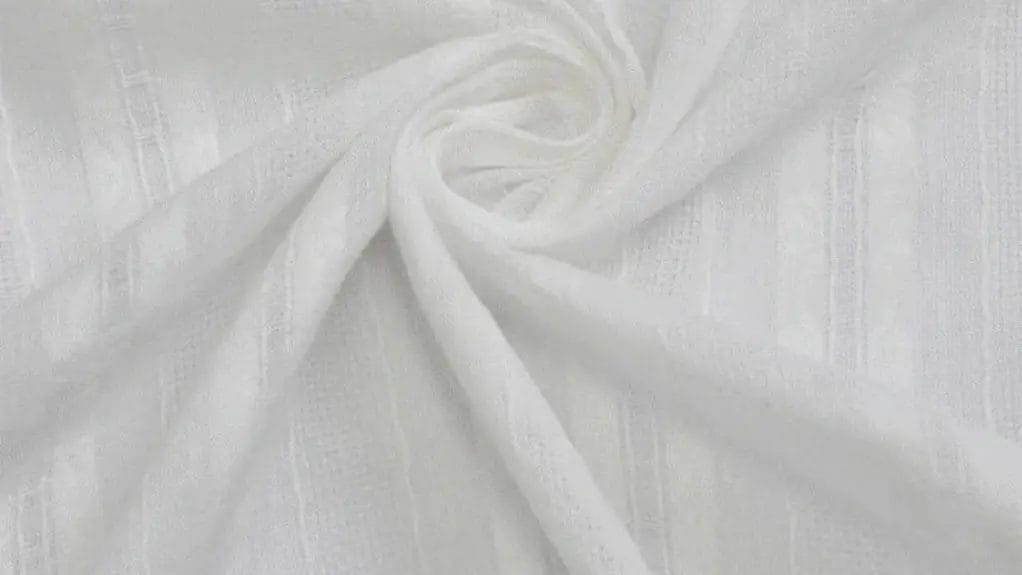
You'll need to adjust your care routine for dobby fabrics based on their fiber composition, whether they're cotton, polyester, or blended materials.
When pressing dobby textiles, use appropriate heat settings and press on the wrong side to maintain the integrity of the raised patterns created by the dobby mechanism during weaving.
To preserve your dobby fabrics, store them flat or rolled rather than folded to prevent permanent creasing, and treat stains promptly using cleaning solutions specifically formulated for the fabric's fiber content.
Washing Instructions Based on Fiber Content
Proper care instructions for dobby fabrics vary considerably based on their fiber composition, requiring specific washing approaches for each material type.
Everything you need to know about washing dobby fabric comes down to understanding its fiber content.
- Cotton dobby fabric stands up well to machine washing in warm water with mild detergent; tumble dry on medium heat
- Silk dobby requires hand washing in cool water with gentle detergent; lay flat to dry
- Polyester dobby can be machine washed in cold water; tumble dry on low heat
- Wool dobby needs dry cleaning or gentle hand washing in cold water; reshape and lay flat to dry
Ironing Tips to Preserve Texture and Patterns
After cleaning your dobby fabric according to its fiber content, maintaining its distinctive raised patterns requires careful ironing techniques.
Iron the reverse side to protect dobby fabric features, using medium heat for cotton blends and low heat for synthetics. Test a small corner first to help you understand the fabric's response to heat.
Press gently across the fabric without dragging the iron, which could flatten the textural elements. For stubborn wrinkles, use steam sparingly and hover slightly above the fabric's surface.
Never press directly on raised designs, as this can permanently damage the characteristic geometric patterns.
Storage Advice to Avoid Damage and Maintain Appearance
Since dobby fabrics feature intricate raised patterns, storing them correctly prevents permanent deformation of their distinctive weave structures.
When storing your dobby textiles, particularly curtains and home decor items, follow these essential guidelines:
- Roll dobby fabrics around acid-free cardboard tubes rather than folding to prevent permanent creases.
- Store in breathable cotton bags away from direct sunlight to protect fibers from UV damage and dust.
- Position storage containers horizontally to distribute weight evenly across the fabric's surface.
- Maintain consistent temperature and humidity levels in your storage area to prevent fiber degradation and mildew formation.
Stain Removal Techniques Suitable for Dobby Fabric
Removing stains from dobby fabric requires specific techniques that respect the raised pattern weave structure.
For water-based stains, blot the area with a clean white cloth and use a mild detergent solution suitable for your fabric's fiber content.
Oil-based stains on cotton dobby fabric require a pre-treatment with enzyme-based cleaners.
For synthetic dobby fabric made with polyester or nylon, apply a specialized solvent-based stain remover.
Different types of dobby weaves may require varying drying techniques - some respond well to air drying, while others need professional cleaning to maintain their popular choice status.
Frequently Asked Questions
Can Dobby Fabric Be Dyed After Purchasing?
You can dye dobby fabric post-purchase, but results depend on its fiber content. Natural fibers like cotton and linen accept dyes readily, while synthetic components may resist coloration or require specialized dyes.
What's the Average Cost Difference Between Dobby and Regular Woven Fabrics?
You'll typically find dobby fabrics priced 15-30% higher than standard woven textiles due to their complex weaving patterns, specialized dobby loom requirements, and increased manufacturing time per yard.
Is Dobby Fabric Recyclable?
You can recycle dobby fabric if it's made from single-fiber content like 100% cotton or polyester. Mixed-fiber dobbies require specialized recycling processes or may not be recyclable due to fiber separation challenges.
Does Dobby Fabric Shrink More Than Other Fabrics?
You'll find dobby fabric's shrinkage rate depends on its fiber composition, not the weave pattern. Cotton dobbies typically shrink 2-5%, similar to standard cotton weaves under normal washing conditions.
How Long Does the Raised Pattern on Dobby Fabric Typically Last?
You'll find that dobby patterns typically last the fabric's lifetime since they're woven directly into the structure, not printed. With proper care, these raised designs maintain their integrity through hundreds of washes.
Conclusion
You've now gained thorough knowledge about dobby fabric's intricate manufacturing process, fiber composition, and technical applications. Whether you're working with cotton dobby for shirting or polyester dobby for upholstery, you'll need to take into account the fabric's weave structure and mechanical properties. By implementing proper sewing techniques and following fiber-specific care protocols, you'll maximize the performance and longevity of your dobby textile projects.
0 comments