

We've spent years examining fiber structures at the molecular level, and the distinction between viscose and polyester fundamentally shapes their performance characteristics. Viscose's regenerated cellulose chains create entirely different properties compared to polyester's synthetic polymer structure—differences that directly impact moisture management, thermal regulation, and durability. Understanding these manufacturing processes reveals why each fiber behaves the way it does in your garments, and more importantly, which scenarios demand one over the other.
Key Takeaways
- Viscose is a semi-synthetic fiber from wood pulp offering silk-like softness, while polyester is fully synthetic from petrochemicals with smooth texture.
- Viscose absorbs 11-13% moisture and breathes better, whereas polyester wicks moisture away quickly but retains odors due to hydrophobic properties.
- Polyester has superior durability with 4-9 g/d tensile strength versus viscose's 2-3 g/d, and maintains strength when wet.
- Viscose requires gentle cold-water washing and air-drying, while polyester withstands warmer washes and tumble drying with minimal shrinkage.
- Viscose drapes elegantly with fluid movement for layered designs, whereas polyester holds crisp structure ideal for geometric shapes and tailored garments.
What is Viscose?
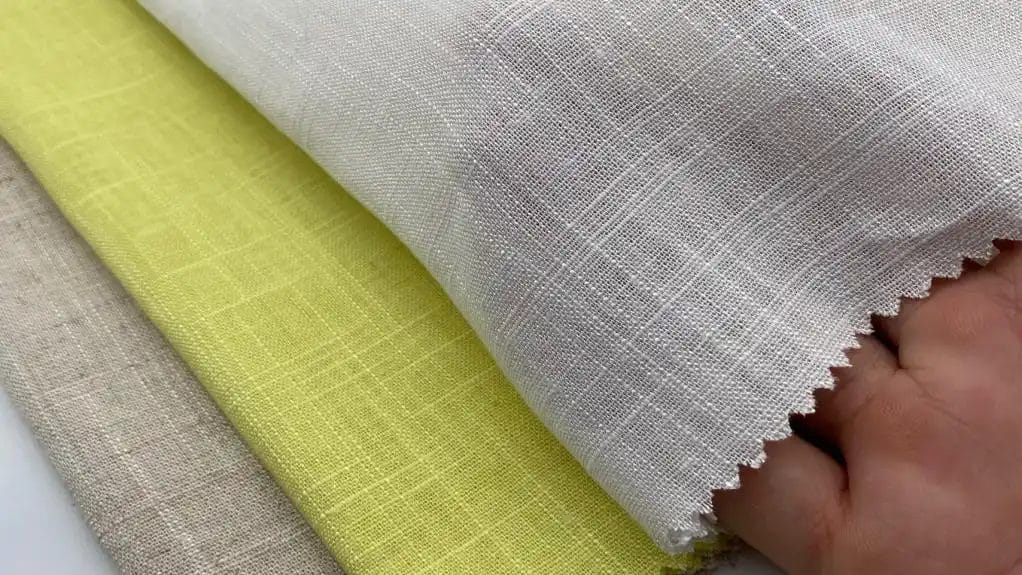
We'll examine viscose as a regenerated cellulosic fiber produced through chemical dissolution and reconstitution of natural wood pulp.
The manufacturing process transforms plant-based cellulose into a spinnable solution through xanthation, creating a versatile textile with distinct mechanical and thermal properties.
Understanding viscose's production methods, material variants, and industrial applications provides essential context for comparing its performance characteristics against synthetic alternatives like polyester.
Definition and Origin
Viscose stands as a semi-synthetic fiber created from cellulose extracted from wood pulp or other plant materials, earning its alternative name "rayon" in the textile industry.
Unlike polyester, which is a fully synthetic petroleum-based material, viscose is a semi-synthetic fiber that bridges natural and manufactured textiles.
The production process dissolves cellulose in chemical solutions, then extrudes it into fibers with distinctive soft, silky characteristics. This manufacturing method originated in the late 19th century as scientists sought silk alternatives.
Manufacturing Process
The manufacturing process transforms raw cellulose into viscose fibers through a complex series of chemical reactions and mechanical operations.
We begin by treating wood pulp with sodium hydroxide, creating alkali cellulose. Through xanthation, this material reacts with carbon disulfide, forming a viscous solution that gives viscose its name.
We dissolve this compound in sodium hydroxide, then extrude it through spinnerets into filaments. An acid bath coagulates these filaments, regenerating cellulose fibers.
Unlike viscose and polyester production, viscose manufacturing requires substantial thermal and chemical inputs, making sustainable practices essential to prevent hazardous substance release.
Types of Viscose
Understanding the production chemistry prepares us to examine the distinct classifications that emerge from variations in cellulose processing and source materials.
We'll encounter several viscose and rayon variants in textile applications.
- Bemberg represents premium regenerated cellulose, delivering superior breathability through its unique cuprammonium process.
- EcoVero demonstrates closed-loop manufacturing from certified sustainable wood sources, minimizing environmental discharge.
- Bamboo viscose utilizes bamboo pulp as its cellulose feedstock, maintaining the soft hand and moisture-wicking properties characteristic of viscose fibers.
Each type exhibits distinct molecular structures affecting drape, absorbency, and thermal regulation.
These variants serve specific performance requirements across apparel categories, from luxury linings to activewear applications.
Common Applications
Building on these molecular variants, manufacturers direct viscose fibers toward applications where their cellulosic structure delivers measurable performance advantages. We've documented distinct deployment categories based on fiber specifications:
| Application Category | Primary Properties Utilized | Representative Products |
|---|---|---|
| Apparel | Moisture absorption, drape | Dresses, blouses, linings |
| Home Textiles | Dye uptake, thermal regulation | Bedding, upholstery |
| Performance Wear | Breathability, flexibility | Activewear components |
Viscose is often used in sportswear where moisture management proves essential. The cellulosic structure enables dye penetration while maintaining mechanical stability in close-to-skin garments including lingerie and undergarments.
What is Polyester?
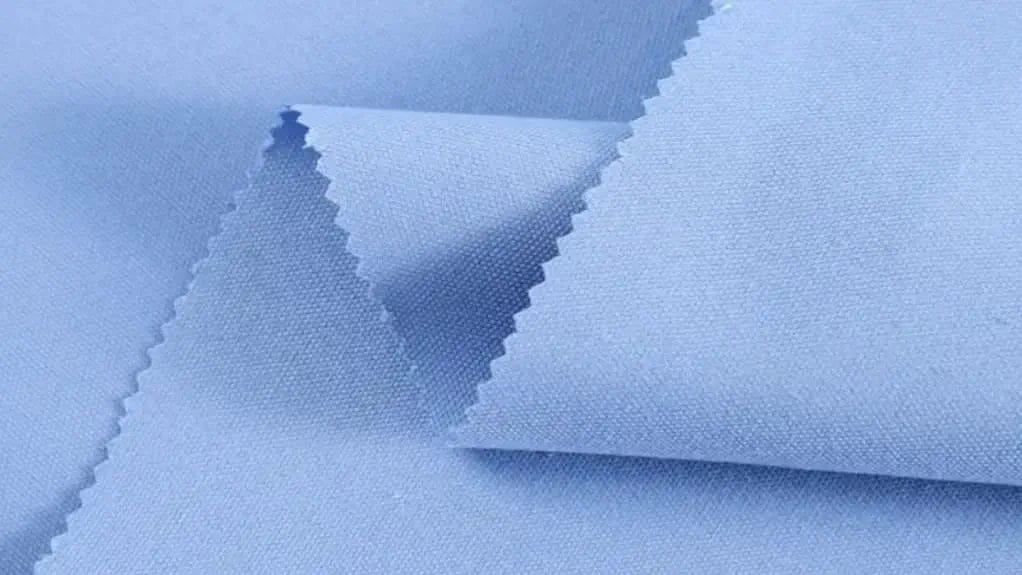
We'll examine polyester as a fully synthetic fiber engineered from petrochemical feedstocks, specifically polyethylene terephthalate (PET).
Understanding its molecular structure and production methods reveals why this polymer-based textile dominates global fabric markets with its exceptional durability and dimensional stability.
Let's break down polyester's chemical composition, manufacturing processes, commercial variations, and primary industrial applications.
Definition and Origin
Polyester stands as the world's most widely produced synthetic fiber, engineered from petrochemical derivatives through a precise polymerization process.
Unlike cellulose-based materials, this fully synthetic fiber emerges from petroleum-sourced monomers that undergo chemical reactions to form polyethylene terephthalate (PET).
We trace its commercial introduction to the 1940s, when manufacturers developed techniques to transform oil-derived compounds into long-chain polymers.
This petrochemical origin fundamentally distinguishes polyester from plant-derived alternatives, establishing its position as a purely synthetic textile solution with distinct performance characteristics.
Manufacturing Process
Through a sophisticated polymerization reaction, manufacturers bond ethylene glycol with terephthalic acid molecules to create polyethylene terephthalate (PET)—the chemical foundation of all polyester fibers.
Polyester production requires extreme temperatures and pressure to achieve proper molecular bonding, making it highly energy-intensive.
Once synthesized, we extrude molten PET through spinnerets, forming continuous filaments or staple fibers for textile applications.
This process encompasses polymerization, spinning, and texturing stages, each determining the fabric's final characteristics.
When comparing viscose vs polyester manufacturing, polyester's petrochemical dependency generates substantial greenhouse emissions, though it efficiently produces exceptionally durable fabrics.
Variations of Polyester
Today's textile industry offers several distinct polyester variations, each engineered for specific performance requirements and sustainability goals.
We've identified recycled polyester (rPET) as the most environmentally significant development, converting post-consumer plastics into functional fibers while reducing petroleum dependency.
Microfiber polyester represents another critical variation, featuring ultra-fine fibers that deliver superior moisture-wicking capabilities for technical applications.
We're also seeing increased adoption of polyester-natural fiber blends, combining synthetic durability with cotton or viscose comfort.
Recent innovations include bio-based polyesters utilizing renewable feedstocks, marking a fundamental shift from traditional fossil fuel-derived manufacturing processes.
These variations of polyester expand application possibilities across diverse textile sectors.
Common Uses
The fiber's exceptional durability and wrinkle-resistance properties have established polyester as the dominant textile in multiple manufacturing sectors.
We find its common uses span activewear, where moisture-wicking capabilities and dimensional stability prove essential for athletic performance. The fiber's thermoplastic nature enables heat-setting processes, creating permanent pleats and shape retention in garments.
In home textiles, polyester's colorfastness and abrasion resistance make it ideal for upholstery applications requiring extended service life. Its quick-drying characteristics and mechanical strength have made it indispensable in outdoor equipment manufacturing.
The fiber's low production costs and consistent quality continue driving widespread adoption across industrial textile applications.
Comparative Analysis: Viscose vs. Polyester
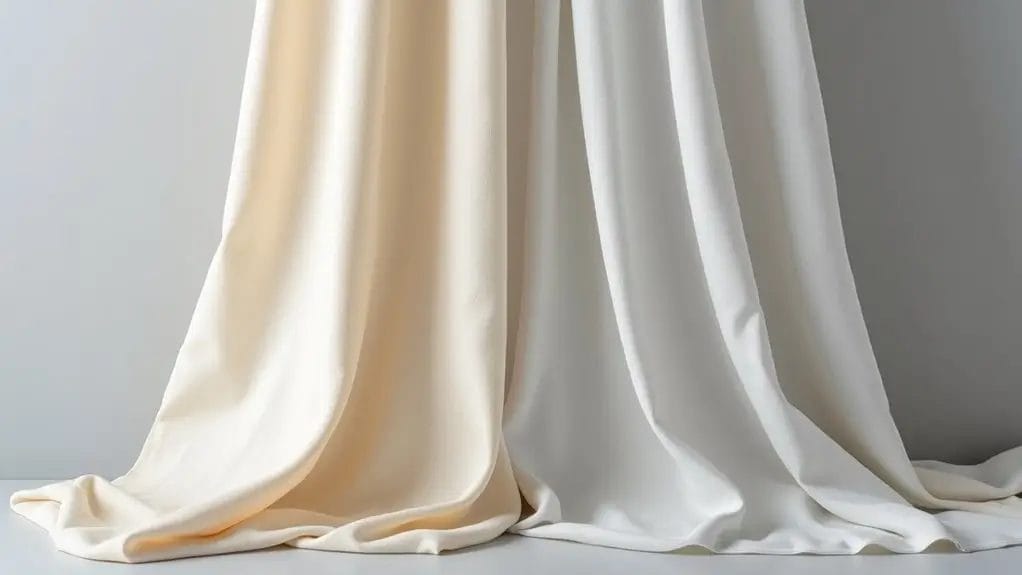
We'll now examine the fundamental differences between viscose and polyester across several critical parameters that define their performance characteristics.
Each comparison point—from molecular structure to mechanical properties—directly impacts fabric selection for specific applications.
Understanding these distinctions enables you to make informed decisions based on your requirements for texture, environmental conditions, and durability expectations.
Texture and Feel
Tactile properties fundamentally differentiate these two fibers at the molecular level, where viscose's regenerated cellulose structure creates a soft, silk-like surface with natural drape characteristics, while polyester's thermoplastic polymer chains produce a smoother, more rigid hand feel.
We've observed that viscose's hygroscopic nature delivers superior softness and breathable performance, absorbing up to 11% of its weight in moisture. This moisture absorption creates a cooling effect against skin.
Polyester's hydrophobic structure repels water, reducing breathability but maintaining dimensional stability.
Manufacturing processes directly impact these tactile differences—viscose requires specialized finishing treatments, while polyester's melt-spinning creates its characteristic slickness.
Breathability and Moisture Management
Because molecular structure determines vapor transmission rates, viscose's hydrophilic cellulose chains permit air permeability values of 150-250 cm³/cm²/s compared to polyester's 50-100 cm³/cm²/s range.
Performance characteristics differ greatly:
- Viscose absorbs 11-13% moisture weight, releasing it through evaporative cooling.
- Polyester's moisture-wicking occurs via capillary action, moving liquid to fabric surfaces.
- Humid conditions cause viscose to retain water, increasing garment weight by 40-60%.
- Polyester dries 3-4x faster but traps odor-causing bacteria within hydrophobic fibers.
We've observed that breathability advantages make viscose superior for static wear, while polyester excels in high-intensity applications requiring rapid moisture transport.
Durability and Strength
Tensile strength measurements reveal polyester's mechanical superiority: dry fibers achieve 4-9 grams per denier compared to viscose's 2-3 g/d, while wet conditions reduce viscose strength by 40-50% versus polyester's negligible 5-10% loss.
This strength differential translates directly to durability in finished garments. We've observed polyester maintaining structural integrity through repeated laundering cycles, resisting abrasion in high-wear zones, and exhibiting minimal dimensional changes.
Viscose's cellulosic structure weakens under moisture exposure, causing fiber swelling and reduced load-bearing capacity.
For applications requiring extended service life—activewear, outdoor gear, industrial textiles—polyester's superior durability profile makes it the preferred choice despite higher initial material costs.
Appearance and Draping Qualities
While structural performance metrics favor polyester, viscose demonstrates measurable advantages in aesthetic properties and fabric hand.
We've analyzed these differences across multiple parameters:
- Texture Profile: Viscose delivers silk-like smoothness with superior drape fluidity, while polyester maintains crisp structure.
- Surface Characteristics: Viscose exhibits moderate sheen with enhanced dye reflection; polyester presents muted appearance.
- Weight Distribution: Viscose creates elegant pooling in layered applications; polyester resists sagging.
- Form Retention: Viscose flows in fluid silhouettes; polyester holds geometric shapes.
These material distinctions directly impact garment performance and end-use applications in textile manufacturing.
Color Absorption and Print Compatibility
Beyond surface aesthetics, dyeing processes reveal fundamental differences in how these fibers interact with colorants at the molecular level.
Viscose's chemical structure enables superior color absorption, allowing dyes to penetrate deeply and create vibrant, colorfast results with minimal bleeding during washing.
We've found polyester requires specialized dyeing techniques due to low moisture absorption properties.
Regarding print compatibility, viscose's absorption traits support complex patterns with precision, while polyester's slick surface challenges intricate designs.
Post-treatment, viscose maintains a softer hand feel, whereas polyester can present stiffness depending on finishing processes.
These molecular distinctions directly impact manufacturing workflows and final garment quality.
Wrinkle Resistance and Care Requirements
When subjected to mechanical stress during wear, viscose fibers exhibit significant wrinkling due to their weak hydrogen bonds and high moisture absorption—characteristics that necessitate steam pressing at controlled temperatures between 150-180°C to restore the fabric's original structure.
Comparative Care Parameters:
- Viscose requires cold water washing and air drying to prevent fiber shrinkage and distortion.
- Polyester tolerates warm water cycles and tumble drying without structural compromise.
- Moisture absorption in viscose intensifies creasing when wet, demanding immediate attention.
- Polyester's hydrophobic properties enable rapid drying and inherent wrinkle resistance.
Polyester clearly dominates as the low-maintenance choice, withstanding repeated laundering while viscose fibers progressively weaken.
Sustainability Considerations
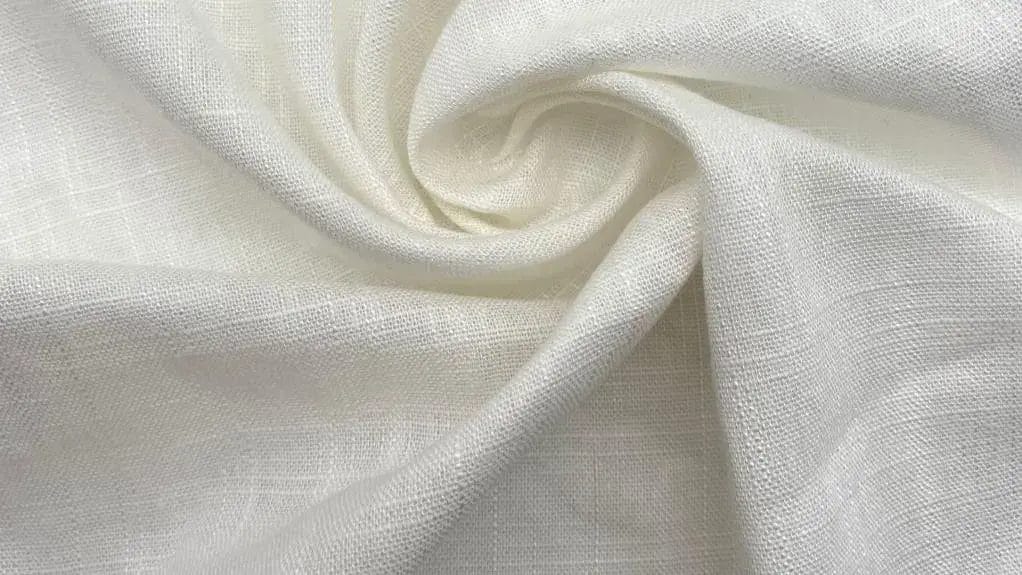
We must examine how viscose and polyester production impacts our environment through their distinct manufacturing processes and resource consumption patterns.
Viscose's biodegradability depends on sustainable sourcing and closed-loop systems like Lyocell that minimize toxic chemical discharge, while polyester's petrochemical origins create persistent microplastic pollution throughout its lifecycle.
Understanding these material differences enables us to evaluate emerging solutions, including recycled polyester technologies and deadstock fabric utilization, that address each fiber's specific environmental challenges.
Environmental Footprint of Production
When evaluating the environmental footprint of viscose and polyester production, we must examine the complete manufacturing lifecycle of each fiber.
Both production technologies present distinct environmental challenges that we can't ignore.
Key Environmental Production Impacts:
- Viscose manufacturing demands substantial water and energy inputs, with conventional processes releasing hazardous chemicals into ecosystems.
- Closed-loop systems like Lyocell minimize waste streams and chemical discharge notably.
- Virgin polyester production from petrochemicals generates considerable greenhouse gas emissions.
- Recycled polyester (rPET) and chemical recycling innovations reduce virgin material dependency.
Understanding these manufacturing differences helps us make informed fabric selections.
Biodegradability and End-of-Life Options
Beyond the manufacturing phase, end-of-life disposal pathways reveal fundamental material differences between these two fibers.
| Property | Viscose | Polyester |
|---|---|---|
| Biodegradability | Degrades naturally under proper conditions | Non-biodegradable; persists for centuries |
| Recycling Infrastructure | Limited; primarily composting | Growing mechanical/chemical recycling |
| Environmental Persistence | Minimal with sustainable sourcing | Contributes to microplastic pollution |
Innovations in Eco-friendly Viscose and Polyester Alternatives
As textile manufacturers confront mounting environmental scrutiny, closed-loop production systems have transformed viscose alternatives into genuinely sustainable options.
Lyocell and Modal minimize chemical discharge while maintaining biodegradable properties.
We're witnessing parallel advances in polyester sustainability:
- Bio-based polyester (PLA, bio-PET) replaces petrochemical feedstocks with renewable resources
- Recycled polyester (rPET) diverts plastic bottles from landfills through mechanical processing
- Blended fabrics merge renewable viscose comfort with recycled polyester durability
- Chemical recycling breaks down used polyester into virgin-quality monomers
These innovations reduce virgin material dependency while preserving essential performance characteristics.
Manufacturing integration remains cost-intensive but demonstrates measurable environmental improvements.
Role of Deadstock and Recycled Fabrics in Sustainable Fashion
Deadstock fabric recovery intercepts surplus textile materials before they reach industrial waste streams, offering manufacturers a resource-efficient alternative to virgin fiber production. We've observed that deadstock fabrics maintain identical technical specifications to primary production runs while eliminating upstream processing energy. Recycled fabrics, particularly rPET polyester, demonstrate comparable tensile strength and durability metrics to petroleum-based variants.
| Material Type | Energy Reduction | Waste Diversion |
|---|---|---|
| Deadstock Viscose | 60-70% | 100% |
| Deadstock Polyester | 55-65% | 100% |
| rPET Polyester | 45-60% | 85-95% |
| Recycled Viscose | 40-50% | 80-90% |
These materials deliver measurable carbon footprint reductions while maintaining manufacturing compatibility with conventional textile equipment.
How to Identify Viscose and Polyester Fabric
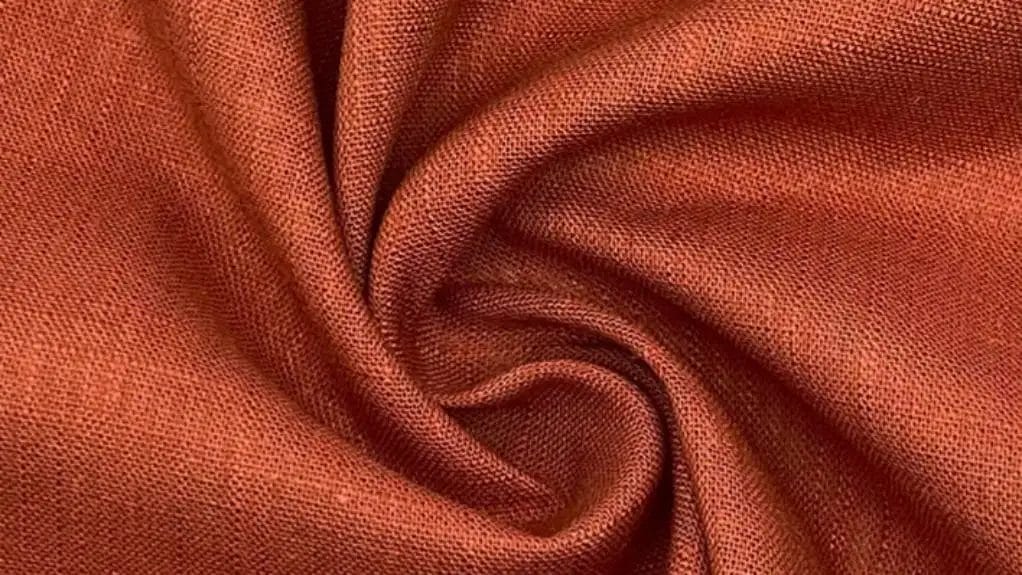
We've covered the sustainability aspects of viscose and polyester, but identifying these fabrics in practice requires specific technical methods.
Our approach combines standardized laboratory procedures—such as burn tests that reveal polyester's melting behavior versus viscose's ash-producing combustion—with practical field assessments including moisture absorption rates and fiber morphology analysis.
These identification techniques enable us to verify fabric composition when labels are absent or questionable, ensuring material specifications align with manufacturing requirements and end-use performance criteria.
Visual and Tactile Tests
Distinguishing viscose from polyester requires systematic sensory evaluation that targets each fiber's distinct molecular structure and physical properties.
We can identify viscose and polyester through controlled testing methods that reveal their characteristic behaviors.
Key Identification Markers:
- Touch Test: Viscose delivers a silk-like feel with cool temperature response, while polyester exhibits slick, plastic-like texture.
- Drape Assessment: Viscose flows with fluid elegance; polyester maintains rigid structure.
- Moisture Response: Viscose absorbs water immediately, becoming damp; polyester repels moisture completely.
- Wrinkle Analysis: Viscose creases readily under pressure; polyester resists wrinkling.
These differential responses enable reliable fabric identification without laboratory equipment.
Label Reading and Certification Marks
Garment labels serve as primary authentication tools, providing mandatory fiber content declarations that distinguish viscose from polyester through standardized textile regulations.
We'll find viscose listed as "rayon" or "viscose," often requiring specialized care protocols like dry cleaning. Polyester typically permits machine washing, indicating superior structural resilience.
Label reading extends beyond fiber identification to certification marks—OEKO-TEX® Standard 100 verifies absence of harmful substances in both materials. EcoVero certification distinguishes sustainably sourced viscose, while rPET designations identify recycled polyester content.
Blended fabrics require percentage-based composition analysis, ensuring appropriate care methodology and performance expectations align with manufacturing specifications.
Simple Home Tests (Wrinkle Test, Burn Test)
We can employ tactile and combustion testing protocols that exploit fundamental molecular differences between cellulosic and synthetic polymer structures.
Wrinkle Test Protocol:
- Compress fabric samples firmly for 30 seconds
- Viscose retains permanent creases due to hydrogen bonding disruption
- Polyester demonstrates wrinkle-resistant recovery from thermoplastic memory
- Results correlate with fiber crystallinity percentages
Burn Test Analysis:
Viscose combusts rapidly, producing ash residue from cellulose oxidation. Polyester melts into hardened beads, emitting petrochemical vapors. These combustion signatures definitively separate natural polymer derivatives from synthetic thermoplastics.
Before conducting burn tests, we'd recommend performing the water absorption test for safer preliminary identification.
Care and Maintenance Tips
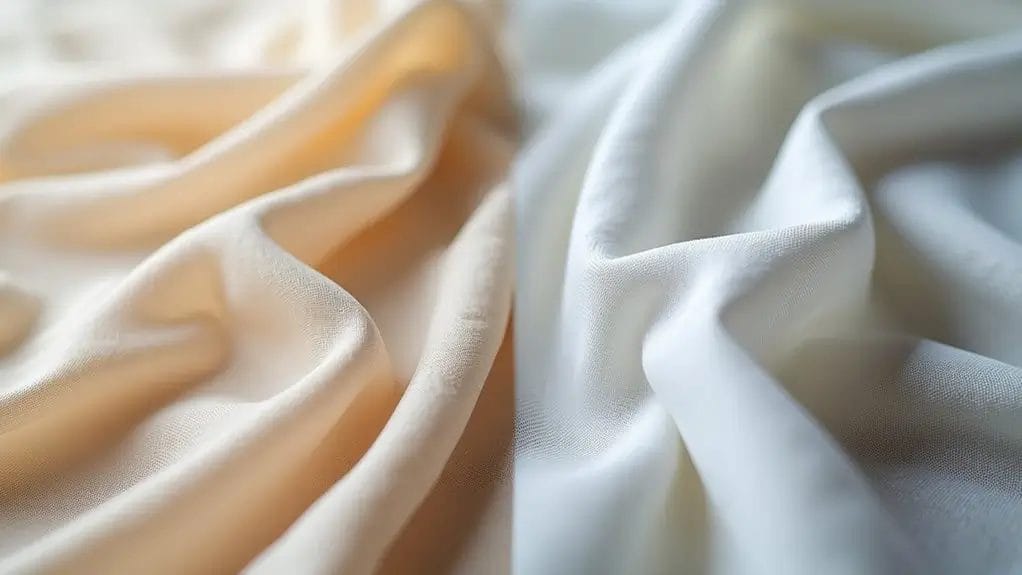
We'll now examine the specific care protocols that distinguish viscose from polyester maintenance requirements.
Each fiber's molecular structure dictates distinct washing temperatures, drying methods, and finishing techniques that directly impact garment longevity and performance retention.
Understanding these material-specific guidelines enables you to optimize fabric durability while minimizing degradation from improper handling.
How to Care for Viscose
For ideal preservation of viscose's cellulosic structure, we'll need to implement specific laundering protocols that account for the fiber's inherent weakness when wet.
Cold water washing on gentle cycles prevents fiber stress and dimensional changes. We must eliminate bleach and aggressive detergents that compromise molecular integrity.
Critical tips include:
- Cold water gentle cycle washing to minimize mechanical stress
- Air-drying flat or hanging away from UV exposure
- Low-temperature ironing with damp cloth barrier
- Professional dry cleaning for structurally complex garments
These protocols maintain fiber morphology while extending garment serviceability through controlled drying and proper thermal treatment during finishing operations.
How to Care for Polyester
Polyester's thermoplastic molecular structure enables simplified maintenance protocols that directly contrast with cellulosic fiber requirements.
We recommend washing polyester garments in warm water (40-60°C) without shrinkage concerns, as the polymer chains maintain dimensional stability. During drying, we utilize low to medium heat tumble cycles that preserve molecular orientation and prevent thermal degradation.
For ironing, we apply minimal heat (110-150°C) with reduced steam to avoid surface glazing from localized melting. The fiber's inherent wrinkle resistance minimizes pressing frequency.
Always verify manufacturer specifications, as polyester blends incorporate distinct thermal sensitivities requiring adjusted care parameters for ideal fabric longevity.
Tips to Prolong Fabric Life
When extending fabric longevity, we must recognize that proper care protocols directly correlate with polymer and cellulose chain preservation.
While viscose and polyester are two distinct materials requiring different approaches, both benefit from strategic maintenance that yields a lower environmental footprint through extended garment lifecycles.
Essential preservation protocols:
- Viscose: Cold water gentle cycles prevent fiber degradation; hand washing minimizes mechanical stress on cellulose structures.
- Polyester: Warm water washing acceptable; avoid high-heat drying to prevent permanent wrinkle setting.
- Viscose storage: Hang garments in cool, dry environments to maintain molecular alignment.
- Polyester maintenance: Regular lint filter cleaning prevents debris accumulation.
Comparison with Other Common Fibers

To fully understand where viscose and polyester fit within the textile landscape, we'll examine their performance characteristics against other common fibers including silk, cotton, nylon, rayon, and acrylic.
Each fiber possesses distinct molecular structures and manufacturing processes that directly influence properties like tensile strength, moisture regain, thermal conductivity, and dimensional stability.
We'll analyze these comparative metrics to help you select the best fiber for your specific application requirements.
Viscose vs. Silk, Cotton, Nylon, Rayon
Although viscose shares structural similarities with rayon—both deriving from regenerated cellulose—we'll examine how it performs against silk, cotton, and nylon to understand its position in the textile landscape.
Key Performance Comparisons:
- Viscose vs. silk: Delivers comparable drape and silky texture at considerably lower production costs, though lacking natural protein fiber sheen.
- Viscose vs. cotton: Superior moisture absorbency in humid conditions, but reduced structural durability and increased wrinkling susceptibility.
- Viscose vs. nylon: Excels in breathability and softness while sacrificing tensile strength and elastic recovery.
- Viscose vs. rayon: Production methodology variations affect final textile performance characteristics despite shared cellulosic origin.
Polyester vs. Nylon, Acrylic, Cotton
Polyester's molecular structure—comprising long-chain synthetic polymers derived from petroleum-based ethylene glycol and terephthalic acid—fundamentally differentiates its performance characteristics from competing fibers in commercial textile applications.
When we compare polyester garments against nylon, we'll find superior weather resistance and accelerated drying speeds.
Acrylic offers wool-like thermal properties, yet polyester delivers enhanced moisture-wicking capabilities critical for athletic wear.
Natural fibers like cotton provide breathability and tactile comfort but can't match polyester's wrinkle resistance and minimal maintenance requirements.
Each fiber occupies distinct market segments: polyester dominates performance apparel, nylon excels in outdoor gear, acrylic serves knitwear applications, and cotton remains prevalent in casual garments.
Future Trends in Fabric Technology
We're witnessing a transformation in fabric technology as bio-based polyesters and closed-loop viscose systems emerge to address environmental concerns in textile manufacturing.
Hybrid fiber blends now combine viscose's moisture absorption with polyester's structural stability, creating fabrics that meet performance requirements while reducing petroleum dependence.
Consumer pressure for sustainable materials is accelerating investment in chemical recycling infrastructure and alternative fiber sources, fundamentally reshaping how we produce both synthetic and regenerated cellulosic textiles.
Advances in Sustainable Fiber Production
As the textile industry confronts mounting environmental pressures, manufacturers are investing heavily in sustainable fiber technologies that fundamentally reshape how we produce both viscose and polyester.
We're witnessing transformative innovations:
- Closed-loop systems like Lyocell processing recycle solvents, eliminating 99% of chemical waste in viscose production.
- Bio-based polyesters derived from plant materials reduce fossil fuel dependency by utilizing renewable feedstocks.
- Recycled polyester (rPET) production will reach 75% of total output by 2030, revolutionizing sustainable textiles from recycled sources.
- Blockchain traceability enables verification of fiber sourcing, ensuring supply chain transparency.
These advances deliver measurable environmental improvements while maintaining essential material properties.
Hybrid Fabrics Combining Viscose and Polyester Properties
Blending viscose and polyester creates hybrid fabrics that exploit each fiber's distinct molecular structure—viscose's hydroxyl groups enable moisture absorption while polyester's ester linkages provide dimensional stability.
We're seeing manufacturers optimize viscose and polyester ratios (70/30, 50/50) to fine-tune mechanical properties: higher viscose content increases drape and breathability, while elevated polyester enhances tensile strength and wrinkle recovery.
These hybrid fabrics dominate activewear production, where moisture-wicking treatments and quick-dry finishing complement the blend's inherent properties.
We're now advancing sustainability through recycled polyester integration with responsibly sourced viscose, reducing environmental impact without compromising performance metrics in commercial textile applications.
Impact of Consumer Demand on Fabric Innovation
Consumer purchasing patterns now directly influence textile R&D budgets, with market data showing that 73% of global apparel manufacturers have redirected capital toward sustainable fiber development since 2020.
We're witnessing systematic shifts in production methodologies:
- Chemical recycling infrastructure enables recycled polyester recovery from post-consumer waste streams
- Closed-loop viscose systems minimize chemical discharge while maintaining fiber integrity
- Sustainable viscose certification programs verify responsible forestry practices and manufacturing standards
- Advanced moisture management technologies enhance performance characteristics in eco-conscious polyester blends
This demand-driven innovation cycle demonstrates how consumer preferences directly translate into measurable improvements in fabric sustainability metrics and production efficiency.
Frequently Asked Questions
What Are the Disadvantages of Viscose?
We've identified viscose's key drawbacks: it wrinkles easily, lacks durability compared to synthetics, dries slowly after moisture absorption, requires chemically intensive production processes that create environmental hazards, and may irritate sensitive skin depending on cellulose quality.
Is 100% Viscose Good Quality?
We'd consider 100% viscose good quality for its soft, breathable properties and excellent drape. However, its durability limitations, wrinkling tendency, and slow drying characteristics require careful maintenance to preserve the fabric's structural integrity and appearance.
Is Viscose Better Than Polyester for Sweating?
We'd recommend viscose over polyester for sweating in casual wear due to its superior moisture absorption and breathability. However, polyester's quick-drying properties make it more practical for high-intensity activities where rapid moisture management's essential.
What Is the Unhealthiest Fabric to Wear?
Low-quality polyester ranks as the unhealthiest fabric we recommend avoiding. It traps heat and moisture, causing skin irritation while shedding microplastics during washing. Its petrochemical composition and poor breathability create prolonged skin contact issues.
Conclusion
We've examined the fundamental material properties distinguishing these two fibers: viscose's cellulose-based structure yields superior moisture absorption and breathability, while polyester's polymer chains deliver exceptional tensile strength and dimensional stability. Our analysis of manufacturing processes, thermal performance characteristics, and durability metrics provides the technical foundation you'll need for informed textile selection. Whether you're specifying materials for garment production or evaluating fabric performance requirements, understanding these core differences guarantees ideal application outcomes in your projects.
0 comments