

When you're shopping for a polo shirt, you'll likely encounter two main fabric options: pique and jersey. These textiles differ greatly in their construction, with pique featuring a distinctive waffle-like pattern and jersey displaying a smooth, flat surface. The structural variations between these fabrics affect everything from breathability to durability, and your choice will impact both comfort and appearance. Understanding the technical distinctions between pique and jersey will help you make an informed decision for your specific needs.
Key Takeaways
- Pique fabric offers superior breathability and durability with its textured honeycomb pattern, making it ideal for formal settings and active wear.
- Jersey provides better stretch and lightweight comfort, suited for casual environments where mobility and softness are priorities.
- Pique maintains its shape longer and shows less wear, while jersey may stretch out and requires gentler care.
- Hot weather favors pique's moisture-wicking abilities, while jersey's smooth texture works better in moderate temperatures.
- Pique presents a more professional appearance suitable for business settings, whereas jersey offers a relaxed, casual look.
Understanding Polo Shirt Fabrics
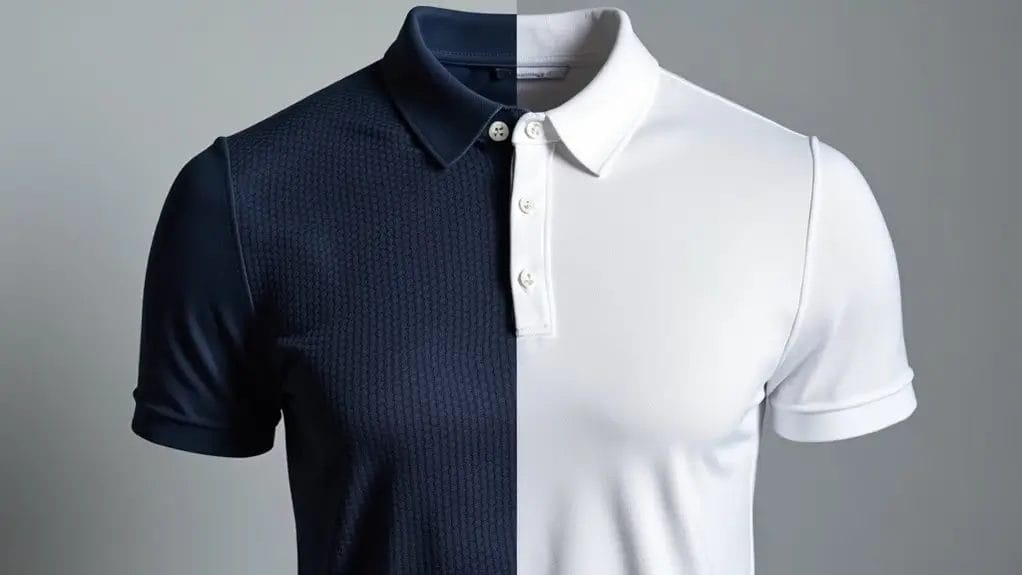
When choosing between polo shirt fabrics, you'll encounter pique fabric's distinctive waffle-like texture created by raised parallel cords and geometric patterns woven into the cotton.
Jersey fabric offers a smooth, flat-knit surface characterized by its single-knit construction with interlocking loops on one side and subtle vertical ribs on the other.
These two foundational polo shirt textiles differ considerably in their structural composition, with pique featuring a double-weave pattern that creates small air pockets, while jersey utilizes a simpler continuous yarn path.
What Is Pique Fabric?
Pique fabric features a distinctive waffle-like or honeycomb texture created through a double cloth weaving technique that uses raised parallel cords or geometric patterns.
The unique knit structure creates small, raised diamonds or geometric shapes on the surface while remaining flat on the underside. This textured weave allows for better airflow and breathability compared to smooth fabrics.
You'll find that pique's complex textile construction gives it more weight and durability than standard knits.
The dimensional structure helps the fabric stand slightly away from your skin, enhancing ventilation and moisture management.
It's this technical composition that makes pique ideal for athletic and casual polo shirts.
What Is Jersey Fabric?
Jersey fabric represents a classic single-knit textile structure characterized by flat, smooth surfaces on both sides.
When you examine jersey knit closely, you'll notice its fine wales and courses creating a uniform appearance that's distinctly different from pique's textured pattern.
This lightweight knit fabric offers natural stretch in both directions due to its interlooped construction, making it highly flexible and comfortable against your skin.
Jersey's structure allows for excellent breathability while maintaining its shape. You'll find that most jersey fabrics are made from cotton, polyester, or cotton-poly blends, each offering varying degrees of moisture-wicking and durability properties.
Pique vs Jersey: Key Differences

The structural differences between pique and jersey knits directly influence how your polo shirt will look, feel, and perform.
You'll notice pique's distinctive waffle-like texture created by raised geometric patterns, while jersey exhibits a smooth, flat surface with minimal texture variation.
Pique's raised pattern creates microscopic air pockets for enhanced breathability, while jersey's uniform structure offers natural stretch and drape.
Though each fabric type requires specific care techniques to maintain its unique characteristics.
Texture and Feel
When comparing fabric textures, you'll notice that pique's distinctive waffle-like pattern creates a more structured, textural surface with small raised geometric designs, while jersey exhibits a smooth, flat face with minimal surface variation.
The pique knit's structured look comes from its unique weaving technique, which forms small geometric patterns that create air pockets within the fabric. Jersey's simple knit construction delivers superior softness and drape, making it feel more like a t-shirt material.
While pique offers a more formal, textured weave appearance, jersey provides a casual, relaxed look and feel that many find more comfortable against the skin.
Breathability and Comfort
Although both fabrics offer breathability, pique's waffle-like construction creates superior ventilation through its raised geometric patterns and air pockets.
When you're wearing a pique polo shirt, the textured surface lifts the fabric away from your skin, enhancing air circulation and moisture-wicking capabilities.
Jersey's flat, smooth structure provides decent comfort for everyday wear but doesn't match pique's ventilation efficiency.
The tighter knit of jersey fabric can trap heat and moisture closer to your skin, especially in humid conditions.
However, jersey's natural stretch and flexibility might feel more comfortable if you prioritize unrestricted movement over maximum breathability.
Durability and Maintenance
Beyond comfort considerations, durability and maintenance characteristics set these fabrics distinctly apart.
Pique's textured, honeycomb weave creates a more durable structure that withstands regular wear and tear better than jersey. You'll find that high-quality pique polo shirts maintain their shape and appearance even after multiple washes, while jersey may stretch or pill more easily.
The knit construction of jersey fabric makes it more prone to snags and pulls, affecting its longevity.
However, jersey's maintenance is slightly simpler - it's less likely to wrinkle and typically requires less ironing. Both fabrics are known for colorfast properties when properly cared for.
Pique Polo Shirts vs Jersey Polo Shirts

When choosing between pique and jersey polo shirts, you'll notice pique's waffle-like texture creates a more structured, formal appearance while jersey's smooth surface presents a casual, athletic look.
You'll find pique's raised geometric pattern allows better airflow and moisture management during business-casual activities, whereas jersey's natural stretch and softer drape excels in dynamic sports movements.
The tighter knit structure of pique maintains its shape throughout the day, while jersey's flexibility makes it more comfortable for activities requiring extensive range of motion.
Style and Appearance
Since their surface textures differ greatly, pique and jersey polo shirts present distinct visual appearances that affect their formality and versatility.
Pique's textured honeycomb weave creates a more polished, preppy look that's ideal for business-casual settings and holds embroidered logos better. You'll notice its structured appearance maintains its shape throughout wear.
Jersey's smooth, flat surface offers a more sporty, athletic style that's perfect for casual occasions. Its fluid drape and sleek design complement active lifestyles.
While pique projects traditional refinement, jersey delivers contemporary appeal - each serving different style preferences and wearing occasions.
Performance in Different Activities
Although both fabrics serve well in casual settings, pique and jersey polo shirts exhibit distinct performance characteristics during different activities.
For outdoor activities like golf and tennis, pique's textured weave provides better airflow and moisture management, while its structured nature maintains shape during movement.
Jersey's smooth knit offers superior flexibility and stretches more freely, making it ideal for casual wear where comfort is paramount.
You'll find pique more suited to athletic pursuits due to its durability and breathability, while jersey's versatility shines in relaxed environments.
The choice depends on your primary activity - structured sports or everyday wear.
How to Choose the Right Fabric for Your Polo Shirt

When selecting between pique and jersey polo shirts, you'll need to evaluate your specific activity level, as pique's textural honeycomb weave provides superior ventilation for active lifestyles while jersey's smooth knit offers fluid mobility for casual wear.
The climate where you'll wear the polo matters considerably - pique's raised pattern creates air pockets that enhance breathability in hot weather, whereas jersey's tight knit structure retains warmth better in cooler conditions.
Your laundering habits should also factor in, since pique's durable construction withstands frequent washing and maintains its shape, while jersey requires gentler care to prevent stretching and pilling over time.
Considering Your Lifestyle and Use
Choosing the right polo shirt fabric requires understanding how you'll primarily use the garment. If you're selecting corporate uniforms or business-casual wear, pique's structured appearance and durability make it your go-to choice.
For a versatile wardrobe piece that shifts from office to weekend, consider how each fabric affects your comfort throughout the day. Active lifestyles benefit from jersey's natural stretch and breathability, while formal settings call for pique's crisp appearance.
Climate also impacts your choice - jersey's lightweight properties excel in warm weather, while pique's textured surface provides better air circulation in varied conditions.
Climate and Weather Factors
The climate where you live plays an essential role in determining which polo shirt fabric will perform best. In hot, humid environments, jersey's lightweight, smooth structure allows better airflow and moisture-wicking. It's ideal for tropical or summer climates where breathability impacts comfort.
Pique's textured, honeycomb weave creates tiny air pockets that provide insulation in cooler weather while still maintaining breathability. High-quality polo shirts in pique are typically thicker vs jersey counterparts, making them more suitable for moderate to cool climates.
Cotton content in both fabrics affects their thermal regulation properties and seasonal adaptability.
Care and Longevity
Proper maintenance considerably impacts the lifespan of both pique and jersey polo shirts, with each fabric requiring specific care techniques.
Jersey's softer structure needs gentle washing to prevent stretching, while pique's durability allows for more rigorous cleaning. You'll find that pique knits maintain their shape longer and resist pilling better than jersey fabrics.
To maximize longevity, use eco-friendly detergents and wash both types of fabric in cold water. Jersey requires flat drying to prevent deformation, whereas pique can handle tumble drying on low heat.
With proper care, pique typically outlasts jersey by several seasons of regular wear.
Which Fabric Is the Best Choice for You?

When choosing between pique and jersey fabrics for your polo shirt, you'll need to weigh their distinct structural characteristics and performance properties.
Pique's textured, honeycomb-like weave offers superior ventilation and durability but can feel heavier and more structured against your skin, while jersey's flat-knit construction provides natural stretch and lightweight comfort but may show wear more quickly.
Your selection should ultimately align with your specific needs - whether that's the formal, classic appearance of pique or the casual, flexible comfort of jersey.
Pros and Cons of Pique Fabric
Since pique fabric features a distinctive waffle-like texture created by raised parallel cords, it offers unique advantages and drawbacks for polo shirt construction.
The pros of pique include superior breathability due to its textured weave, enhanced durability from its sturdy construction, and better shape retention compared to jersey polo shirts. The structured fabric also provides a more formal appearance, making pique polos suitable for business casual apparel.
However, pique's drawbacks include less stretch, potential stiffness (especially in 100% cotton versions), and a heavier feel. While cotton-polyester blend options improve flexibility, they're still less fluid than jersey.
The textured surface can also show wear more noticeably over time.
Pros and Cons of Jersey Fabric
Jersey fabric presents a distinctly different structural composition from pique, featuring fine-gauge knit construction that creates a smooth, flat surface.
This lightweight fabric offers excellent draping qualities and stretches in all directions, making your polo shirt more form-fitting and flexible.
The smooth surface of jersey fabric makes it ideal for printing and embroidery work, giving you crisp, clear designs.
When made from organic cotton, it's particularly soft against your skin.
However, jersey's thin construction means it's more prone to snags and wrinkles than pique.
You'll also notice it shows sweat more readily and may not maintain its shape as well over time.
Frequently Asked Questions
Can I Customize the Collar Material Differently From the Shirt Fabric?
You can choose a different collar fabric, typically ribbed cotton or polyester blends, to contrast with your shirt's main material while maintaining structural integrity and comfortable stretch properties.
How Long Do Pique and Jersey Polo Shirts Typically Last?
You'll get 2-3 years from both fabrics with proper care. Pique's honeycomb structure offers better durability against wear, while jersey's continuous knit may show pilling sooner under frequent washing.
Are There Hybrid Polo Shirts That Combine Both Pique and Jersey?
You'll find hybrid polos that combine pique's honeycomb structure on the exterior with jersey's smooth interior backing, offering both fabrics' benefits through engineered double-knit or jacquard construction techniques.
Which Fabric Shrinks Less After Multiple Washes?
You'll experience less shrinkage with pique fabric due to its textured honeycomb weave structure, which allows more give compared to jersey's tighter knit construction and smoother surface tension.
Do Professional Sports Leagues Have Specific Fabric Requirements for Polo Uniforms?
You'll find most pro leagues mandate specific fabric compositions, typically requiring moisture-wicking polyester blends with UPF protection and antimicrobial properties. Some leagues specify fabric weights between 150-200 GSM.
Conclusion
You'll find that pique's knit structure, featuring raised geometric patterns and a textured surface, offers superior moisture-wicking capabilities and dimensional stability. Jersey's interlock construction creates a smoother hand feel but sacrifices durability. When analyzing fiber composition, pique's tighter weave maintains shape retention through repeated wash cycles, while jersey's single-knit construction tends to stretch. Consider your wear patterns and performance requirements when selecting between these distinct textile structures.
0 comments