

When you're selecting home textiles, you'll encounter two prominent synthetic fabrics: peachskin and microfiber. These materials differ considerably in their molecular structure, performance characteristics, and practical applications. While both offer specific advantages in bedding and household use, their distinct polymer compositions and manufacturing processes create unique properties that affect durability, maintenance, and user experience. Understanding these technical variations will help you make an informed decision for your specific textile needs.
Key Takeaways
- Peachskin has a velvety, brushed surface texture mimicking peach fuzz, while microfiber features a dense, smooth weave with microscopic filaments.
- Peachskin requires gentler care with specific washing instructions, whereas microfiber tolerates various washing temperatures and conditions.
- Microfiber excels at trapping dust and moisture, making it ideal for cleaning, while peachskin prioritizes comfort and aesthetic appeal.
- Peachskin typically lasts longer with proper care, while microfiber may need more frequent replacement due to pilling and fiber breakdown.
Understanding Peach Skin Fabric

Peach skin fabric is a woven polyester material that undergoes specialized brushing treatments to create its distinctive ultra-fine surface texture reminiscent of a peach's exterior.
You'll find this textile characterized by its velvety hand-feel and matte finish, achieved through mechanical micro-abrasion of the fiber surface during manufacturing.
Commonly employed in bedding, drapery, and apparel applications, peach skin fabric's combination of durability and softness makes it particularly suitable for items requiring both comfort and resilience.
What Is Peach Skin Fabric?
A luxuriously soft synthetic material, peach skin fabric earned its name from its remarkably gentle texture that mimics the delicate fuzz found on fresh peaches.
You'll find this textile is composed of finely woven polyester fibers that undergo specialized brushing and peaching treatments to achieve its signature feel.
The manufacturing process creates microscopic loops on the fabric's surface, resulting in a suede-like touch while maintaining durability.
The unique combination of fiber density, weave pattern, and surface modification gives peach skin fabric its characteristic softness without compromising its structural integrity.
Texture and Feel
When you touch peach skin fabric, you'll notice its distinctive dual-sensory characteristics: a buttery-smooth surface coupled with an ultra-fine raised texture.
The fabric's tactile properties can be broken down into three key elements:
- A soft, velvety nap that's created by microscopic fibers brushed in a uniform direction.
- A plush yet compressed surface structure that feels smooth against your skin.
- A subtle friction coefficient that creates a gentle grip without being sticky.
This unique combination of textures makes peach skin fabric distinctly different from traditional microfiber, which typically presents a more uniform, single-texture surface feel.
Common Uses in Home Textiles
The versatility of peach skin fabric has established it as a premium choice for numerous home textile applications, particularly in bedding ensembles and decorative furnishings.
You'll find it primarily in duvet covers, pillowcases, and sheet sets where its temperature-regulating properties enhance sleep quality. The fabric's dimensional stability makes it ideal for upholstery accents and drapery.
In contrast, microfiber's durability and stain resistance make it perfect for high-traffic applications like sofa covers and throw pillows.
Its superior moisture-wicking capabilities make it especially suitable for seasonal comforters and mattress protectors where comfort and practicality are paramount.

Microfiber consists of ultra-fine synthetic fibers, typically polyester or nylon, with each fiber measuring less than one denier in diameter.
You'll find microfiber's distinctive texture characterized by its dense weave and microscopic filaments that create a surface that's simultaneously smooth and grippy to touch.
These technical properties make microfiber ideal for household applications including bedding, upholstery, and cleaning cloths, where its ability to trap dust particles and moisture proves particularly effective.
What Is Microfiber?
Made from ultra-fine synthetic fibers thinner than one denier, microfiber represents a technological breakthrough in textile engineering.
This innovative fabric consists of polyester, polyamide, or a blend of both materials, woven into an exceptionally dense structure.
When examining microfiber under a microscope, you'll discover these key characteristics:
- Split fiber technology that creates microscopic hooks for superior cleaning and absorption.
- Cross-sectional shapes ranging from wedge to star configurations.
- Surface area up to 40 times greater than traditional synthetic fibers.
These properties make microfiber an exceptional material for both cleaning applications and performance textiles.
Texture and Feel
Beyond its microscopic structure, microfiber's tactile properties showcase remarkable versatility in textile applications.
When you touch microfiber fabric, you'll notice an exceptionally soft, smooth surface that feels like silk against your skin. The ultra-fine synthetic fibers create a dense yet lightweight texture that's both plush and durable.
These fibers are engineered to provide a gentle, non-abrasive feel while maintaining their structural integrity. The fabric's unique construction allows it to feel like natural materials but with enhanced performance characteristics.
You'll find that microfiber's texture remains consistent even after multiple uses and washes.
Common Uses in Home Textiles
Thanks to its exceptional versatility and performance characteristics, microfiber fabric has become a staple in numerous home textile applications.
You'll find this innovative synthetic textile extensively used throughout modern bedrooms and living spaces.
- Bedding essentials: sheets, pillowcases, duvet covers, and mattress protectors that offer superior moisture-wicking and temperature regulation
- Upholstery applications: sofa covers, cushion covers, and window treatments that resist staining and maintain color vibrancy
- Cleaning accessories: dust cloths, mops, and polishing cloths that utilize the fabric's electrostatic properties to trap particles effectively
These applications showcase microfiber's adaptability in meeting diverse home textile needs while maintaining peak performance.
Key Differences Between Peach Skin and Microfiber

When comparing peachskin and microfiber fabrics, you'll find distinct variations in their fundamental composition, as peachskin typically consists of polyester filaments woven in a tight, uniform structure while microfiber utilizes split fibers less than 1 denier in thickness.
You can observe key differences in their surface characteristics, with peachskin exhibiting a brushed, velvet-like nap that mimics natural peach fuzz, whereas microfiber displays a smooth, dense surface with exceptional absorption properties.
The fabrics' distinct molecular structures and manufacturing processes result in varying maintenance protocols, with peachskin requiring gentler washing cycles to preserve its raised texture, while microfiber demonstrates superior resilience to frequent laundering and mechanical stress.
Fabric Composition and Weave
The fundamental composition of peachskin and microfiber fabrics reveals distinct manufacturing processes and structural characteristics. You'll find peachskin typically consists of 100% polyester with a unique brushed surface treatment that creates its signature soft texture.
- Material structure: Peachskin uses standard polyester fibers, while microfiber contains ultra-fine synthetic filaments split into microscopic strands.
- Fiber density: Microfiber features densely packed fibers under 1 denier in thickness.
- Weave pattern: Peachskin employs a tight plain weave before brushing, whereas microfiber uses various specialized weaving techniques to integrate its fine filaments.
These distinct compositions directly impact each fabric's performance characteristics and applications.
Texture and Appearance
Both peachskin and microfiber fabrics exhibit distinctive surface characteristics that set them apart visually and texturally.
You'll notice peachskin has a subtle, brushed nap that creates a soft, velvety surface reminiscent of a ripe peach's exterior. Its texture is uniformly matte with a gentle fuzz that's visible under close inspection.
In contrast, microfiber presents an ultra-smooth surface with a slight sheen.
While it's also soft to touch, its texture is more sleek and uniform than peachskin. The microscopic fibers create a dense, flat surface that doesn't show directional brushing patterns typical of peachskin's raised texture.
Durability and Care Requirements
Beyond surface characteristics, durability and maintenance requirements mark significant distinctions between these textile variants. You'll find that peachskin demands more careful handling to maintain its delicate surface texture, while microfiber demonstrates superior durability under regular use.
- Peachskin requires gentle washing cycles, low heat drying, and minimal agitation to preserve its distinctive nap.
- Microfiber's synthetic construction enables machine washing at various temperatures and resists structural degradation.
- The care longevity ratio favors microfiber, as it maintains integrity through repeated laundering cycles without special treatment.
Both materials respond well to spot cleaning, though peachskin's surface may show wear more readily.
Microfiber vs Peachskin: Cost and Value Comparison

When comparing peachskin and microfiber fabrics, you'll find microfiber generally costs 30-50% less per yard due to its synthetic production methods and market availability.
Your maintenance costs for peachskin will be higher, as it requires specialized cleaning agents and gentle wash cycles, while microfiber's durability allows for standard laundering with minimal special care.
The long-term value proposition favors microfiber for everyday household applications, though peachskin's premium feel and sophisticated appearance may justify its higher investment for specific decorative or comfort-focused uses.
Pricing Differences
Price points between peachskin and microfiber fabrics can vary noticeably based on manufacturing processes and material quality.
When you compare microfiber and peachskin costs, you'll find significant differences in market positioning and value propositions.
- Entry-level microfiber typically ranges from $3-8 per yard, offering basic durability at an economical price point.
- Mid-grade peachskin commands $8-15 per yard, reflecting its enhanced textile engineering and superior hand-feel.
- Premium variations of both fabrics can reach $20+ per yard, though peachskin generally maintains a higher cost threshold due to its specialized finishing process.
The cost differential stems from peachskin's more complex manufacturing requirements and refined fiber composition.
Longevity and Maintenance Costs
Although initial purchase costs represent a significant factor, the long-term value proposition of both fabrics hinges on their respective durability and care requirements.
Peachskin's tightly woven synthetic fibers demonstrate longer wear resistance, maintaining structural integrity through multiple wash cycles. You'll find microfiber requires more frequent replacement due to its susceptibility to pilling and fiber breakdown.
Maintenance expenses favor peachskin, with its easy care instructions and minimal special treatment needs.
Microfiber often demands specific detergents and washing protocols to preserve its properties.
When calculating total ownership costs, peachskin's extended use life and simplified maintenance routines typically offset its higher acquisition price.
Overall Value for Home Use
Despite their distinct price points, determining the overall value proposition of peachskin versus microfiber requires analyzing multiple factors beyond initial costs.
When evaluating home textile value, consider these critical factors:
- Microfiber delivers cost-effective performance in moisture-wicking and durability, making it ideal for high-traffic environments.
- Peachskin's luxurious hand-feel and superior thermal regulation justify its premium pricing for comfort-focused applications.
- Both fabrics demonstrate excellent value when matched to specific use cases - microfiber excels in utility spaces while peachskin enhances living areas.
Your environment and intended application should guide fabric selection, as each material's unique properties contribute differently to long-term value enhancement.
Choosing the Right Fabric for Your Bed and Home Textile Needs
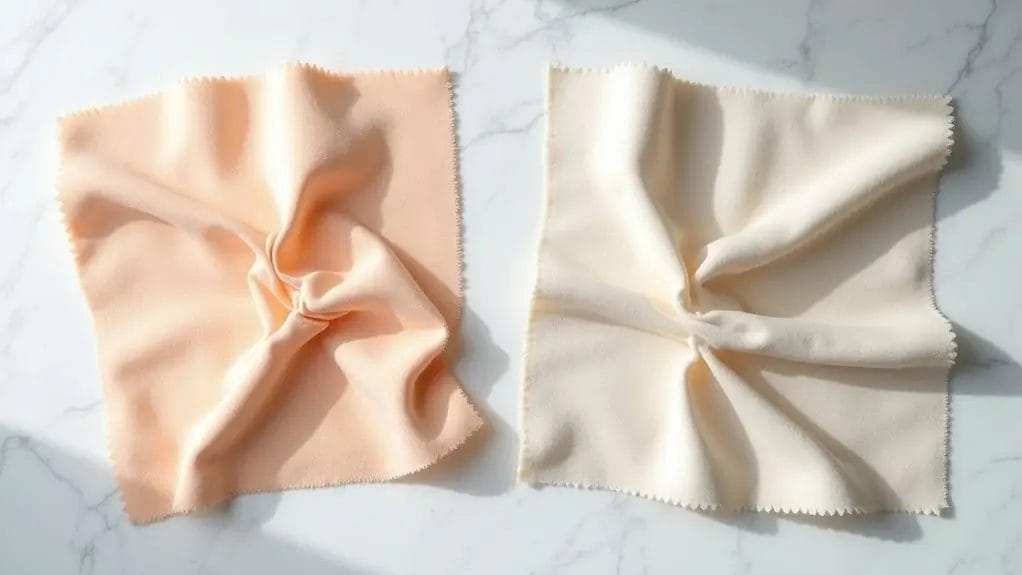
When selecting between peachskin and microfiber for your bedding needs, you'll need to evaluate each fabric's thermal regulation properties and surface texture characteristics that affect sleep quality.
You should consider the fabrics' environmental footprints, as microfiber releases more microplastics during washing while peachskin's production process typically involves fewer synthetic materials.
The maintenance requirements differ considerably, with microfiber requiring more frequent washing due to static buildup, while peachskin's moisture-wicking properties and stain resistance offer extended wear between cleanings.
Comfort and Sleep Quality
The quest for ideal sleep quality often hinges on your choice between peachskin and microfiber fabrics. Both materials offer distinct comfort characteristics that affect your rest cycle and sleep hygiene.
- Peachskin's brushed surface creates a gentle, temperature-regulating environment that maintains consistent comfort throughout your sleep cycles.
- Microfiber's ultra-fine synthetic filaments provide a softer initial feel but may trap heat more readily during extended rest periods.
- The fiber density and weave structure of peachskin (typically 1500 thread count equivalent) offers superior moisture-wicking properties compared to standard microfiber sheets, enhancing overnight comfort through vapor transmission.
Environmental Impact
Beyond personal comfort considerations, selecting between peachskin and microfiber fabrics carries significant environmental implications.
Microfiber's synthetic composition means it releases microplastics during washing, contributing to water pollution. Additionally, its moisture-wicking properties, while beneficial for breathability, require frequent washing, increasing water consumption.
Peachskin, though also synthetic, typically has a longer lifespan and releases fewer microfibers during laundering. Its enhanced durability means less frequent replacement, reducing overall environmental impact.
However, both fabrics' manufacturing processes involve petrochemicals, making neither option fully eco-friendly.
Consider these environmental trade-offs when making your selection.
Ease of Care and Cleaning
Between peachskin and microfiber fabrics, maintenance requirements differ significantly in relation to washing protocols and stain resistance.
You'll find that both materials offer distinct care advantages for your home textiles.
- Microfiber requires gentle machine washing in cold water without fabric softeners, while peachskin can withstand warmer temperatures and standard detergents.
- You shouldn't brush microfiber fabrics, as this can damage the ultra-fine fibers, whereas peachskin maintains its texture even after repeated brushing.
- When dealing with stains, use microfiber-specific cleaning solutions for best results, while peachskin responds well to standard spot treatments.
Both fabrics are machine-dryable on low heat settings, making them practical choices for everyday use.
Special Features of Peach Skin and Microfiber

You'll notice both peach skin and microfiber fabrics exhibit exceptional moisture-wicking capabilities, though microfiber's engineered polyester filaments provide superior quick-drying performance.
While peach skin's brushed surface creates air pockets that enhance breathability, its molecular structure makes it slightly more susceptible to wrinkling compared to microfiber's dense fiber matrix.
Microfiber's tightly woven synthetic construction delivers superior stain resistance, as its microscopic fibers create a barrier that repels liquid penetration more effectively than peach skin's softer weave.
Quick Drying and Breathability
When comparing moisture management capabilities, peachskin and microfiber fabrics demonstrate distinct performance characteristics in quick-drying and breathability.
Both textiles offer efficient moisture-wicking properties, but they function differently:
- Microfiber's ultra-thin synthetic filaments create numerous micro-channels that actively transport moisture away from your skin, allowing for quick evaporation.
- Peachskin's unique surface texture provides a cool touch and moderate moisture transfer through its specialized weave structure.
- The density of fibers affects breathability - microfiber's tighter construction can trap heat, while peachskin's looser weave enables better air circulation.
These variations in fiber structure and composition directly impact their performance in humidity control and thermal regulation.
Resistance to Wrinkles and Stains
Both peachskin and microfiber fabrics exhibit remarkable resistance to wrinkles and stains through their specialized synthetic compositions and manufacturing processes.
You'll find that microfiber's densely woven ultrafine fibers create a unique barrier against liquid penetration, while maintaining structural integrity that prevents deep creasing.
Peachskin's tightly bound polyester filaments offer similar stain-fighting properties, though with slightly less resistance to deep-set wrinkles.
For ideal stain resistance, microfiber's hydrophobic properties repel liquids more effectively than peachskin.
However, both materials respond well to gentle steaming or low-heat ironing when wrinkles occur, making them practical choices for everyday use.
Frequently Asked Questions
Can Peachskin and Microfiber Fabrics Be Safely Bleached?
You shouldn't bleach either fabric, as chlorine bleach degrades synthetic polyester fibers. Instead, use oxygen-based bleach alternatives to preserve the structural integrity of both peachskin and microfiber materials.
How Long Do Peachskin Sheets Typically Last Compared to Microfiber Sheets?
You'll get 3-5 years from quality peachskin sheets with proper care, while microfiber sheets typically last 1-2 years before showing significant fiber degradation and pilling from mechanical abrasion.
Are Peachskin or Microfiber Fabrics Better for People With Allergies?
You'll find peachskin's tighter weave structure and synthetic polyester composition more hypoallergenic, as it's less likely to harbor dust mites, allergens, and microbial growth compared to standard microfiber materials.
Do These Fabrics Require Special Washing Machines or Detergents?
You don't need specialized machines, but use gentle, phosphate-free detergents. Wash both fabrics in cold/warm water, avoid fabric softeners, and tumble dry on low to maintain synthetic fibers' integrity.
Can Peachskin and Microfiber Fabrics Be Ironed or Steamed?
You can iron or steam both fabrics at low temperatures. Use the synthetic setting and avoid direct high heat, as these polyester-based materials could melt or develop heat-induced surface damage.
Conclusion
When selecting between peachskin and microfiber textiles, you'll need to evaluate your specific requirements for tactile properties, durability metrics, and environmental impact. Peachskin's velvety surface structure and superior wear resistance make it ideal for long-term bedding investments, while microfiber's synthetic composition offers enhanced cleaning efficiency at a lower cost point. Consider your textile's primary function, maintenance parameters, and sustainability factors to determine the most suitable material for your application.
0 comments